


Earlier today, the Court of Appeal unanimously granted the Bar Council leave to commence a judicial review against the attorney-general's 2023 decision to seek a discharge not amounting to an acquittal (DNAA) for Ahmad Zahid Hamidi’s 47 charges in the Yayasan Akalbudi corruption trial.
What are the key takeaways of the Court of Appeal’s decision? In a nutshell, the court held that the Bar’s application was not frivolous and raised serious public law issues regarding the AG's prosecutorial discretion.
The court also characterised the case as "appropriate, rare and exceptional" in that the DNAA was sought at an advanced stage where 99 prosecution witnesses and 15 defence witnesses had already testified.
In my view, it’s a fair characterisation because the DNAA was granted after the court ruled that the prosecution had established a prima facie case.
In simple terms, this means the evidence was already strong enough to warrant a conviction, assuming the defence could not disprove it.
Ending the trial at such an advanced stage, with an "airtight" case already on the record, is exactly what makes this situation so unusual.

In a ruling that resonates with public sentiment, the court designated this case as “appropriate, rare, and exceptional” due to a unique convergence of factors.
These include the gravity of the corruption charges and the significant public interest involved. Crucially, the court noted the advanced stage of the trial - where a prima facie case had been established after a “maximum evaluation” of the evidence, leading to the defence being called.
‘Practical finality’
With 99 prosecution witnesses over 53 days and 15 defence witnesses already heard, the timing of the discontinuance creates a sense of “practical finality” that demands judicial scrutiny.
It is difficult to fault the Court of Appeal's logic when it clarified that today’s ruling is not a judgment on the criminal charges themselves.
By explicitly stating that the decision “does not determine the guilt or innocence of the accused, nor does it pass judgment on the AG’s motives”, the court underscored that its role is strictly to oversee the legality of the process.
This neutral, procedural stance makes the finding incredibly hard to dispute.
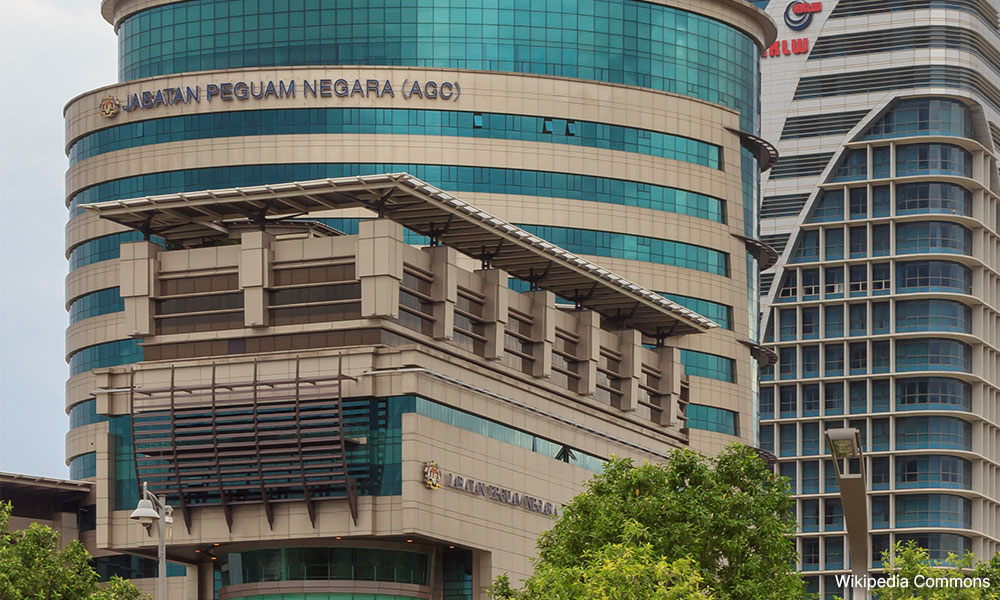
While critics often argue that challenging the AG’s prosecutorial discretion under Article 145(3) of the Federal Constitution is unlawful, the court has clarified that this power is neither absolute nor unfettered.
By holding that judicial review is permissible in “appropriate, rare and exceptional” circumstances, the court has essentially reaffirmed that even the AG’s broad and wide constitutional discretion must always remain subject to the principles of legality and rationality.
In other words, in “rare and exceptional” situations like this, the judiciary can and should step in to review those decisions.
It is also interesting to note that the court said the presumption of legality of the AG’s prosecutorial discretion cannot be an “absolute bar” or completely shut out leave for judicial review, if such a court challenge is supported by identifiable and serious matters.
The court also clarified that the “presumption of legality” regarding the AG's prosecutorial discretion does not serve as an absolute barrier to judicial oversight.

In other words, the court ruled that the AG's powers are not a “get out of jail free” card against legal challenges. If a challenge is backed by identifiable and serious concerns, the court cannot simply shut the door on a judicial review.
It is submitted that by highlighting "identifiable and serious matters”, the court opened the door for the Malaysian Bar to argue that the DNAA was not just a routine decision, but one that needs public explanation.
Valid legal issues
This ruling, therefore, reinforces those constitutional powers, which, while broad, are not immune to scrutiny when valid legal issues are raised.
The Court of Appeal's ruling may be a bitter pill for Zahid and his supporters to swallow, but for the public, it is a landmark moment.
It reaffirms that prosecutorial power is not a blank cheque. By opening the door to judicial review, the court has prioritised transparency and the rule of law, marking a major win for accountability in our legal system. Yes, it is a massive win for legal accountability in Malaysia!
It is fair to argue that perhaps the court has finally broken the idea that the AG is untouchable. Moving this challenge forward proves that accountability still matters, especially in cases involving high-level corruption.
Hopefully, it’s a huge step toward restoring public trust in our institutions. - Mkini
MOHAMED HANIPA MAIDIN is a former deputy minister of law.
The views expressed here are those of the author/contributor and do not necessarily represent the views of MMKtT.

No comments:
Post a Comment
Note: Only a member of this blog may post a comment.