


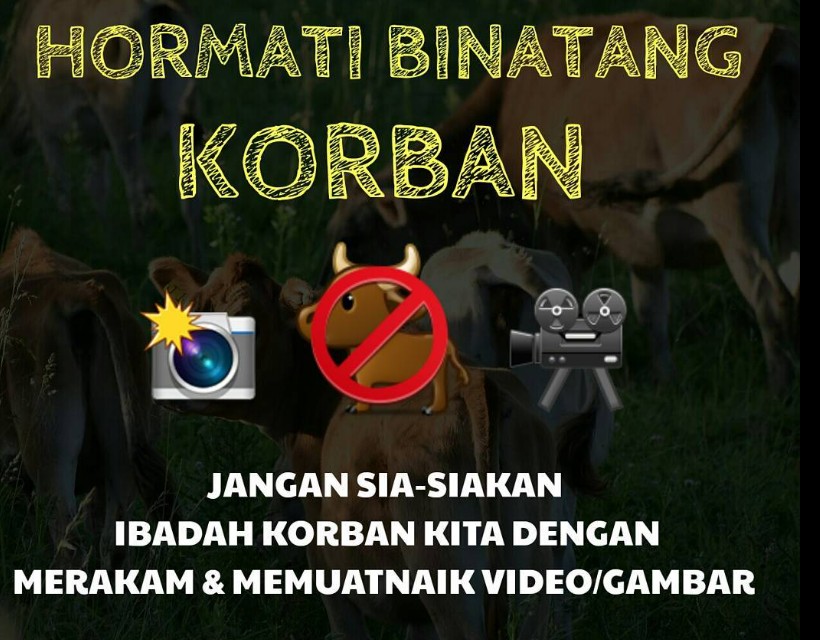
THE Eid al Adha a.k.a. “the Feast of Sacrifice” has come and gone but this request by an administrator of a social media site to be mindful of the sensitivity of non-Muslims – or animal lovers for that matter – has certainly left a foul taste on his pious brethren.
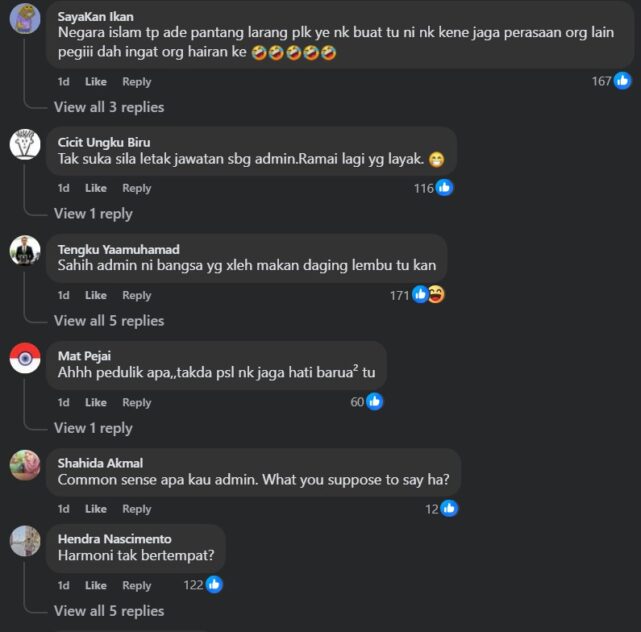
Warga Wilayah who has been dishing out various developments in the Federal Territories of Kuala Lumpur, Putrajaya and Labuan has apparently been chastised as “munafik” (hypocrite) and “kafir” (infidel) by requesting Muslims “to keep pictures of sacrificial animals solely for their personal viewing”.
“No need to upload them. Please have a little common sense  ,” he reminded in a Facebook post on the eve of yesterday’s (May 27) Hari Raya Korban.
Despite attributing his post to “opinion of mufti (qualified Islamic legal opinion expert to issue fatwa) since 2015” his sensible sounding post if pitted against Malaysia’s multi-racial and multi-religious background attracted a barrage of condemnation.
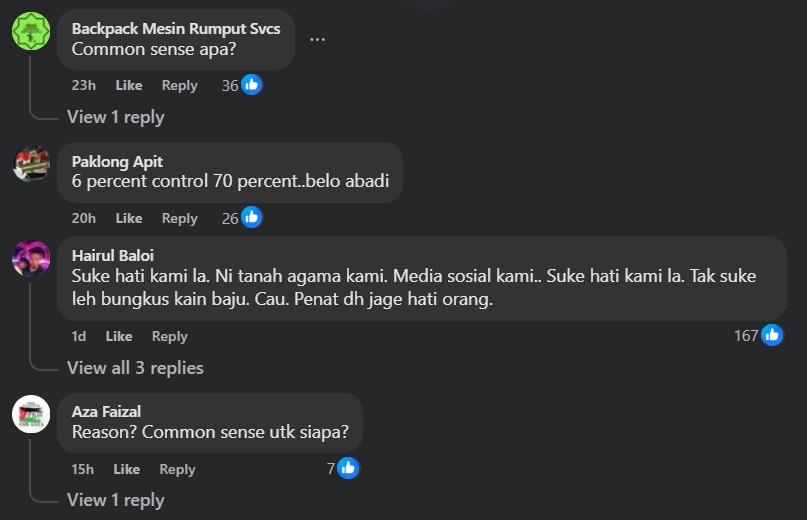
Some even rallied fellow Muslins to upload pictures of sacrificial activities or even purposely uploaded past images of sacrificial livestock to mock the poster.
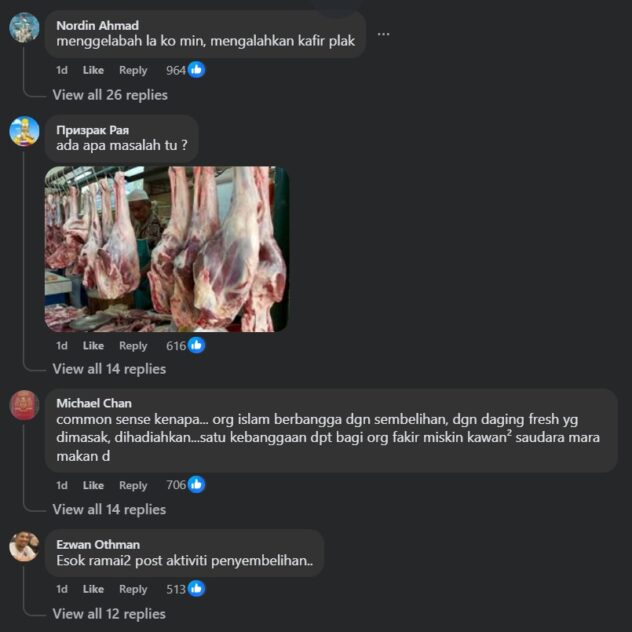
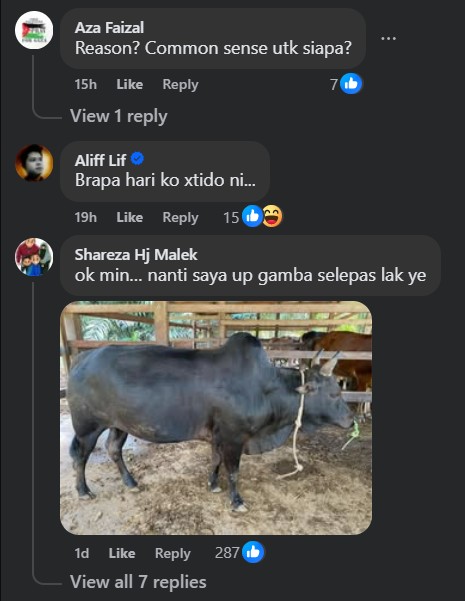
In disputing Warga Wilayah’s appeal for “common sense”: to prevail, others berated him for undermining the stature of Islam as the country’s official religion “just for the sake of pleasing the 6% when Muslims make up 70% of the population”.
Others regraded the poster’s request as “misplaced harmony” with one commenter asking him to give up his “administrator post”.
Preserving sensitivity
In providing a synopsis of mufti’s views on the sacrificial ritual, the administrator of Kisah Zakat Malaysia had in a August 2018 FB post outlined the manners before, during and after slaughtering a sacrificial animal that many devotees intentionally forget/ignore due to their “over-excitement”.
They include:
 1. Taking and uploading pictures (selfies) with the sacrificial animal.
2. Taking and uploading videos of the sacrificial animal in a ‘dying’ state.
3. Taking and uploading pictures (selfies) with the head/certain parts of the sacrificial animal that may be sensitive for some quarters/other races.
4. Taking and uploading videos of humiliating situations during the slaughter process.
5. Taking and uploading pictures of the sacrificial animal that has been slaughtered under ‘torturous’ conditions … and others.
“If you insist of doing so, then snap or record images that are courteous or able to display the beauty of Islam, not those that can spark misunderstandings and negative perceptions,” cautioned Kisah Zakat Malaysia.
In fact, Perlis mufti Datuk Dr Asri Zainul Abidin had also in August 2019 reportedly advised Muslims against uploading photos or videos of sacrificial livestock on social media

According to the renowned religious scholar, the condition of animals that are seemingly tortured following the slaughter process or the way they are handled can cause non-Muslims to view negatively the purity aspect of the Korban obligation.
Interestingly, Dr. Mohamad Razif bin Mohamad Fuad, a scholar, author and senior lecturer at Universiti Malaya’s Academy of Islamic Studies, sees nothing wrong with the korban ritual so long as it abides by proper procedures.
This is the tolerance that Islam teaches. Respecting non-Muslim neighbours doesn’t require us to hide the worship that Allah commands.
Performing sacrifice in a permitted place according to procedure with proper mannerism is not provocation. It is a religious right protected by the Federal Constitution and more importantly by the command of Allah.
We need not be apologetic Muslims. Manners preserve methods. Being apologetic sacrifices principles.
Can’t stand the sight of sharp knife? Can’t see blood? I can list other religious rituals that involve sharp objects and human blood. But we respect the beliefs of other religions. – Focus Malaysia

No comments:
Post a Comment
Note: Only a member of this blog may post a comment.