


Lawyers have opined that the Pahang crown prince’s recent decree requiring the armed forces to obtain royal assent before conducting military exercises in the state is constitutionally baseless, with his Johor counterpart also appearing to pour cold water on the move.
Citing the Federal Constitution, lawyer Zaid Malek highlighted that Part 1, Section 1(2) of the Eighth Schedule lists the matters in which a ruler may act at his own discretion - none of which cover dictating the conduct of military exercises.
Under Section 1(1), a ruler is required to act in accordance with the advice of the Executive Council or of its member who is acting under its general authority.
This then raises the question of whether making royal consent a condition precedent to military exercises could be considered a clear departure from what the Constitution allows.
Arguing that a decree implying such a directive would be ultra vires (beyond legal powers) of the Constitution, he asserted that the decree “cannot be legally binding,” cautioning that to treat it as such would be akin to ignoring the clear ambit of the Federal Constitution.
He added that while it is unnecessary for parties to challenge the decree as it has “no force of law,” a situation could present itself where the state government acts upon it as though it were binding.
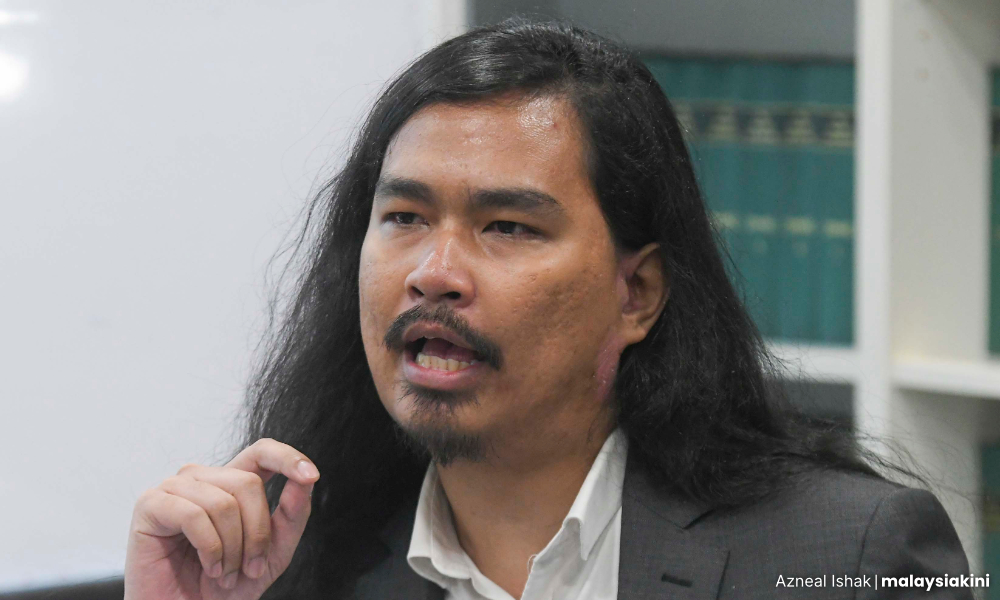
Zaid said that at such a point, the federal government can and must challenge the decree in court.
“A constitutional monarch must, as the name suggests, be bound to the Constitution, and the exercise of their discretion is limited only to matters enumerated within it.
“Our Constitution is the highest law of the land, and any failure to uphold it would destroy the very foundation of our legal system,” he affirmed.
Pahang ruler’s consent required
On May 24, Pahang Crown Prince Tengku Hassanal Ibrahim Alam Shah decreed that the armed forces and all relevant agencies must brief and obtain the Pahang sultan’s consent prior to executing any military training and exercises in the state.
In a statement issued by Istana Abdulaziz, the Tengku Mahkota of Pahang expressed concern over the environmental impact of plans to hold military exercises in the state, particularly its islands.
While Tengku Hassanal said he does not object to military training to improve soldiers’ skills, such activities must be done in a “controlled manner that is safe, responsible, and in harmony with the environment and all parties.”
“His Royal Highness decreed that the armed forces and all parties must comply with and uphold his decree. He will not hesitate to request the state government to take appropriate action should any breach of procedure occur,” the statement added.
In a separate statement two days later, Johor Regent Tunku Ismail Sultan Ibrahim declared his state's doors continue to be open to the military, saying the armed forces has the full space, authority and cooperation to conduct any form of training in the state.
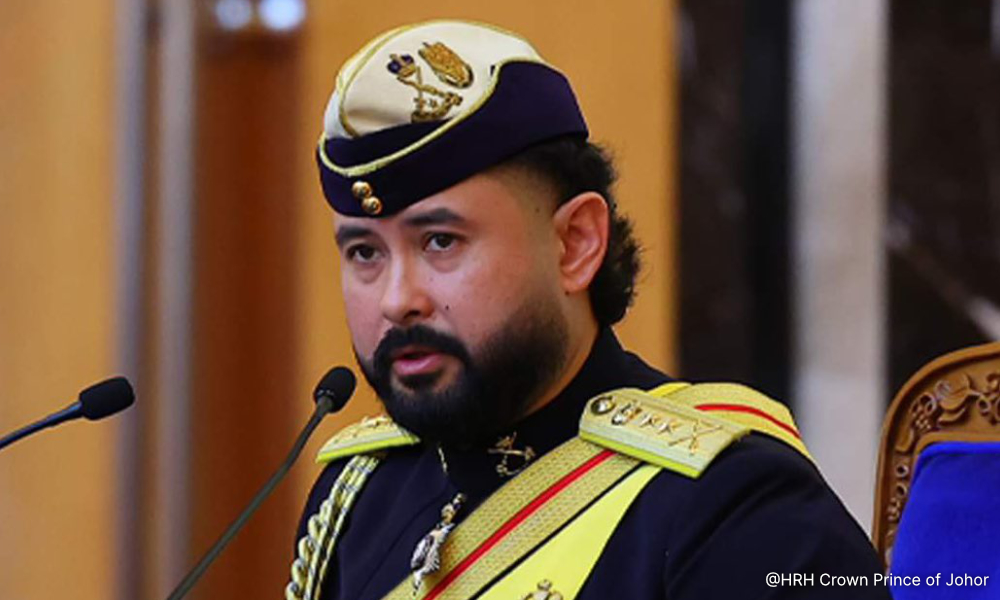
Military personnel, he emphasised, should never be subjected to unnecessary obstacles in carrying out training and operational exercises that are vital to national defence and preparedness.
Tunku Ismail, also known as TMJ, also took a swipe at unnamed individuals who he accused of attempting to exploit the military institution for personal interests, or to generate social media attention and public recognition.
“Before issuing statements on such matters, one must first understand the Federal Constitution… a superficial understanding of military service and constitutional matters only reflects a failure to truly comprehend the sacrifices, discipline, responsibilities and realities endured by the armed forces.
“It is equally unfortunate that concerns are selectively raised over military exercises, while many other pressing issues involving the welfare and well-being of the people appear to receive far less attention and urgency,” the Johor crown prince added.
Tunku Ismail is the commanding officer of the Royal Johor Military Force, a legacy of Johor's status as an unfederated Malay state and Malaysia's oldest active military unit.
With the force primarily undertaking protective operations centred on the security of the immediate Johor royal family members, it is also the only state-maintained military in the federation.
Defence a federal matter
Lawyer Arjun Mohanakrishnan noted that the historical distinction does not alter the constitutional reality that defence remains a federal matter.
Pointing to Article 41 of the Federal Constitution, which designates the Yang di-Pertuan Agong as supreme commander of the armed forces, and List I of the Ninth Schedule, which places defence under federal jurisdiction, Arjun said state rulers shouldn’t have a say in the matter.
He further referenced Article 81 of the Constitution, which states that the executive authority of every state shall not impede or prejudice the exercise of the executive authority of the federation.
“Can a royal decree be legally binding? Yes. For example, if the monarch proclaims a state of emergency under Article 150, it is legally binding.
“(But), I don't believe the decree by (Tengku Hassanal) is binding because matters pertaining to defence fall under the federal level,” Arjun said.
He noted that while certain quarters might contend that the use of land and forest does not fall under federal powers, but the state itself, the Constitution is silent on the temporary use of such spaces for military drills.
Expressing similar sentiments, Advance Tertiary College academic director and senior lecturer Daniel Abishegam underscored that while states hold jurisdiction over land matters, it is the state government's permission that would be required - not the ruler's directly.
He added that while the armed forces should be able to legally proceed with exercises in Pahang even if the sultan withholds consent, such a move could strain long-term relations between the federal and state agencies.
“I understand Tengku Hassanal’s concern for the land use in his state, and I commend that…(His Royal Highness’ decree) probably carries significant influence.
“If the federal government or armed forces do not want to get tangled up in a kerfuffle with the palace, they should seek to find a middle ground,” Daniel said.
However, he stressed that the text of the Constitution must be respected and held above any other “non-legal or historical feelings”, warning that a willingness to read it through the lens of sentiment and emotion would amount to devaluing the highest law of the land.

“Adherence to the clear words of the Constitution by all parties is absolutely vital for a modern democracy like ours to function,” he said.
Armed forces vows compliance
In response to Tengku Hassanal’s decree, the armed forces has since pledged its compliance while affirming that as the nation’s defence institution, it remains committed to ensuring all training, exercises, and operations are executed in a planned, professional, and responsible manner.
Besides fully adhering to all regulatory guidelines, standing operating procedures (SOPs), and environmental impact assessments stipulated by relevant authorities, the armed forces said it recognises the importance of strategic cooperation with the state government, enforcement agencies, relevant experts, and local communities in every training deployment.
The armed forces also expressed its gratitude to Tunku Ismail, noting that the royalty’s statement translates into a “strong strategic synergy” between the royal institution, the state government, and the military.
Emphasising that it has consistently operated based on legal boundaries, it added that the national defence mandate is implemented holistically across geographical borders.
“Consistent and realistic training in actual fields is a mandatory prerequisite to strengthen the tactical competence of armed forces personnel, thereby ensuring national defence preparedness remains at the highest level,” it said. - Mkini

No comments:
Post a Comment
Note: Only a member of this blog may post a comment.