


A genuinely progressive government should welcome scrutiny and anchor its legacy in affordable housing, public healthcare, walkable neighbourhoods, and inclusive planning.
From Boo Jia Cher
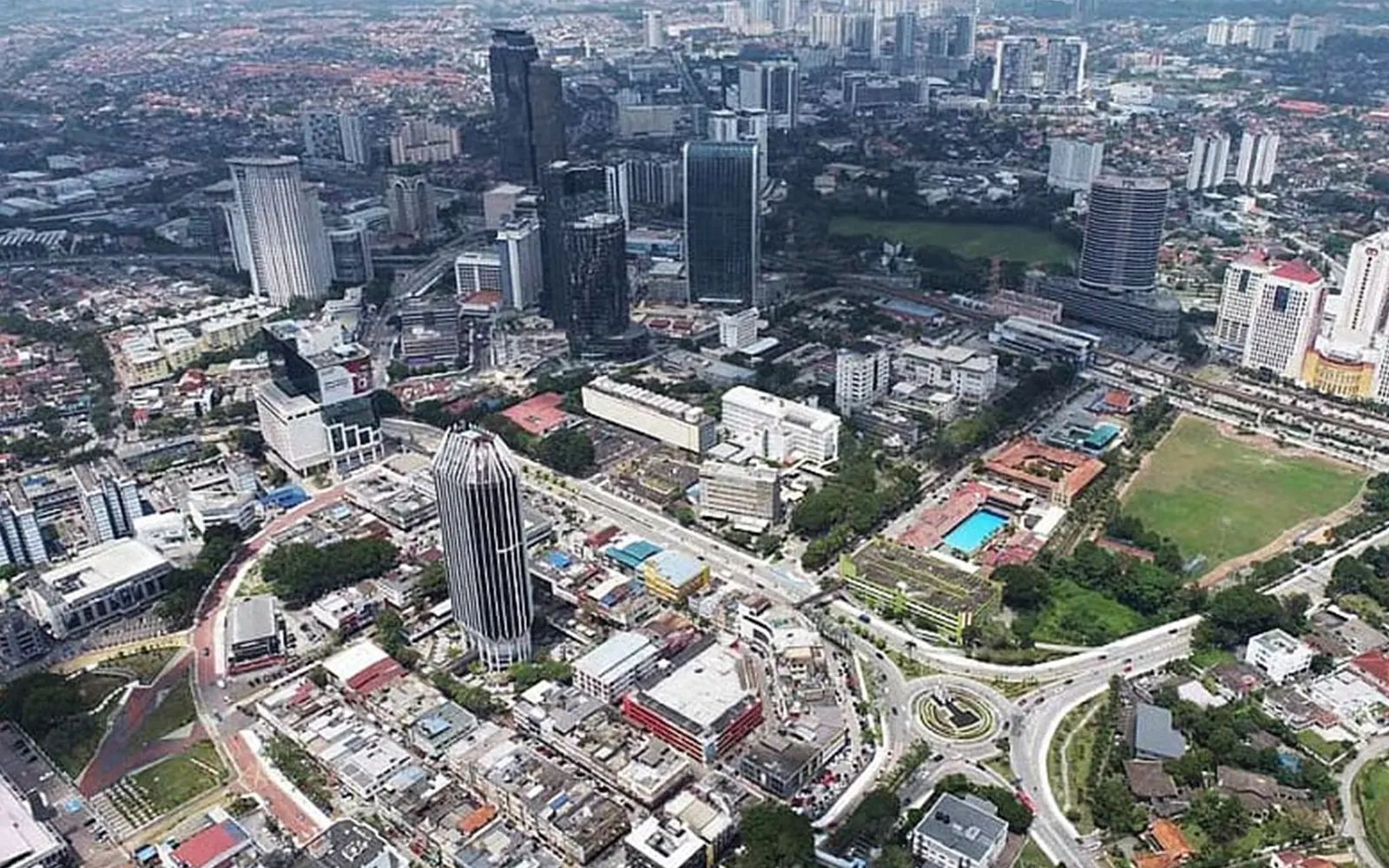
Too often “progress” means more highways, condos and profits for developers while ordinary people lose public space, forests, trust, and a say in how cities are built.
For more than a decade, Selangor has been held up as Malaysia’s model of progressive governance.
As the country’s richest state by GDP, boasting a 2024 output of RM432.1 billion, it is led by a coalition that champions reform, moderation, and multiracialism.
For many urban voters, supporting Pakatan Harapan (PH) has felt like the most rational choice.
Compared to the conservative racial and religious politics of the opposition, PH appears modern, stable and balanced.
To be fair, the Selangor government has delivered real wins.
Welfare initiatives under Iltizam Selangor Penyayang have thrown vital lifelines to needy families through cash aid, healthcare support, and targeted subsidies.
But voters must now ask the question: is the Selangor PH government truly progressive, or does it only “look progressive” when compared to the opposition?
Look beyond the polished PR campaigns and a different reality emerges.
Selangor is increasingly governed through a top-down, developer-friendly model that treats perpetual growth and corporate accommodation as the default solution to every problem.
That is not progressivism.
An obsession with highways
Consider the persistent controversy surrounding the Petaling Jaya Dispersal Link (PJD Link).
While publicly declared “discontinued” in April 2024 after the developer failed to meet conditions, subsequent reporting revealed the project remained under active review at both federal and state levels, with revised alignments quietly considered.
This is precisely why public trust has eroded.
Worse still, the state government had to be dragged to the High Court.
Only after a year-long legal battle did it finally release the social and environmental impact assessments to the residents whose neighbourhoods would be carved up by the highway.
When a self-proclaimed progressive government forces its own citizens into a war of attrition just to access public planning documents, it functions like a corporate bureaucracy, not a democracy.
A genuinely progressive administration understands that cities cannot tarmac their way out of congestion.
Yet, local planning decisions consistently prioritise vehicular flow over walkability, public space, and reliable public transit.
Profit over public health
This pro-developer bias has a direct impact on public wellbeing.
Local lawmakers have repeatedly emphasised that Petaling Jaya urgently needs its own dedicated public hospital to serve a district of nearly 620,000 people.
While residents navigate overcrowded public clinics and endure long transits to distant facilities, high-value commercial and private medical developments advance rapidly.
A progressive administration would treat public healthcare as essential infrastructure.
When land-use decisions consistently favour private profit over long-term public need, the rhetoric of social justice rings hollow.
Institutionalising marginalisation
The gap between progressive rhetoric and ground reality is starkly evident in how Selangor manages its diverse social fabric.
The state recently halted its 2025 planning guidelines restricting non-Muslim places of worship in commercial shop lots, but only after intense public backlash and political pressure.
While the pause is welcome, inclusive governance cannot depend on ad-hoc damage control.
A genuinely progressive, multiracial administration should not wait for a crisis to protect minorities.
It must proactively establish clear, fair and predictable rules that secure lawful spaces for minority cultural and spiritual life from the start.
When reassurance is offered only after causing anxiety, minority rights are treated as a policy afterthought.
Nature as ‘leftover’ land
The environment faces a similar pattern of mismanagement, where ecological preservation is treated as a secondary concern to land monetisation.
The tragic case of the Shah Alam community forest is a grim example: while legal disputes over its status continue into 2026, bulldozers have already cleared 70% of the woodland.
A similar lack of transparency plagued a 68.4ha parcel near the Ayer Hitam Forest Reserve.
Residents and MPs had to wage a prolonged campaign for clarity before the state finally acknowledged the site was unsuitable for development due to dangerous slope conditions.
This reflects a persistent mindset where forests and open spaces are viewed as “idle” land waiting to be monetised.
A government that only protects nature when the rakyat protests, or when the terrain is too steep to build on, is merely managing ecological depletion more politely. That makes it anything but progressive.
In Selangor, forests, rivers, and open spaces are too often treated as idle land waiting to be monetised.
Growth for whom?
Politically, PH relies heavily on a single defensive argument: support us because the alternative is worse.
But fear cannot sustain democratic legitimacy forever.
A genuinely progressive government should welcome scrutiny and anchor its legacy in affordable housing, public healthcare, walkable neighbourhoods, and inclusive planning.
If “progress” in Selangor simply means more highways, luxury condos, malls, and the constant threat of deforestation and disruptive mega-projects, then voters have every right to ask: what exactly is progressive about it? - FMT
Boo Jia Cher is an FMT reader.
The views expressed are those of the writer and do not necessarily reflect those of MMKtT.

No comments:
Post a Comment
Note: Only a member of this blog may post a comment.