


THE Sultan of Selangor recently reminded Malaysians of a remark often attributed to former United States president Harry S. Truman:
“No one gets rich in politics unless they are dishonest.”
Whether taken literally or not, the message behind the statement should serve as a warning to any country where public office is increasingly viewed not as a public trust, but as a pathway to immense wealth.
Malaysia must confront an uncomfortable question: why do so many politicians appear to accumulate extraordinary wealth within relatively short periods of time, far beyond what most ordinary citizens could earn through decades of honest work?
The public sees the luxury cars, sprawling homes, designer watches, political dynasties and business networks associated with certain political figures.
At the same time, ordinary Malaysians continue to struggle with rising living costs, stagnant wages, expensive housing and shrinking economic opportunities. Yet they are repeatedly told to tighten their belts and remain patient.
This contradiction is steadily eroding public trust.
For many Malaysians, corruption is no longer viewed as the behaviour of a few bad actors, but as something embedded within the wider system.
Inflated contracts, procurement irregularities, patronage networks, abuse of power and “cable culture” have become familiar features of public discourse.

Perhaps even more concerning is the growing public desensitisation towards corruption. When scandals no longer shock society, it suggests a deeper moral and institutional decay has taken root.
Malaysia has also reached a troubling stage where some politicians are admired less for integrity or public service and more for wealth and influence.
Young people observing this environment may begin to conclude that honesty offers little reward, while manipulation and connections provide the real path to success. That is how societies gradually lose their moral compass.
The tragedy is that Malaysia is not lacking in resources or potential. What the country risks losing instead is public trust.
Every ringgit lost through corruption carries real consequences. It may mean a hospital lacking proper medical equipment, a rural road left unfinished, a flood mitigation project delayed, a deteriorating school, or scholarships and public services that never reach those who genuinely need them.
Corruption persists partly because society continues to tolerate it selectively. When politicians accused of wrongdoing are defended simply because they belong to a preferred race, religion, political party or ideology, accountability becomes secondary to tribal loyalty.
Political tribalism has increasingly become a shield for unethical behaviour, and this weakens efforts to build a more mature and principled democracy.
Addressing corruption requires more than slogans or periodic anti-corruption campaigns. Structural reforms are necessary.
Political financing laws should be strengthened to ensure greater transparency regarding the sources of funding for political parties, campaigns and elected representatives. Hidden funding inevitably raises questions about hidden influence.
Asset declarations involving ministers, lawmakers, senior civil servants and their immediate family members should also be publicly accessible and independently audited. Public office must come with a higher standard of transparency and accountability.
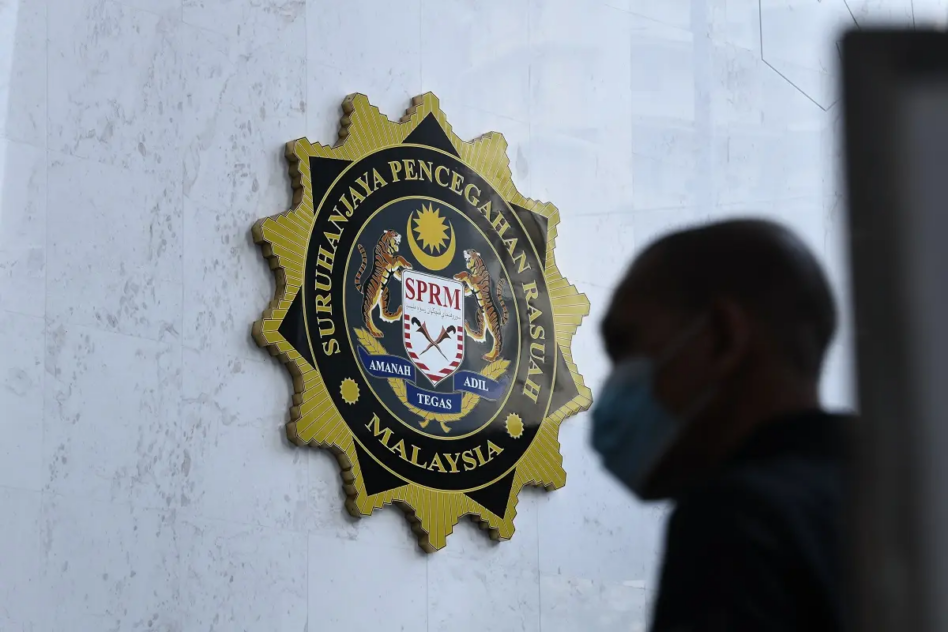
At the same time, anti-corruption institutions such as the Malaysian Anti-Corruption Commission must be seen as genuinely independent. Public confidence weakens whenever investigations are perceived as selective or politically motivated.
Anti-corruption education should also move beyond memorisation and textbook exercises.
Integrity cannot simply be taught as theory while dishonesty continues to be normalised in daily public life. Ethical values must be reinforced through culture, leadership and example.
Malaysia must also stop glorifying wealth without questioning how it was acquired. In an era shaped heavily by social media, luxury and status are often celebrated without scrutiny.
Over time, this risks creating a culture where wealth becomes admired regardless of whether it was earned ethically.
Religious institutions, schools, universities, civil society groups and the media all have a role to play in reinforcing the idea that public office is an amanah, a trust, and not a business opportunity.
The Sultan’s remarks resonate because they reflect concerns increasingly shared by ordinary Malaysians: that corruption is no longer perceived as an exception, but as a recurring feature of political culture.
Countries rarely collapse overnight. Decline often happens gradually, through weakened institutions, selective enforcement of laws, and the slow erosion of public faith in justice and accountability.
Malaysia still has time to change course.
But the country must decide whether politics is meant to serve the public, or merely enrich those who know how to manipulate the system.
The day citizens fully believe that political power exists primarily for personal enrichment is the day democracy itself begins to lose legitimacy.
KT Maran is a Focus Malaysia viewer.
The views expressed are solely of the author and do not necessarily reflect those of MMKtT.
- Focus Malaysia.

No comments:
Post a Comment
Note: Only a member of this blog may post a comment.