


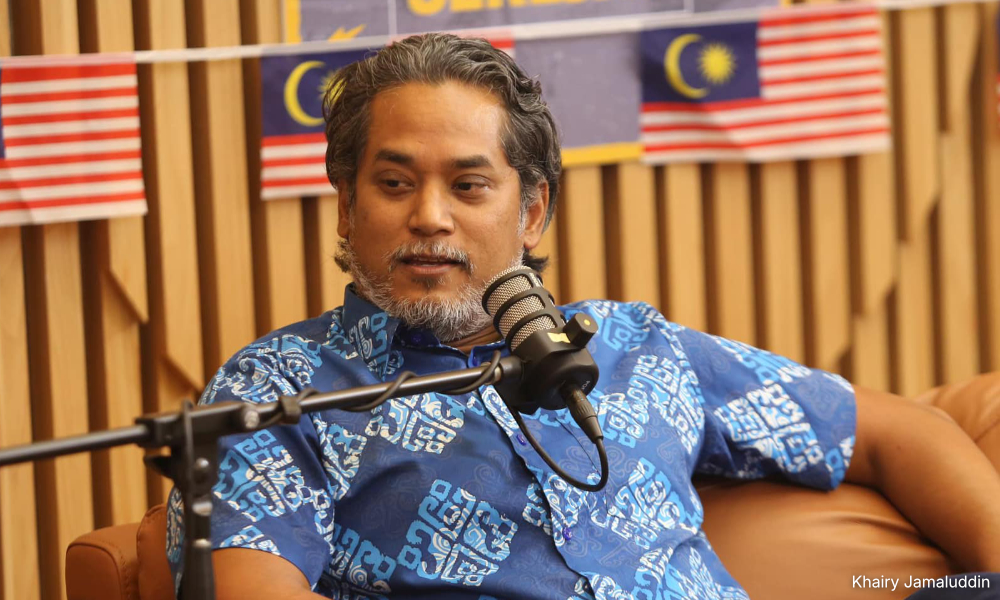
Former minister Khairy Jamaluddin, in a snippet from his podcast “Keluar Sekejap”, has raised an uncomfortable but necessary question.
At a time when public confusion over Malaysian history is becoming more visible, and when doubtful claims can capture public imagination more easily than careful scholarship, historians and academics cannot afford to remain distant from public debate.
What, after all, is the social purpose of a scholar if knowledge circulates only among academics, far from the public that sustains our institutions?
As a scholar from a public university, I agree with the broader spirit of his challenge. Malaysia does need more academics who are willing to engage the public and challenge misinformation.
In that sense, Khairy’s criticism should not be dismissed defensively. It should be seen as a timely reminder that scholars have a responsibility beyond the university.
Yet the silence of academics is not simply a matter of individual courage. It is also the predictable outcome of a system that has never truly cultivated academic freedom.
Walking on eggshells
Malaysian universities have long operated within legal, bureaucratic, and political constraints. This matters because one cannot demand public intellectuals without first creating the conditions that allow them to speak.
They are produced through debating, disagreeing, writing for the public, speaking without fear, and making mistakes without career-ending consequences. In Malaysia, many academics have been trained in the opposite direction.
Many are trained to be careful, to seek approval, to avoid “sensitive” topics, to protect institutional reputation, and to treat public communication as a risk rather than a responsibility.
That is why Khairy’s challenge should be heard, but also deepened. Yes, we need historians, sociologists, political scientists, economists, scientists and legal scholars to enter public debate.
But we must also ask why so many hesitate. The answer is not only personal fear; it is structural fear.
It is the fear of disciplinary action, public vilification, police reports, political pressure, social media mobs, and being misunderstood by an audience that often reacts before it reads.
Some incidents have reinforced this lesson. The Bruce Gilley controversy at Universiti Malaya (UM) is a useful example, not because one must agree with Gilley’s views, but because it showed how quickly universities can become defensive when speech becomes controversial.
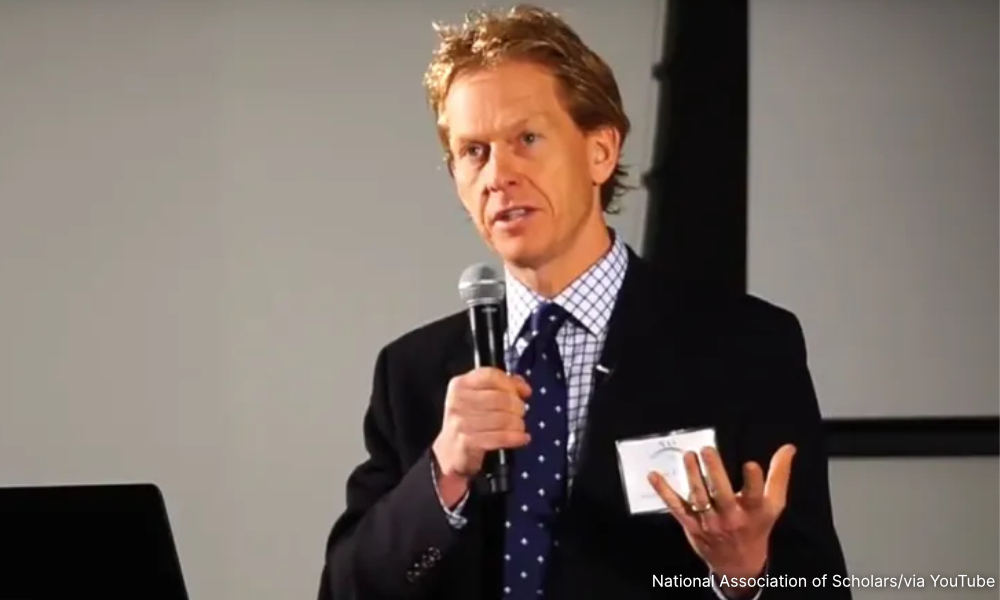
In April 2024, Gilley, an American political scientist, sparked outrage after remarks at UM in which he accused Malaysia’s political leaders of advocating a “second Holocaust” against Jewish people.
UM later apologised, the Higher Education Ministry ordered the cancellation of his remaining programmes, and the university was asked to explain how the incident had happened.
Public anger did not stop with Gilley alone; it also turned toward the institution and those associated with bringing him in.
One mistake is all it takes
Again, the point is not to defend Gilley’s statement. The point is that the episode sent a familiar message to university administrators and academics, where controversial speech does not merely invite rebuttal; it can also invite institutional pressure, public apology, cancellation, investigation, and reputational damage.
For scholars watching from within the system, especially those in public universities, the lesson is hard to miss.
One careless platform, one misunderstood statement, or one public controversy can quickly place not only the speaker but also colleagues, departments, and institutions under intense public scrutiny.
That culture does not encourage scholars to enter public life. It teaches them to avoid risk.
Those of us inside universities also know that the public record often captures only the formal outcome - the apology, the cancellation, the investigation, while the informal burden carried by colleagues, including hostile messages, online abuse, or reputational suspicion, is much harder to document.
Malaysia has repeatedly shown this reactive public culture. Consider the 2024 “Allah socks” controversy involving KK Mart.
Images of socks bearing the word “Allah” triggered social media backlash, boycott calls, criminal charges and even Molotov cocktail attacks on several outlets.
Whatever one’s view of the offence, the pattern was familiar: outrage first, inquiry later. The space for calm explanation was quickly squeezed by anger, identity politics, and performative condemnation.
This is why many academics do not see the public sphere as a classroom. They see it as a courtroom. Every word can be quoted without context. Every explanation can be reframed as an insult. Every attempt to complicate a public issue can be accused of betrayal.
A historian who explains migration may be accused of undermining identity. A political scientist who explains federalism may be accused of partisanship. A legal scholar who explains constitutional limits may be accused of challenging religion, monarchy, or race.
Under such conditions, silence becomes less a moral failure than a survival technique.
Others fill the gap
The controversy over Solehah Yaacob’s historical claims must be read within this larger context. Her claim that ancient Romans learned shipbuilding from the Malays understandably drew criticism and concern about academic standards.
Khairy is right that when weak claims dominate public attention, credible scholars must respond. But the response should not merely be ridicule. It should be public education.
Scholars must explain what counts as evidence, how historical claims are tested, and why unsupported claims should be challenged, no matter how appealing they sound.
So, I agree with Khairy’s larger call. We academics must not hide behind constraints forever.
The public sphere will not wait for ideal conditions. If serious scholars do not speak, others will. If historians do not explain the past, influencers will invent it. If economists do not explain inequality, demagogues will simplify it. If legal scholars do not explain constitutional principles, partisan actors will weaponise them.
Silence does not create neutrality; it creates a vacuum.
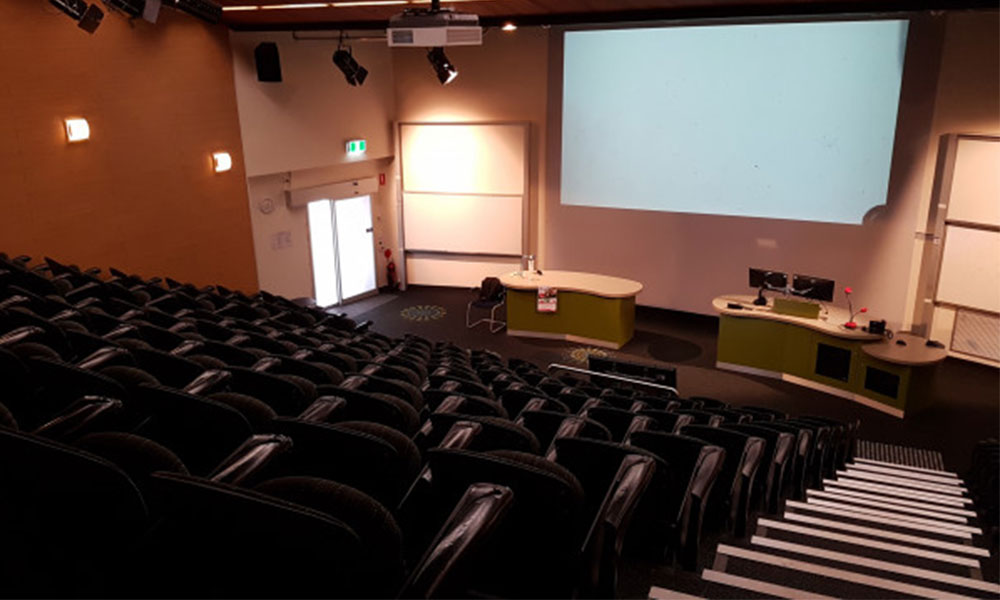
We must revive the scholar as a public intellectual, but revival also requires reform. Universities must be prepared to defend academics who speak responsibly on matters of public concern. Ministries and university boards must stop treating intellectual disagreement as disloyalty.
We also need a more mature public culture. Citizens should be able to disagree with scholars without demanding that they be sacked right away. Politicians should be able to criticise universities without turning every controversy into a loyalty test.
Universities should be able to host difficult discussions without panicking at the first sign of backlash, and scholars should be able to say, “this claim is wrong”, “this evidence is weak”, or “this issue is more complex than it appears”, without fearing that their careers will suffer.
Malaysia does not lack intellectuals; it lacks an ecosystem that allows them to become public intellectuals.
Some academics are indeed too comfortable, some are too cautious, but many have learned through experience that silence is often safer than public engagement. - Mkini
Khoo Ying Hooi is an associate professor at Universiti Malaya.
The views expressed here are those of the author/contributor and do not necessarily represent the views of MMKtT.

No comments:
Post a Comment
Note: Only a member of this blog may post a comment.