


Vesting the appointment of the public prosecutor (PP) at the Yang di-Pertuan Agong’s discretion could pose challenges to ensuring accountability and public scrutiny, a parliamentary expert said today.
The concern arises from the Constitution (Amendment) (No 2) Bill 2026, which seeks to separate the roles of the attorney-general and PP.
The bill was first tabled in Parliament in February, with a revised draft expected in June.
According to the bill, the Agong would appoint the PP at his discretion, based on recommendations from the Judicial and Legal Service Commission and after consulting the Conference of Rulers.
However, parliamentary and policy advocacy specialist Maha Balakrishnan pointed out that while the change diverts the prime minister’s involvement from the process, it does not automatically resolve concerns over transparency and oversight.
‘Agong’s discretion can be influenced’
Speaking at a forum held during the launch of Projek Sama’s Prosecutorial Accountability Watch database, Maha said that in constitutional terms, “discretion” means the Agong ultimately makes the decision based on his own judgment, even if consultations are involved.
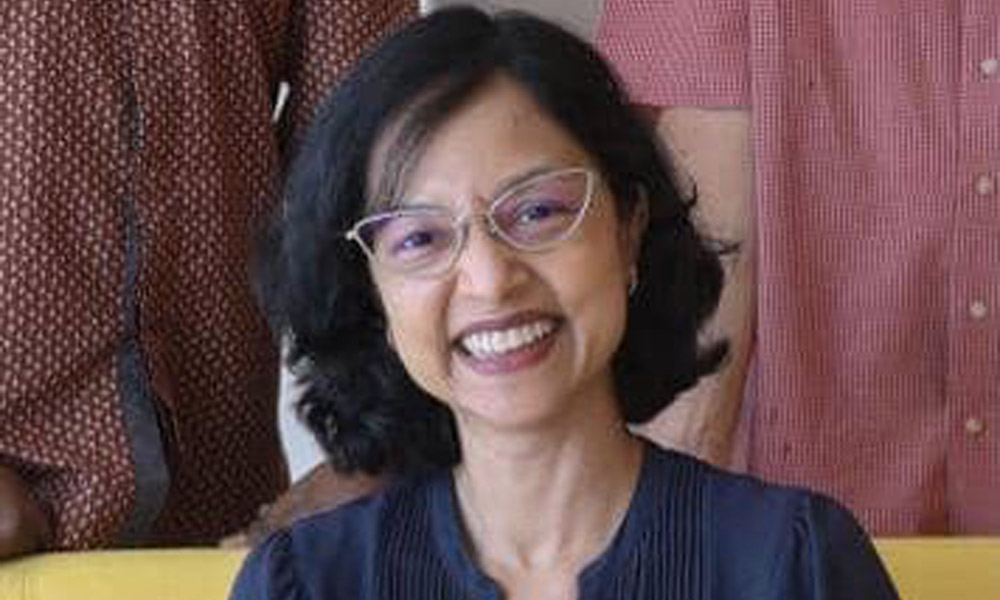
She pointed out that the main concern lies in the difficulty of scrutinising decisions made under the monarch’s discretionary powers.
“We shouldn’t, for very good reasons, be able to hold a constitutional monarch answerable to any one organisation or institution.
“It is (also) very difficult to do so. Whether it is answerable to the judiciary, to a court of law or even to Parliament, it is difficult to do so,” said the research fellow at the UN Sustainable Development Solutions Network-Asia Headquarters in Sunway University.
Maha also warned that the Agong would still rely heavily on advice and consultations from others, including individuals who may themselves be shielded from public scrutiny.
“It is the advice that he receives, the advice that he’s been given, the influential circles that are actually protected by that discretion.
“So, all the more reason we need to look into ensuring that the process is not only transparent, but it is accountable,” she added.
Parliamentary oversight
Maha suggested that Parliament should play a stronger oversight role in the PP appointment process, describing it as the country’s most transparent and publicly accessible institution.
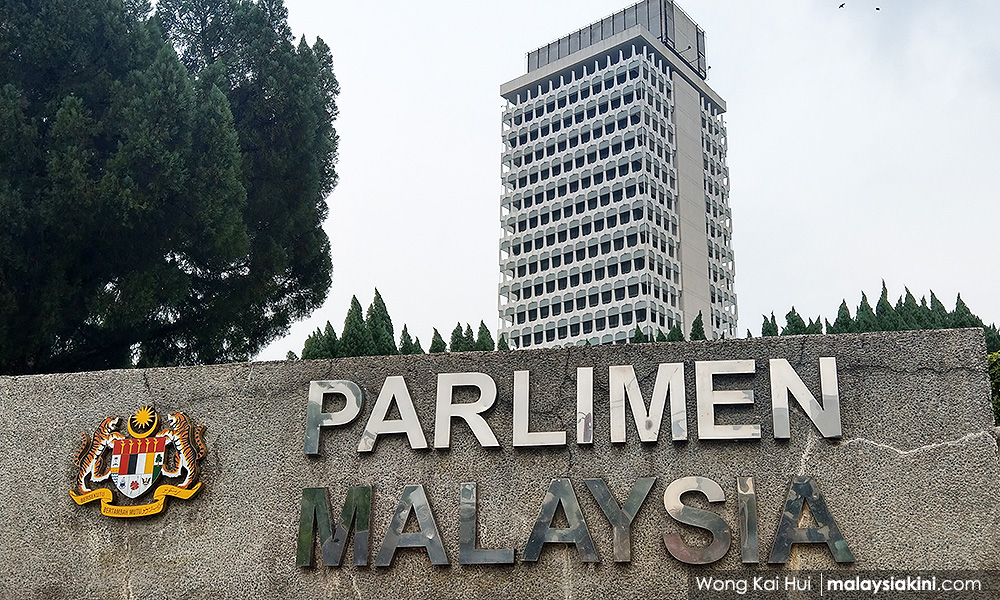
Similar calls were also made by former economy minister Rafizi Ramli, who was also speaking as a panellist at the forum.
Rafizi said parliamentary oversight would help “dilute the corridors of power” in Putrajaya and address institutional blind spots caused by familiarity and patronage within the executive branch.
While acknowledging criticism that MPs may lack technical expertise, he argued this should not exclude Parliament from its role in performing checks and balances.
“It’s our job to give that power and train the MPs so that the people understand that… they have a very important check and balance role to cover the blind spots in Putrajaya and people in the corridors of power,” he said.
The Pandan MP also reiterated that he would not support the bill if parliamentary oversight is not included in the next draft tabled in Parliament.
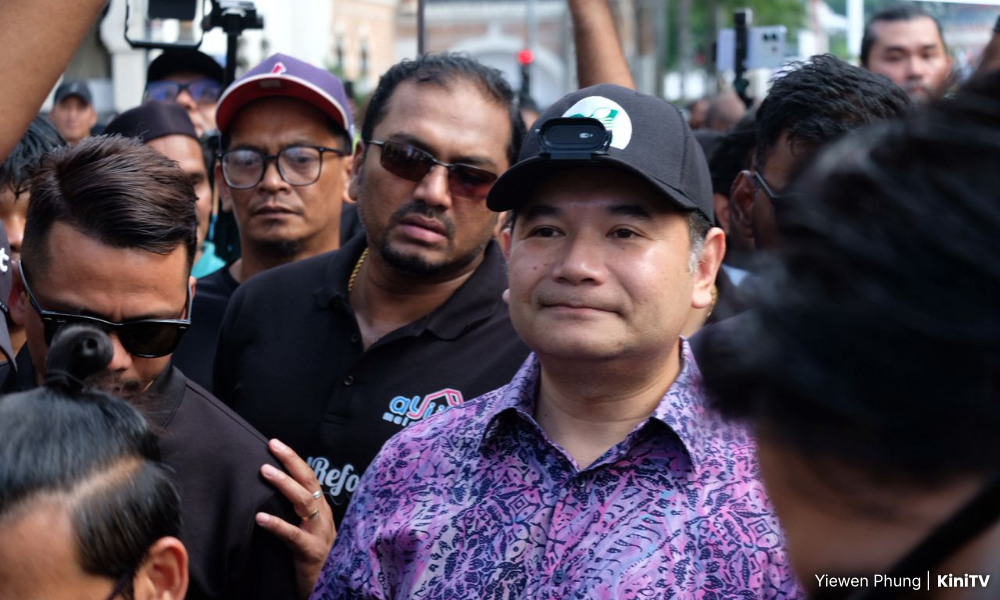
“I make my position very clear. Unless the new draft (of the AG-PP separation bill) brought to Parliament in the next session includes parliamentary oversight and participation, I’m not going to vote.
“They can kiss two-thirds (majority) goodbye. It’s not going to move without us. We may not be ministers, there might be a few of us, but our vote is extremely important,” he added.
Last February, 10 PKR backbenchers announced they would withhold support for the bill unless the government introduced provisions allowing Parliament to vet PP candidates.
The statement was signed by Rafizi, Wong Chen (Subang), Lee Chean Chung (Petaling Jaya), S Kesavan (Sungai Siput), Onn Abu Bakar (Batu Pahat), Rodziah Ismail (Ampang), Nik Nazmi Nik Ahmad (Setiawangsa), Zahir Hassan (Wangsa Maju), Hassan Abdul Karim (Pasir Gudang), and Bakhtiar Wan Chik (Balik Pulau).
The group urged Putrajaya to consider the proposed amendments, asserting that their support hinges on such changes. - Mkini

No comments:
Post a Comment
Note: Only a member of this blog may post a comment.