

Asean Summit acknowledges that strategic non-alignment is not a shield from the consequences of great-power conflict.
From Faiz Abdullah
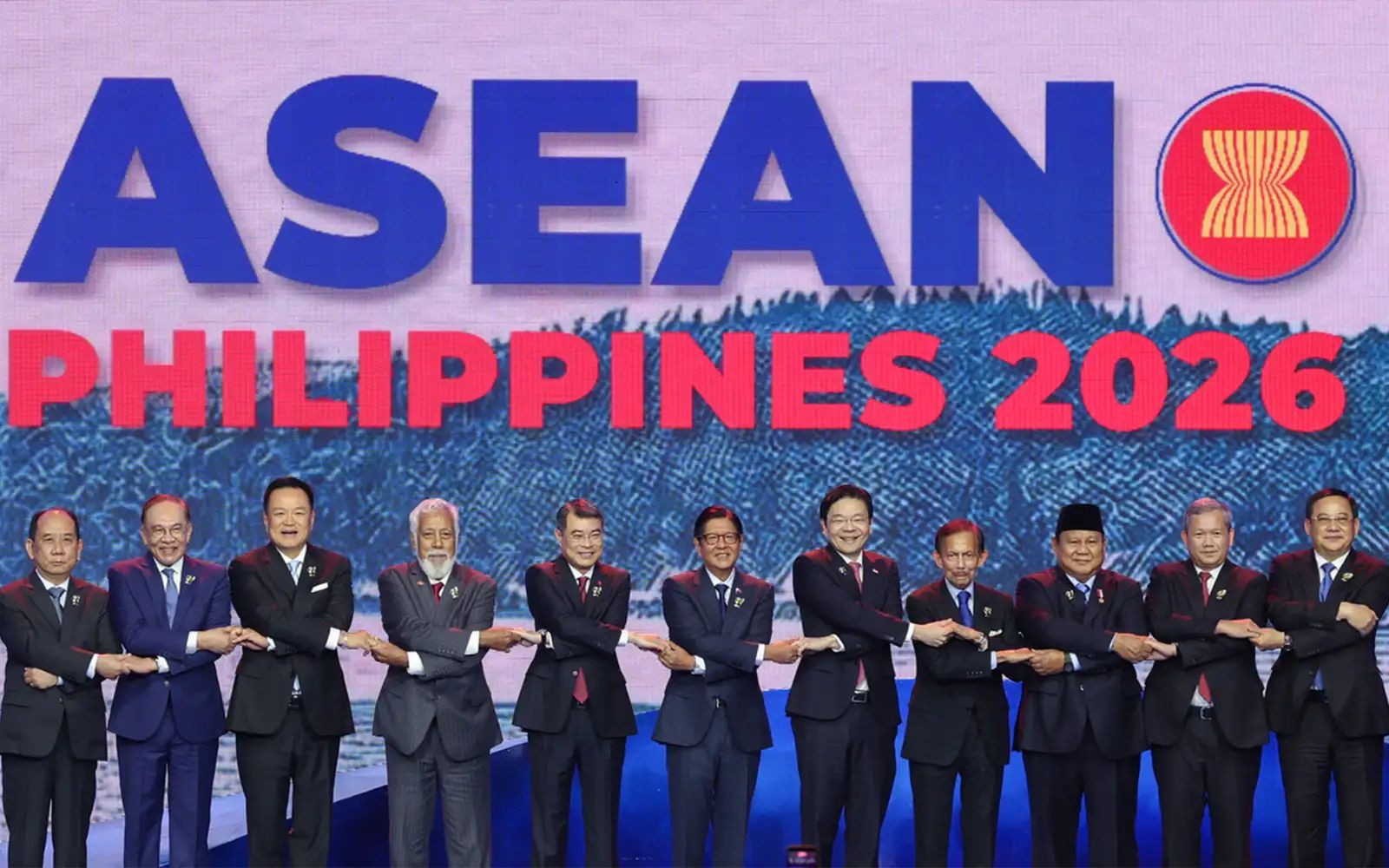
Sixty-nine days into a war that nobody in Southeast Asia provoked let alone started, Asean leaders gathered in Cebu confronting an uncomfortable reality: even regions that pride themselves on strategic non-alignment are not shielded from the consequences of great-power conflict.
The US-Israel-Iran war, now grinding through its third month with no sign of capitulation on the part of Iran, has shattered the myth of American military invincibility, tearing deep into the grand notion of its exceptionalism. But even weightier, it has exposed once again the fragility of the global economic architecture upon which much of Asia’s prosperity rests.
The Strait of Hormuz, through which roughly a fifth of the world’s traded oil passes, is now a theatre of war. Energy prices remain elevated, shipping insurance premiums have shot through the roof, and food inflation, already politically sensitive across much of the region, has worsened.
Asean governments have spent decades cultivating an image of relative insulation from the geopolitical convulsions of the wider world. That image has taken a battering, and the conversations in Cebu carried an edge of unease about what comes next.
That was the backdrop to Prime Minister Anwar Ibrahim’s participation in the 48th Asean Summit. Across both the retreat and plenary sessions, Anwar emerged as one of the clearer, albeit occasionally more strident, voices for coordinated regional action, while working to contain what Putrajaya regards as a creeping tendency towards strategic alarmism.
A case against panic
On Hormuz itself, Anwar’s argument was as candid as it was unequivocal. Conflict in a major maritime chokepoint does not remain confined to the immediate theatre.
Countries with no direct stake in the fighting are still hit with the fallout through fuel prices, inflation, insurance costs and supply disruption.
His appeal to fellow Asean leaders was for member states to use whatever diplomatic channels and relationships they possess to support de-escalation and the reopening of the Strait.
At the same time, Anwar sought to dampen a more excitable line of argument that has lately gained currency in parts of the region: that the turmoil around Hormuz might presage similar instability in the Strait of Melaka.
Putrajaya regards such comparisons as overdrawn, and says so plainly in private. No doubt similar as natural bottlenecks, Hormuz and Melaka, however, occupy divergent strategic realities.
The latter rests upon established cooperative arrangements among the littoral states and a broadly shared interest in preserving the transit-passage regime through one of the world’s busiest maritime corridors.
What worries Malaysian policy circles is that repeated speculation about disruption in the Melaka Strait risks acquiring a self-fulfilling logic of its own. Markets and insurers are not always discerning consumers of geopolitical nuance.
More consequentially, a sustained climate of anxiety could invite the major powers to seek expanded presence in the Melaka Strait under the banner of protecting their interests, which would introduce precisely the instability that the consternation had only imagined.
This brings to mind Franklin Delano Roosevelt’s legendary quip: “The only thing we have to fear is fear itself.”
Anwar’s intervention in the retreat was, in that sense, carefully pitched: to acknowledge the seriousness of the wider crisis without contributing unnecessarily to a broader climate of strategic alarm.
The reasoning is clear enough: While inflation and other disruptions can still be managed, paralysis of public morale engenders a self-fulfilling prophecy.
On the economic front, he argued against the inward turn governments often embrace during periods of stress. Export controls, reserve hoarding and supply restrictions may offer temporary domestic relief, but they also fracture the regional production chains upon which Asean economies depend.
Protectionist reflexes, Anwar warned, tend to aggravate the vulnerabilities they claim to address. He called instead for deeper intra-Asean trade and coordination.
Energy, food and political pressure
In the plenary session, Anwar moved from diagnosis to specific proposals. Malaysia expressed support for accelerating the Asean Framework Agreement on Petroleum Security, which allows member states to draw upon shared reserves during emergencies.
Anwar also urged Asean governments to diversify fossil-fuel supply sources and deepen engagement with Gulf producers. Particular emphasis was placed upon energy connectivity.
He welcomed the Asian Development Bank’s Regional Connectivity Fund for Energy as a possible catalyst for the long-discussed Asean Power Grid project, whose ambitions have for years outrun both financing and implementation.
The practical shape of such coordination is beginning to emerge. On the sidelines of the summit, Malaysia floated the idea of a regional oil stockpiling framework, potentially starting with three or four like-minded member states and drawing in the private sector to execute it.
The proposal has yet to be formalised, but it reflects a broader recognition that energy security arrangements built for calmer times are not adequate for
the present moment.
Food security featured prominently as well. Anwar called for Asean countries to examine regional standby arrangements for food emergencies and to strengthen the Asean Plus Three Emergency Rice Reserve. He also raised fertiliser security, a less discussed but no less far-reaching concern.
Fertiliser prices track energy prices closely, and they have been moving in the wrong direction. When fuel costs climb, food production costs follow.
Across much of Southeast Asia, lower-income households are the first to feel it and the last to recover. For the powers that be, unless effectively addressed, it makes for dismal politics as well.
Myanmar and the South China Sea
Not all of the summit’s discussions centred upon Hormuz and energy security.
On Myanmar, Anwar acknowledged recent calls by the military authorities for peace talks while noting the obvious contradiction between such overtures and the continued airstrikes in opposition-held areas.
Having been the prime mover of peace efforts while Malaysia was the Asean chair last year, this was no grandstanding posture but an earnest call by Anwar to move the needle in the current impasse.
That said, there was no consensus among Asean member states on recognising the recent elections, and rightly so, for any such recognition would tear apart the Five-Point Consensus reached on April 24, 2021.
Detractors continue to pan it for lacking substantive progress in implementation but unless a better formulation is forthcoming, Asean peace efforts must continue to be guided by it.
The point was delivered with unusual candour. Negotiations cannot easily be sustained while airstrikes continue, and Anwar did not pretend otherwise.
He reiterated that Asean’s good offices remain available if all parties are prepared to engage seriously.
On the South China Sea, he pressed for continued movement on the long-running Code of Conduct negotiations with China, warning against allowing the process to drift indefinitely, while doubling down on his exhortation against external powers “muscling in” on the process.
No fishing in troubled waters here and literally so as well, as Anwar raised concerns over illegal, unreported and unregulated fishing in overlapping exclusive economic zones, describing it as an increasingly combustible issue if left unmanaged.
The concern is not abstract: fishing fleets from certain Asean member states have repeatedly entered Malaysian waters, an inconvenient reality that tends to go unacknowledged when the same countries gather around a summit table, where treading on egg shells is par for the course in the art of diplomacy.
Nevertheless, they need to be cracked sooner rather than later, as several Southeast Asian capitals share that concern. Fisheries disputes are routinely overshadowed by naval stand-offs and coastguard confrontations, but they carry their own capacity for escalation.
Quiet diplomacy on the margins
Away from the formal sessions, Anwar held bilateral meetings with several regional leaders. The meeting with Singapore’s Prime Minister Lawrence Wong produced agreement, albeit tangentially, on a non-binding memorandum of understanding aimed at coordinating responses to some of the economic consequences of the war.
The document, if it comes to fruition, will carry no legal obligations. That is not really the point. For two economies as intertwined as Malaysia and Singapore, even modest coordination sends a useful signal.
All told, while no dramatic breakthrough emerged from Cebu, Asean summits are not generally remembered for moments of strategic audacity. Their preferred instruments remain communiqués, working groups and the indefinite management of difficult questions.
Yet the mood in Cebu suggested a growing recognition that energy insecurity, inflation and supply disruption are becoming progressively harder for individual states to manage alone. Whether that recognition survives contact with domestic politics is another matter.
Asean has produced no shortage of frameworks, declarations and aspirational roadmaps over the years. Implementation has invariably proved the harder business.
Still, crises occasionally generate forms of political urgency that routine diplomacy cannot. Putrajaya, at least, appears determined to ensure the present one does not go entirely to waste. - FMT
Faiz Abdullah is executive chairman of the Institute of Strategic and International Studies, Malaysia.
The views expressed are those of the writer and do not necessarily reflect those of MMKtT.

No comments:
Post a Comment
Note: Only a member of this blog may post a comment.