


Yesterday, we celebrated the eighth anniversary of the May 9, 2018 transition from an electoral one-party to a revived multiparty democracy.
The transition is not, and must not be seen as, the downfall of Umno-BN. The transition is the call for all parties to reinvent themselves to be competent in mature multiparty competition.
It is for the old ruling parties to learn how to compete without power abuse and excessive incumbency advantages, and the old opposition parties to learn how to govern measuredly and balance the interests of all communities and sectors.
In the past eight years, we have had five prime ministers. Instead of only two national blocs, we now have three national coalitions, two regional coalitions and numerous smaller parties in Parliament.
All major parties have been friends and foes. Going back to 2008, all major parties have had each other as partners in government and also rivals in elections. This takes away any moral high ground by any party about other parties having unholy or unworthy partners.
The 16th general election is expected to see different combinations of multi-cornered fights in constituencies, possibly involving some new parties.
Election outcomes would decide which parties will emerge as federal and state government partners from multiple multilateral negotiations.
Parties should avoid making absolute pledges against power-sharing with certain other parties, as reneging on such words post-election inevitably invites the wrath of the electorate.
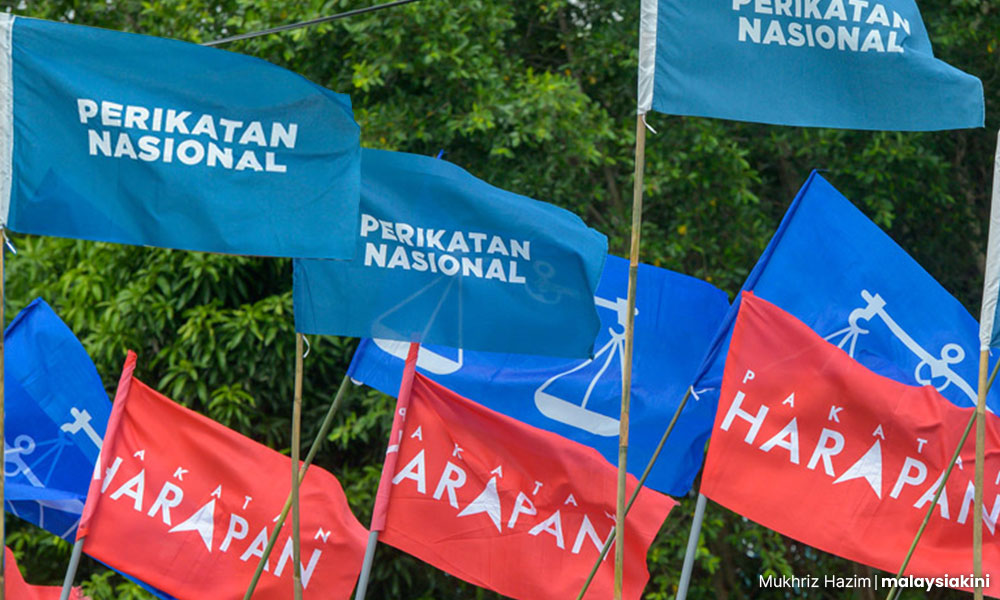
Moving away from the black-and-white politics of a two-coalition system is cognitively stressful for many voters, but it brings two major benefits.
First, it provides voters with more choices, and to serve the more fragmented landscape, calls for necessary systemic adjustments such as the introduction of Closed List Proportional Representations (CLPR) seats in addition to the existing First-Past-The-Post seats.
That Johor has become the fourth state with appointed assemblypersons is a sign that state-wide non-constituency-based representation is gaining acceptance, and it takes only a tweak in electoral system to turn these patronage-laden “government’s bonus seats” into legitimate CLPR seats, which may come with gender and other demographic quotas to improve representativeness of legislatures.
Second, it erodes the moral self-righteousness of political parties, which they use as grounds for demonising their rivals. This can have positive implications on our ethnic relations, as political enmity often carries ethnic undertones.
Grandstanding by political parties and politicians is now increasingly greeted with scepticism and distrust.
Culture wars fail to divide. Overall, we must cherish the fact that the eight years of democratisation in Malaysia have been free from bloodshed.
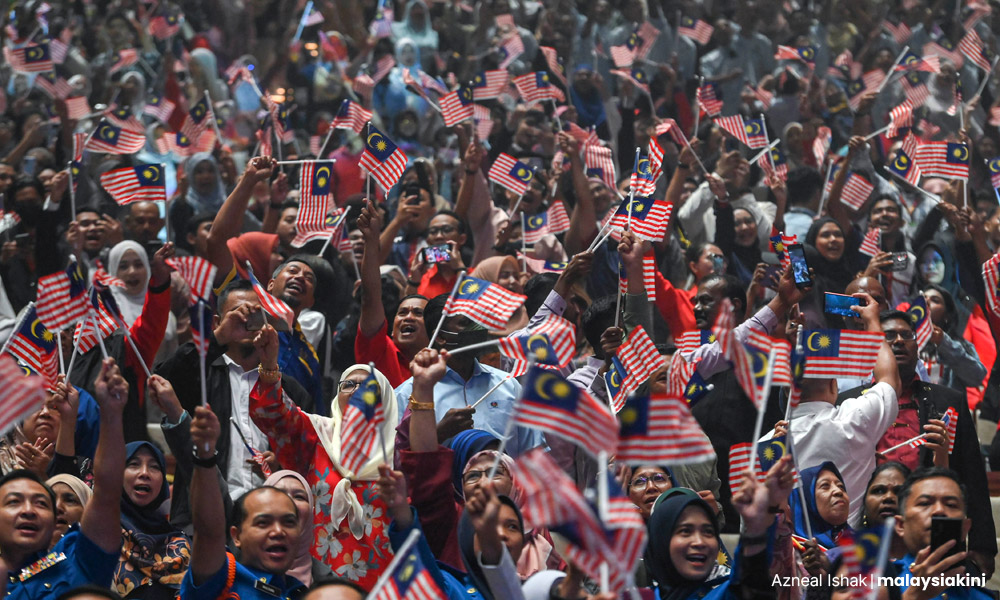
Despite relentless attempts by certain politicians, agitative groups and key opinion influencers to spark and stir up battles in the culture war, ordinary Malaysians live peacefully and recognise that we are made differently to know each other.
The heartwarming story about a compassionate Malay mechanic, “Abang Minyak Hitam Jalanan” (Abang Usop) and a Chinese single father, Dicky Yau, whose motorcycle broke down at midnight, went viral.
It touched millions of Malaysians and reminded us that we are brothers and sisters sharing the land and a common destiny despite all the staged conflicts.
It reminds us that random acts of kindness may have greater power than we ever recognised. What more if compassion can be systematically organised.
Keep monarchs above politics
As democratisation deepens, all political parties, politicians, social groups and the public must keep monarchs above politics.
Political division is the fundamental condition for multiparty competition, but this exactly underlines the need for a source of political unity – our constitutional monarchs.
True royalists understand the division of labour between the constitutional monarch and elected politicians, well articulated by the English constitutional thinker, Walter Bagehot.
Bagehot divides the government into two elements, the efficient and the dignified. The cabinet is the “efficient” element that runs the country and cannot avoid making difficult and controversial decisions. If voters don’t accept their decisions, they can be voted out.
The constitutional monarch is the “dignified” element that stays out of all and sundry policy issues and only privately advises the government.
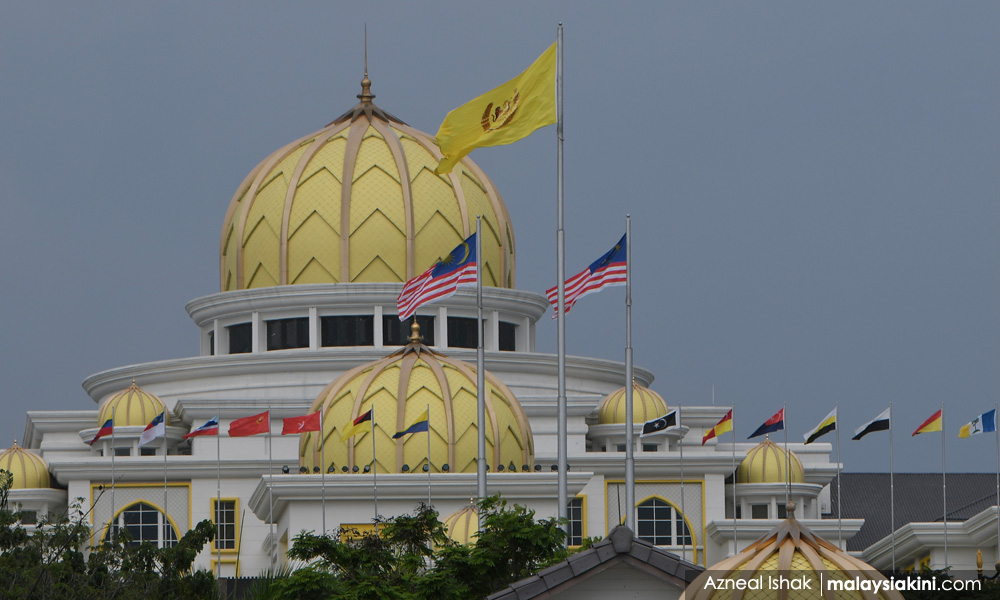
This division is illustrated in royal speeches in Parliament. Written by the elected government and not the monarch. If a royal speech is rejected by Parliament, it would be an indicator of no-confidence against the government, not against the crown.
In 1924, when the Labour and Liberal parliamentarians passed an amendment to the address in reply, the Conservative party minority government resigned.
By staying above any political controversies, constitutional monarchs can unite the nation even when politics become toxic. This provides invaluable political stability.
The best way to protect the sanctity of our constitutional monarchies is not to silence trolls and slanderers online, but by all political actors protecting the monarchical institutions by not dragging them into political controversies.
While the rulers love the people deeply, elected politicians must always offer policy solutions so that if the solutions fail, the blame will be placed solely on elected politicians, whom voters can replace in the next election.
In this light, we are deeply worried that the Constitution (Amendment) (No 2) Bill 2026, on the role separation of attorney-general and public prosecutor, may unwittingly undermine our constitutional monarchy by stipulating in Article 145a(1) that:
“The Yang di-Pertuan Agong, shall in his discretion, on the recommendation of the Judicial and Legislative Service Commission and after consultation with the Conference of Rulers, appoint a person qualified… to be the public prosecutor of the Federation”.
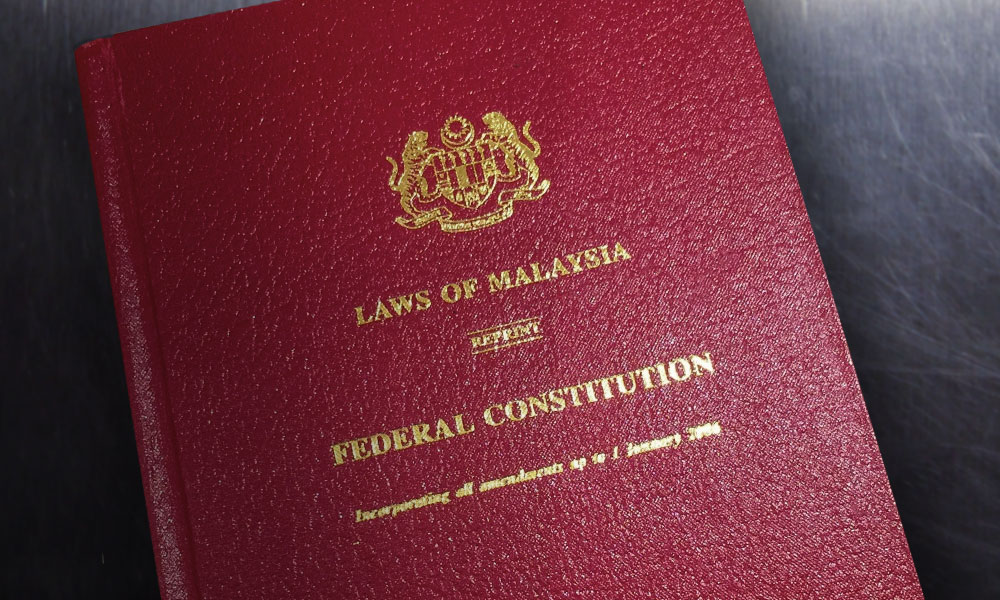
This is an unprecedented departure from the Constitution’s basic structure, which gives the king personal discretion primarily in choosing the prime minister, assenting to the PM’s request for early dissolution of Parliament and requisitioning a Conference of Rulers meeting related to royal privileges [Article 40(2)].
Until now, PMs, as the ones who effectively appoint the AG, have been taking all the backlash surrounding prosecutorial decisions and conduct.
While we want the public prosecutor to be free from the executive’s control, this political burden must not be transferred to the Agong.
The task of scrutinising the candidate(s) for the commission overseeing the prosecution should be left to Parliament or a parliamentary committee, which the people can hold accountable and vote out if necessary.
In our eagerness to pursue the AG-public prosecutor separation and other reforms, we must not weaken the constitutional monarchy and parliamentary democracy.
Make Parliament, state legislatures trustworthy
Some Malaysians cast doubt on Parliament’s integrity and competence. Such scepticism and distrust are perfectly understandable.
While elected politicians may be flawed, Parliament and all state legislatures have a greater strength than all unelected institutions: they can be sacked by the voters when elections come.
This means elected politicians may let us down, but we can hold them accountable.
Dismissing parliamentary democracy and advocating for the transfer of authority to any unelected institution is outright dangerous.
Can we trust any unelected institutions, based on claims of pedigree, devoutness, patriotism, professionalism or morality, to be able to make the best decisions for us, and not for themselves, their families or institutions, or their financial backers who may even be some foreign powers?
We must reject the anti-parliamentary democracy narrative because ultimately it is anti-people. Authoritarianism hurts not just democracy, but also sovereignty in this era of heightened geopolitical contestation.
Our task as we enter the ninth year of democratisation is neither to blindly trust Parliament and state legislatures nor to sweepingly dismiss them, but to make the legislative branch of our democracy trustworthy.
This requires investment of public interest and resources in Parliament and state legislature.
The "Dilarang Ponteng Parlimen" (Forbidden to Skip Parliament) campaign, initiated by activist Roshinee Mookaiah in April is a heartening sign that democracy is vibrant because ordinary citizens care.
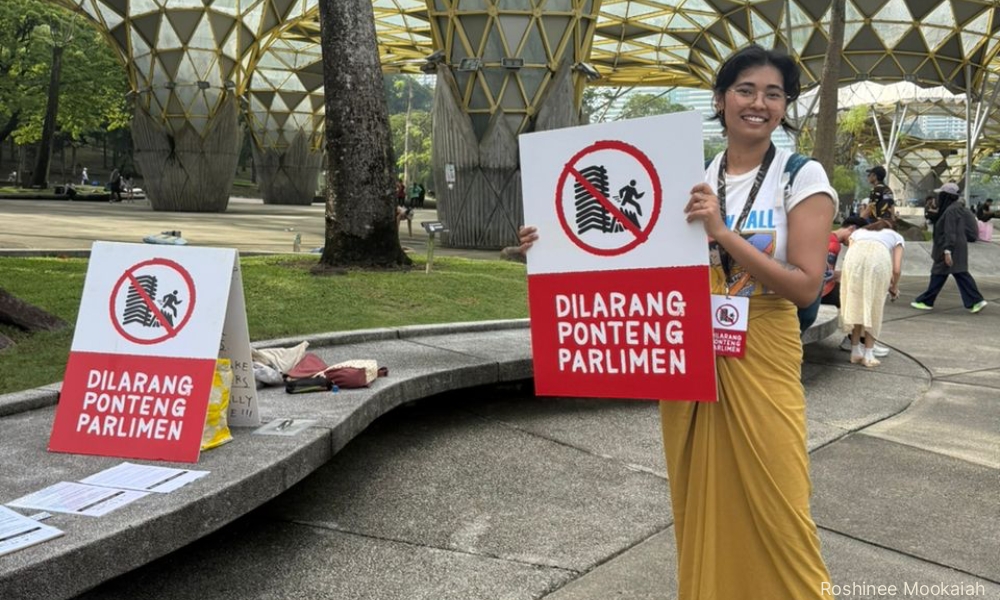
At both Parliament and all the state legislatures, we must have longer sitting days, more committees to scrutinise policies and laws, recognition of and support for a shadow cabinet, and equitable constituency development funds for all lawmakers regardless of party affiliation.
Regardless of which parties are in power, we must continue to demand parliamentary reforms at both the federal and state levels. - Mkini
PROJEK SAMA is an initiative to advocate for institutional reforms for the sake of political stability and accountability at a time when our nation steers through the uncharted waters of a hung Parliament and coalition government.
The views expressed here are those of the author/contributor and do not necessarily represent the views of MMKtT.

No comments:
Post a Comment
Note: Only a member of this blog may post a comment.