


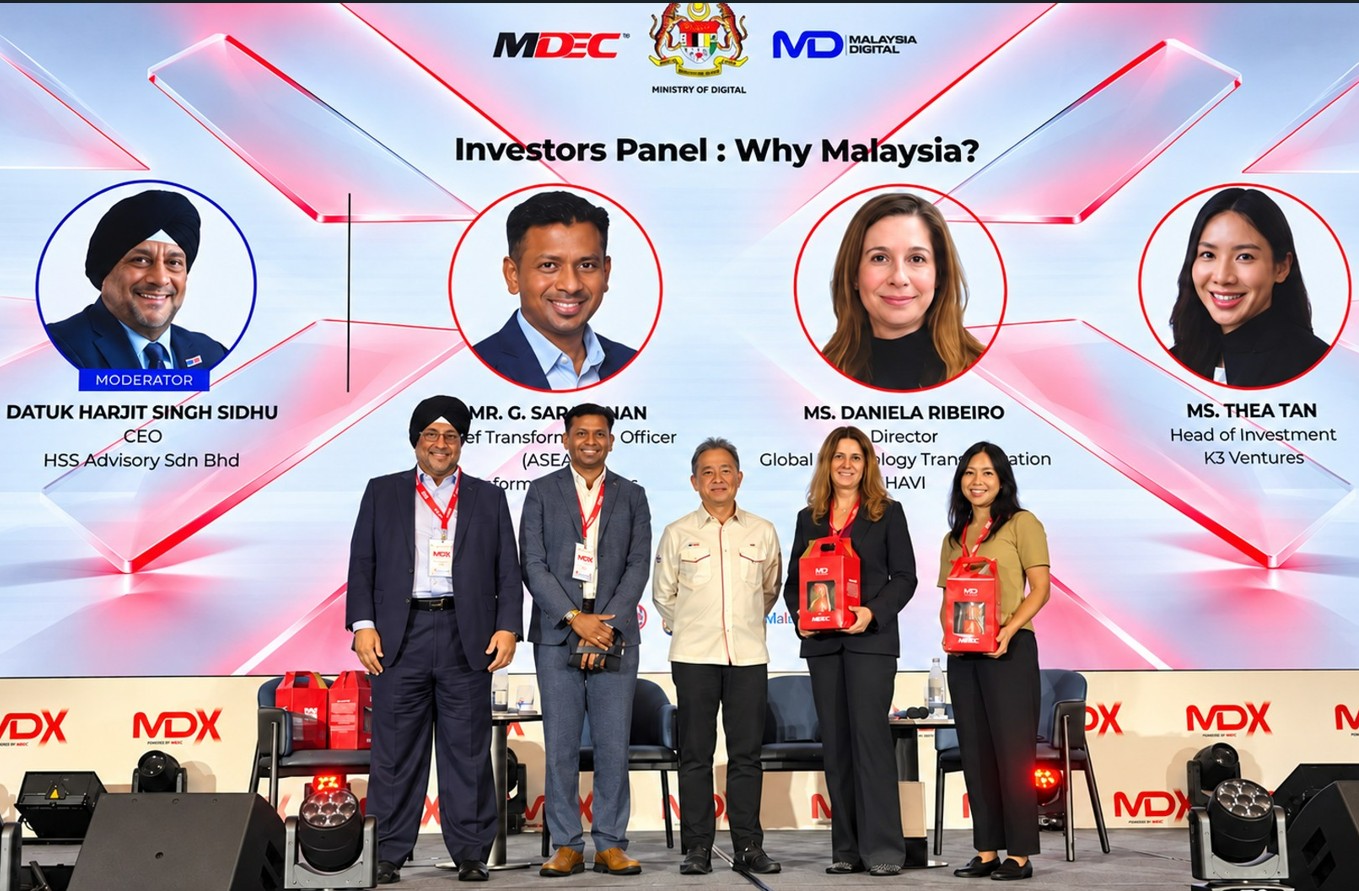
MALAYSIA has succeeded in attracting major digital and artificial intelligence (AI) infrastructure investments but the next test is whether the country can convert that momentum into high-value jobs, stronger local companies and Malaysian-developed technology capabilities.
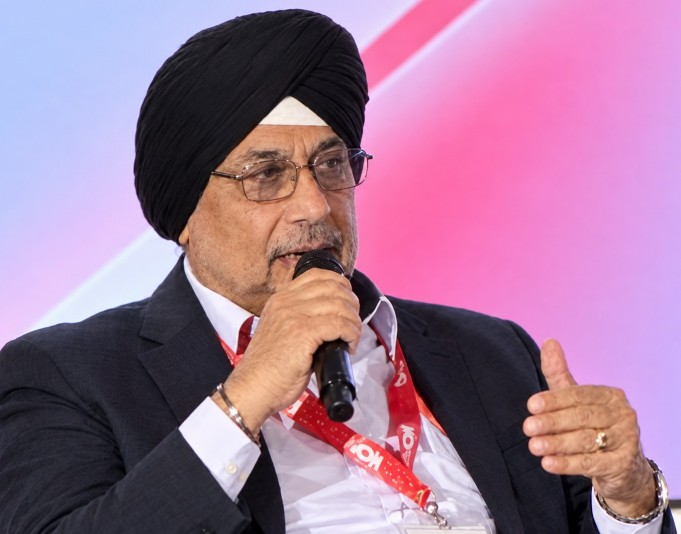
But while digital infrastructure provides Malaysia with a strong foundation, the real economic multiplier comes when Malaysian businesses and talent are able to build on top of that infrastructure, according to HSS Advisory Sdn Bhd CEO Datuk Harjit Singh.
“That’s where investment starts translating into sustainable value for the country,” envisages Harjit who is also a Malaysia Digital Economy Corp (MDEC) board member.
He was speaking on the sidelines of the MDX Forum 2026 after moderating a panel discussion with Informed Solutions chief transformation officer (ASEAN) G. Saravanan, HAVI global technology transformation director Daniela Ribeiro and K3 Ventures investment head Thea Tan.
Also present at the panel was MDEC senior vice-president Datuk Fadzli Abdul Wahit.
“Beyond attracting AI investment, Malaysia now needs to turn that investment into capability – our talent, our companies, our intellectual property and ultimately technology and services that Malaysia can take to the world.”
For HAVI, that decision is already translating into jobs. Ribeiro said the global supply chain company which has begun hiring for its Malaysian technology hub in March already has around 70 employees with plans to grow the team to close to 170 by the middle of 2027.
Malaysia emerged from a study covering Southeast Asian locations and more than 100 indicators, she further revealed.
While Malaysia was not the cheapest location assessed, its competitive cost structure combined with talent availability, government stability, ease of doing business and institutional support helped tip the decision in its favour.
In Tan’s view, Malaysia now has an opportunity to move beyond being a destination for data centres and capture more value across the AI ecosystem, including semiconductors, cloud services, GPU (graphics processing unit) optimisation and software.
Having built the infrastructure, she contended that the question is “how does Malaysia now take the next step” to create the ecosystem required to generate jobs and new businesses.
She also described Singapore and Malaysia as highly complementary in the development of the regional AI economy with Singapore playing a major role as a capital and financing hub while Malaysia has the resources and ecosystem to build and deploy infrastructure.

Saravanan said talent had been one of the critical considerations in Informed Solutions’ decision to establish its ASEAN base in Malaysia. He pointed to the country’s multi-lingual capabilities, technical knowledge and willingness among younger Malaysians to learn and adapt.
He added Malaysia’s multi-cultural society had produced a workforce comfortable operating in diverse environments, an attribute which went “beyond the technical knowledge” and conventional measures of the talent pool.
The panel also identified areas where Malaysia could strengthen its proposition. In this regard, Saravanan said technology and talent were already available but greater awareness and adoption of policies, standards and regulatory frameworks would help companies navigate the market more effectively.
Tan said AI infrastructure investors looking beyond established locations such as Johor would also value greater clarity at state level on land, power, water, permitting and longer-term policy direction, particularly given the size and five-to-10-year investment horizon of such projects.
To Harjit, the discussion showed that Malaysia’s investment proposition was increasingly about the quality of its ecosystem rather than incentives alone.
“The capital coming into AI and digital infrastructure gives Malaysia a tremendous opportunity,” he projected.
“What matters now is what grows around that capital – Malaysian talent, Malaysian suppliers, new technology businesses and intellectual property. That’s ultimately how we should measure the next phase of Malaysia’s digital economy.” – Focus Malaysia

No comments:
Post a Comment
Note: Only a member of this blog may post a comment.