


Dikir barat, a traditional performance art form from Kelantan, has endured through a long history, evolving under diverse influences and unique dynamics.
Despite the passage of time and rapid technological change, this stage performance has remained relevant and continues to hold an evergreen appeal.
Beyond maintaining traditional versions, the art has evolved into contemporary performances involving new music, lyrics, melodies, and presentation styles.
Across generations, dikir barat - whether traditional or modern - continues to hold a place in the hearts of the Kelantanese, while also attracting growing support from those outside the state.
However, one side of this traditional industry rarely discussed is the participation of women.
Although considered to be at odds with the state’s administrative framework and legal enforcement, the presence of female performers cannot be sidelined and has never truly disappeared.
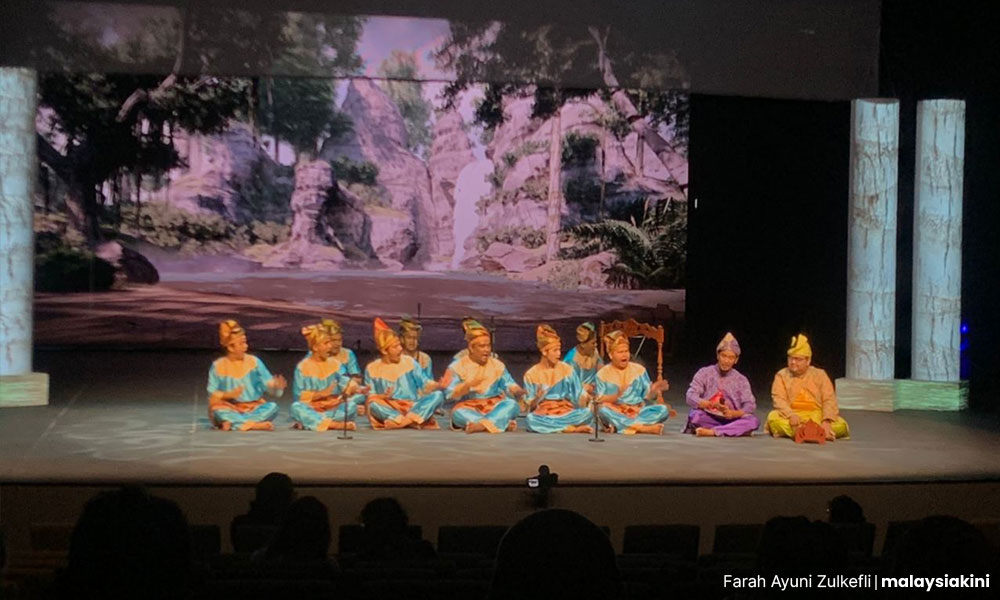
In fact, despite state government efforts to prevent women from openly becoming dikir barat singers - known as pendikir - their involvement remains high.
With the emergence of accessible broadcasting platforms, singing activities among women are flourishing, suggesting that the imposed bans are merely “symbolic”.
The role of women in dikir barat has thus undergone a unique transformation, shaped by social media platforms and streaming applications.
Start of the ban
Once, female pendikir were active in villages, sometimes appearing in “secret” performances to attract crowds to events.
These were usually held during weddings, community activities, group rehearsals, or mega performances involving ticket sales.
However, activities featuring female singers began to face threats when the state government introduced the Kelantan Entertainment and Places of Entertainment Control Enactment 1998, which was replaced by a more stringent version in 2025.

This was followed by state entertainment and sports guidelines stating that female artistes are only permitted to perform before a closed, women-only audience.
Exceptions are made for recitals of sajak, puisi, pantun, syair, or other religious or patriotic performances; girls aged 12 and below are also exempted from the rule.
From the Norma Dahlia era to Eda Ezrin
Despite legal constraints, new talent in Kelantan’s vocal arts has continued to mushroom.
However, the methods and expressions of this talent have shifted to new media, which are perceived to be outside the jurisdiction of the Kelantan Entertainment and Places of Entertainment Control Enactment 2025.
Sharing her experience as a dikir barat singer, Norma Abdullah, 57, said she started performing at 17 in the 1980s, when the art form was flourishing across the state.
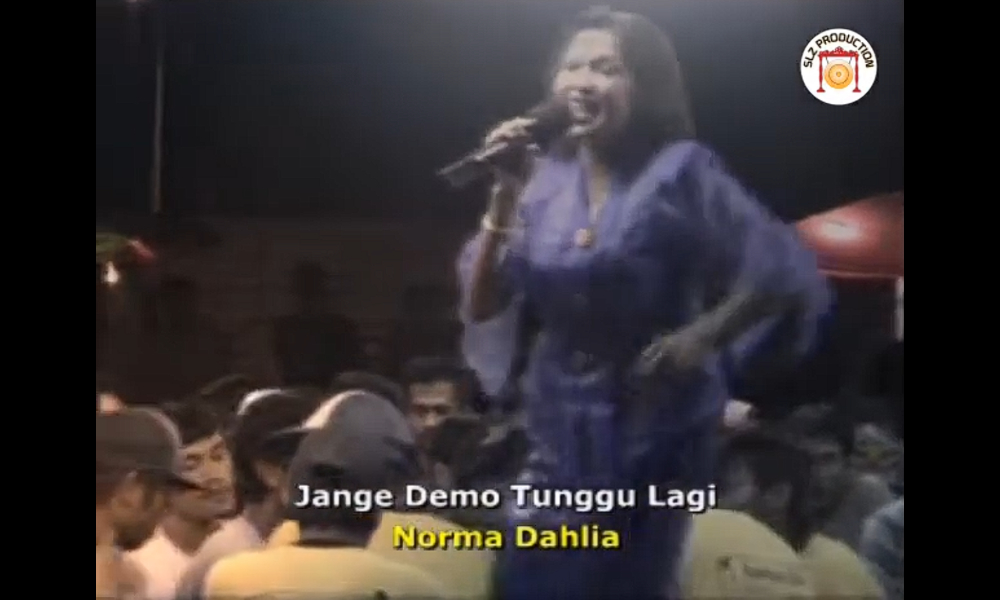
“Back then, there were no restrictions. Many female singers emerged and were warmly received by the local community. I was invited to perform across the state.
“There was a time I was invited every day except Thursday nights. Dikir barat performances involving women were quite free then, but we maintained our manners, modesty, and appearance as Malay women.
“In terms of attire, we weren’t influenced by other entertainers. We didn’t wear tight clothes and maintained polite behaviour as Malays,” the performer better known as Norma Dahlia told Malaysiakini.
Other popular dikir barat singers of her era included Noriha Bunga Raya, Ani Cantik Molek, Syarifah Aloyah, Rohaya, and Faridah Bobby, along with many others from southern Thailand.
“Many dikir barat events back then required tickets. Performances were usually held in open areas enclosed by gunny sack screens around the stage.
“All viewers needed to buy a ticket for entry, and the organisers paid us from ticket sales. It was usually RM50 per show then, plus tips from the audience during performances,” she said, adding she never faced enforcement action during her career.
Popular for the song “Bunga Dahlia”, the mother of four said her career slowed down after the change in state administration in 1990.
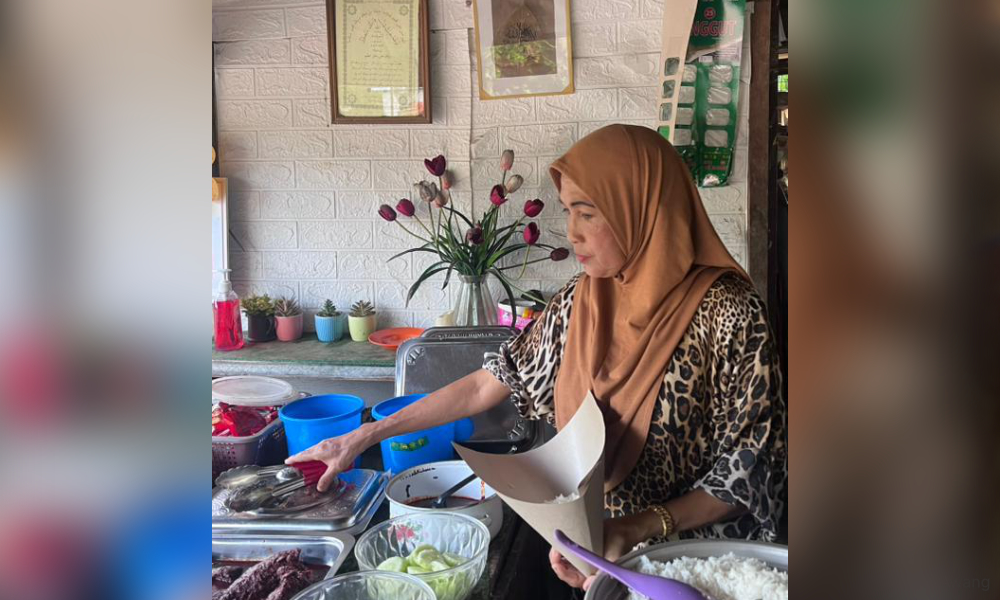
However, she said dikir barat was still given leeway to feature female singers in certain locations, depending on permit approvals.
“It wasn’t as free at that time, and invitations (to perform) slowed down, but there was still flexibility. It depended on the location and approval of the permit application by the organiser.
“But there was still demand for cassette albums before the shift to video compact disc (VCD). I recorded tens of cassettes and four VCD albums with friends,” she said, adding that the albums supported her daily life.
Norma said that female dikir singers continue to be well-received, with more talent emerging via new media platforms.
“After my generation, new talents began to emerge, and even now, there are still many. It’s just that today, female singers are more prominently featured with elements of modern singing.
“I feel we must defend and highlight the authenticity of dikir barat. Modern music should just be a supplement. We must show the new generation the original form,” said Norma, who now runs an eatery in Kampung Kayu Kelat, Jerteh.
Puteri Suara Gendang
A female dikir barat performer known as Dikming, 32, said the response to the heritage art form has been very good so far, whether it involves individual performers or a group.
She formed the Puteri Suara Gendang team in August last year to continue her involvement in the craft.
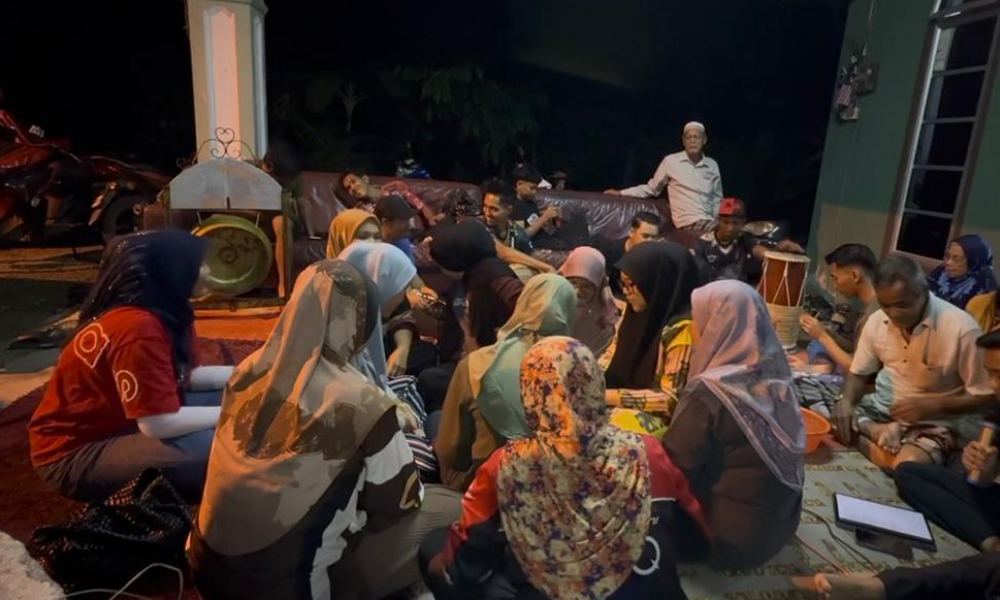
The group consists of close family members, with female relatives as the chorus (awak-awak), male relatives as musicians, and Dikming as the tok juara (master trainer).
“I’ve been involved in dikir barat since I was 12. It’s in my blood, as my father and grandfather were also involved in dikir barat,” she told Malaysiakini.
Dikming said the involvement of women in the craft is unique as it is typically monopolised by men.
However, she believes positive aspects should be highlighted as long as they are not excessive, while acknowledging that laws must be respected.
“My group focuses on displaying the authenticity of dikir barat. We maintain our modesty as women and watch our manners and behaviours, including how we dress and socialise.
“Rehearsals are held in the yard of the house, except if there are invitations for friendly performances from other groups. So far, there haven’t been many invitations as we are new, but we have performed at closed events,” she said.
During rehearsals, Dikming broadcasts livestreams on TikTok, where she receives encouraging view counts.

“My hope is, God willing, that I will preserve this heritage of dikir barat. Even if the law forbids open performances, we will work in closed settings so the talent of the younger generation can be spotlighted, not lost to time, and most importantly, not to highlight nonsense,” she said.
Apart from leading the group, she said she dabbles in writing lyrics for dikir barat songs.
“The latest one, titled ‘Nasib Diri’, was popularised by Eda Ezrin,” she said.
Eda is another active female singer, focusing on social media videos and stage performances.
The performer, whose real name is Wan Norsahidah Azlin Wan Ismail, bounced back quickly after being detained by authorities in Thailand two years ago.
The mother of two, released from a prison in Narathiwat last August, entered the mainstream music industry after her duet “Cinta Setandang Pisang” won Best Ethnic Song at the 24th Music Industry Awards last September.
This achievement shows how female pendikir talent can compete with mainstream artists nationwide.
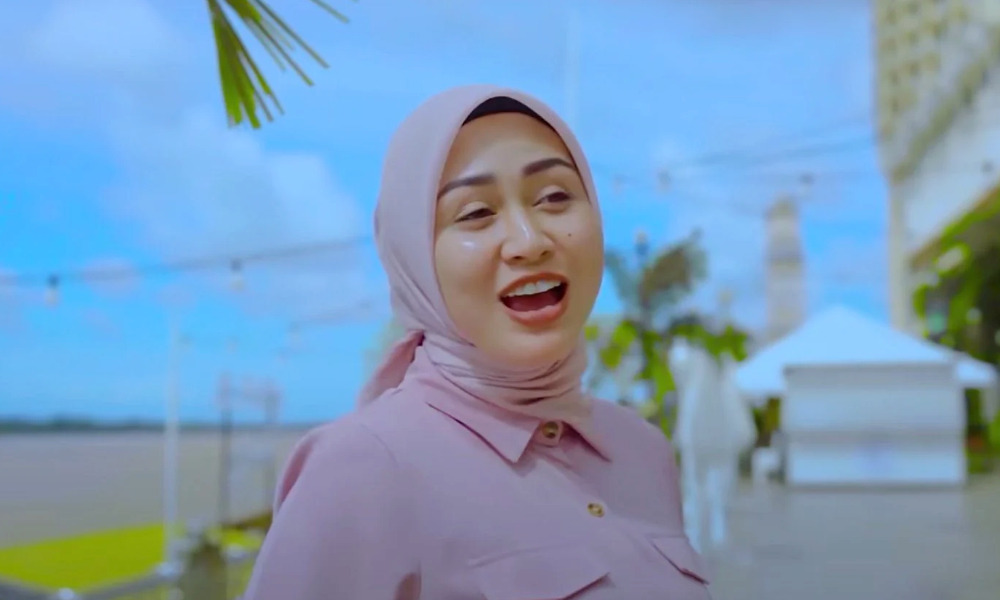
When contacted by Malaysiakini, Eda said she was too busy with her business during Ramadan to be interviewed.
‘Illegal’ performances and new media
Dikir barat activist and practitioner Sulhie Yusuf said women’s involvement is strictly controlled by state enactments.
However, Sulhie said some “illegal” performances still occur at private premises or village weddings when organisers do not receive permits.
“But people often just go ahead, especially in rural areas where women sing, but not openly.
“From the very beginning, female singers have performed as an interlude singing event that serves as a gap between the turns of the dikir barat teams performing or competing.
“It is still a practice, but legal constraints do not help them and limit the development of female pendikir in a 'halal' (permissible) way - if in a ‘haram’ (illegal) way, then there are many,” said the activist known as Yie Arjunasukma.

He added that online platforms like YouTube and TikTok have opened doors for female performers to showcase their talent and earn an income.
“Those who are smarter in taking advantage of the new online spaces can generate an income. For me, it is a good platform (because) these media aren’t bound by laws preventing female singers from performing.
“We see new talent standing out and becoming famous. Then they grow and eventually get sponsors to promote products in the entrepreneurial sector,” he said.
Another Kelantanese dikir barat artist, Sulizi Che Awang, believes the state enactment cannot fully control women’s involvement but can prevent elements that contradict Islam.
He agreed that the involvement of women in open performances often brings more harm than good, especially when it involves physical movements or dancing.
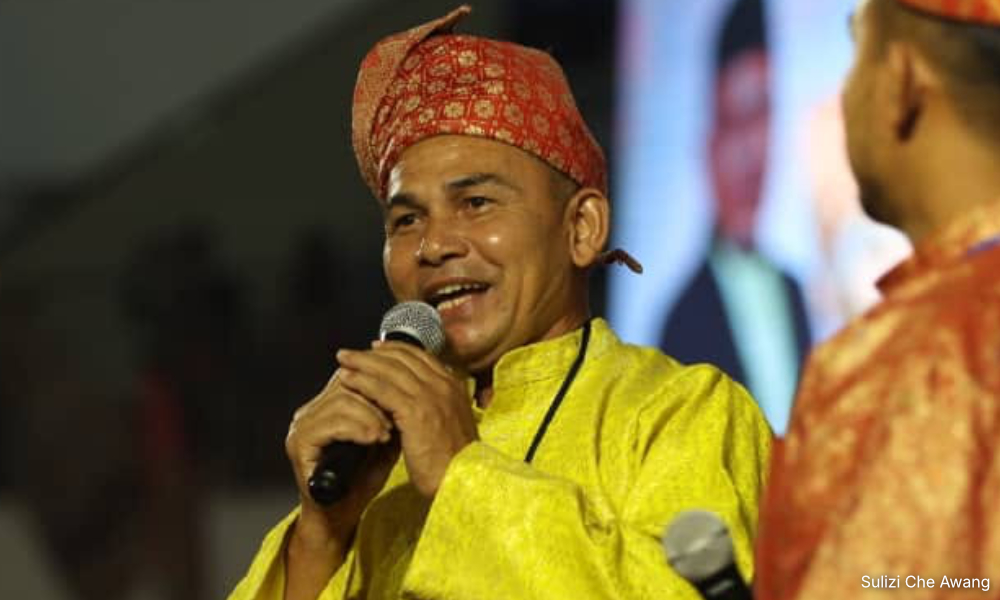
“If you want to say that the law restricts women from being involved in dikir barat, it is true, but not in general. From a religious standpoint, provocative or excessive physical movement is not allowed, as it can lead to bad morals.
“There are indeed restrictions, but not 100 percent to the point of completely blocking the development of dikir barat by women.
“There is still flexibility - for example, there are women’s dikir barat competitions, but the performances only involve female audiences,” said the performer known as Cikgu Sulizi.
Some state governments may restrict open performances, but closed competitions are usually allowed, while performances during certain celebrations might be given flexibility, he added.
“However, if the situation is not under control, then there will be disciplinary action,” he said, noting that women are rarely seen performing dikir barat at night.
Sharing his experience as an album producer, Sulizi said the year 2000 sparked the popularity of female pendikir when their performances were recorded on VCD.

That was when Rosalinda and Adik Waniey emerged, he said, adding that the Jaguh album series involving female singers had recorded encouraging sales.
“At that time, fans could not watch them (female dikir barat performers) sing on an open stage. But fans could watch on television, and they began to be known not only in Kelantan but throughout the country.
“Now, with the advancement of technology and new media, people can listen to dikir barat songs at their fingertips via smartphones. Every singer has their own channel.
“With the advent of this technological sophistication, dikir barat fans can listen to and watch songs by female singers like Eda.
“In fact, the trend of developing female dikir barat (talent) is growing day by day and gaining a place in the hearts of fans. This matter cannot be blocked anymore, including by state government enactments,” said the singer of “Cinta Seorang Saing”. - Mkini

No comments:
Post a Comment
Note: Only a member of this blog may post a comment.