


A strategic analysis of the Islamabad talks and the subtext behind US vice-president JD Vance’s statement.
From Abdolreza Alami
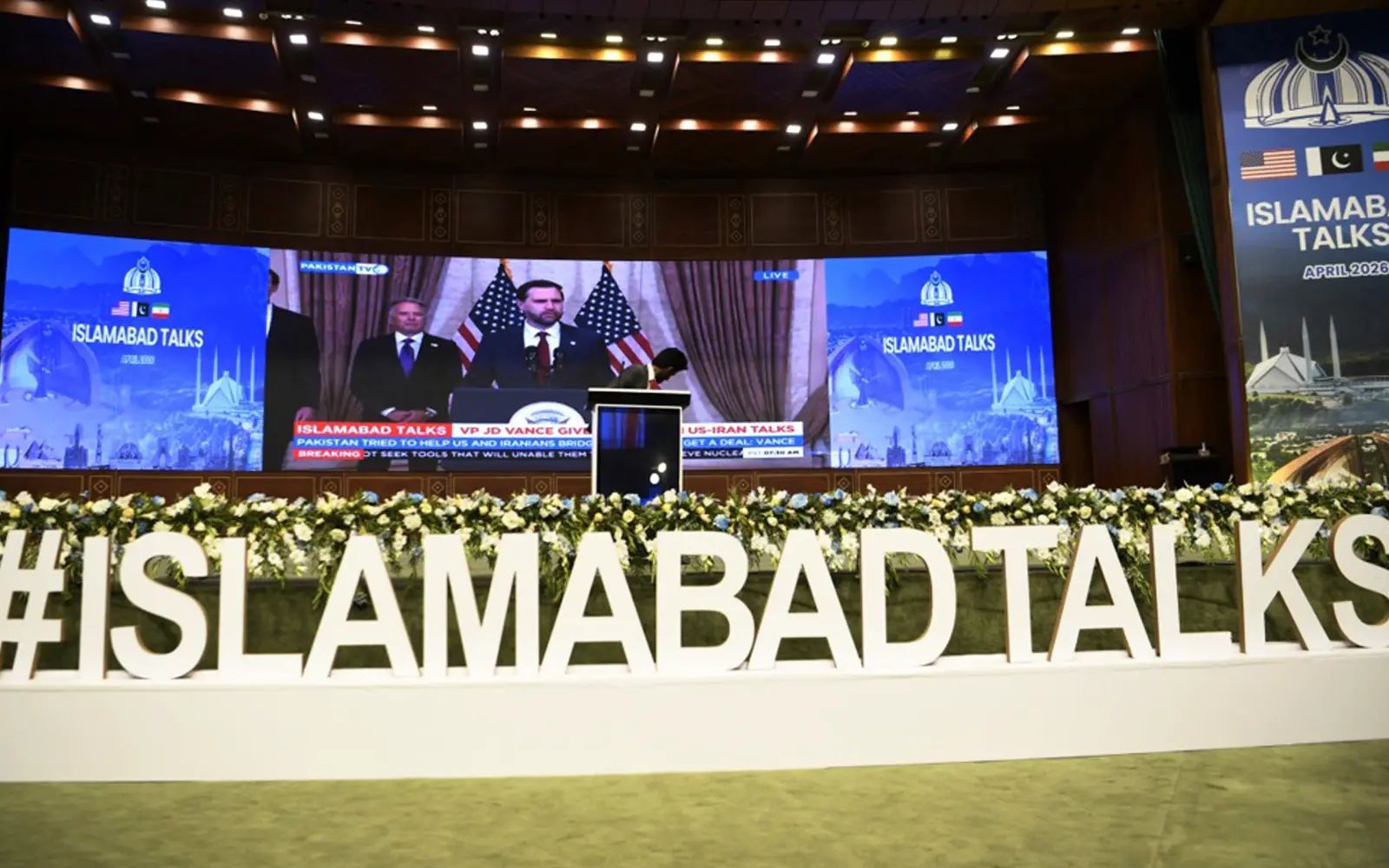
In the early hours of Sunday, April 12, US vice-president JD Vance stepped to the podium and declared, in a tone blending regret with veiled threat: “The bad news is that we have not reached an agreement.”
On the surface, this read as a report of diplomatic failure. For strategic analysts fluent in the language of power, however, those words revealed something far more consequential: who actually lost in Islamabad.
The 21 hours of negotiations in Islamabad marked the highest-level face-to-face meeting between the US and Iran in 47 years.
This historic encounter, structured as a trilateral summit mediated by Pakistan, was not merely a diplomatic event. It was a mirror, one that reflected the deeper architecture of power in the region with uncomfortable clarity.
If the enemy is destroyed, why negotiate?
The first and most structurally damaging fissure in Washington’s narrative is this: The Trump administration spent weeks claiming it had delivered devastating blows to Iran’s nuclear and military capacity.
Following the ceasefire announcement, Trump himself claimed that the Iranians were “agreeing to all the things that they have to agree to,” adding: “They’ve been conquered. They have no military.”
If that were true, why spend 21 hours behind closed doors in Islamabad bargaining? In the logic of power, you do not negotiate with a disarmed adversary; you dictate surrender terms.
This contradiction exposes a fundamental reality: Washington’s operational claims are far more media performance than battlefield reality.
Sources close to the Iranian negotiating team told CNN that the US had made “unacceptable demands”, including on the Strait of Hormuz. This is where the real power equation becomes visible. Iran holds a strategic lever that no air campaign can fully neutralise.
The Strait of Hormuz: a weapon that war cannot silence
Reports indicate that the central deadlock in the Islamabad talks persisted over control of the Strait of Hormuz. This chokepoint is the Achilles’ heel of the global economy, and Iran’s grip on it constitutes leverage that no bombing campaign can neutralise.
The strait has remained effectively sealed since the war began, snarling global supply chains and driving oil and gas prices sharply higher.
Vance did not travel to Islamabad from a position of dominance, but from a position of necessity. Washington understands with cold precision that returning home empty-handed means the continuation of economic crisis, accelerating inflation, and compounding domestic political pressure.
US inflation surged to 3.3% in March, driven in part by energy shocks linked to the conflict with Iran. These numbers, dry as they appear, were the hottest motivation behind Vance’s presence at the negotiating table.
What was not said
Vance’s brief post-talks remarks are layered with strategic subtext.
He said: “We need to see an affirmative commitment that Iran will not seek a nuclear weapon, and will not seek the tools that would enable them to quickly achieve a nuclear weapon. That is the core goal of the President of the US.”
First, the language shifted from “destruction” to “commitment.” Washington is no longer demanding the physical dismantlement of Iran’s nuclear infrastructure. The ask has been reduced to a future-oriented “commitment of will.”
This is a strategic retreat of the first order: the US has tacitly accepted that it cannot physically disarm Iran. When a superpower downgrades its demands mid-conflict, it is not projecting strength. It is calibrated to battlefield facts it cannot alter.
Second, the threat is absent. Vance announced that no deal had been reached, yet he did not leave the table with a military ultimatum.
He described the US offer as its “final and best”, but conspicuously refrained from issuing a direct military threat.
In game theory, this absence is deafening. A player who has credible alternatives announces them at the moment of breakdown. Silence signals the exhaustion of options.
Third, the rhetorical inversion. Vance attempted to reframe the outcome with the claim that the failure of the talks was “bad news for Iran much more than it’s bad news for the US.”
Yet this assertion collapses under its own logic: if the absence of an agreement hurt Iran more than America, why did the US team remain at the table for 21 consecutive hours?
Stronger parties leave earlier. The duration itself is a confession.
The Trump paradox: selling a paper victory
Sources close to the Iranian delegation said the US was looking for an excuse to leave the talks, and that “the ball is in America’s court.”
Washington is ensnared in a deep strategic paradox. For domestic consumption, the Trump administration must project victory, because its political base demands it. However, at the negotiating table, ground realities have closed every maximalist avenue.
The solution being engineered is now transparent: accept geoeconomic concessions behind closed doors — de facto recognition of Iran’s Hormuz leverage, possible sanctions relief, implicit acceptance of deterrence — while simultaneously selling a “paper nuclear victory” from public podiums.
Republican senators Lindsey Graham and Tom Cotton warned that any future US-Iran nuclear agreement would require Senate approval to be durable, and that such approval would only be possible if Iran fully dismantled its enrichment capabilities.
This internal political pressure further constrains Vance’s room for manoeuvre, trapping the administration between congressional hawks and geopolitical necessity.
Iran rises from a table it did not lose
The Islamabad talks concluded without agreement, but that outcome carries profoundly different meanings for each party.
Iran left the table with its leverage intact: control of the Hormuz chokepoint, a nuclear programme whose full vulnerability remains undemonstrated, and regional alliances that have not been structurally dismantled.
Independent analysts have observed that “every option has been tried — sanctions, economic coercion, military coercion — and both sides ended up in a final scenario.”
What Islamabad revealed is not the failure of Iranian diplomacy. It revealed the structural limits of American power in a conflict where geography, economic interdependence, and nuclear deterrence have converged against the maximalist position.
Washington knows that without an agreement with Tehran, the economic haemorrhage continues.
Vance has left Islamabad, but this table will not remain empty. In diplomacy, the party compelled to return negotiates from weakness. And in this endgame, it is Washington’s return that is inevitable.
The silence after Vance’s podium remarks was not the silence of Iranian defeat.
It was the silence of a power that did not need to speak. - FMT
Abdolreza Alami is a senior lecturer at the faculty of communication and media studies at Universiti Teknologi Mara (UiTM).
The views expressed are those of the writer and do not necessarily reflect those of MMKtT.

No comments:
Post a Comment
Note: Only a member of this blog may post a comment.