


The announcements made by two prominent national leaders on Sunday, May 10, offer encouraging signs that the federal government is moving toward a fair resolution of longstanding issues affecting non-Muslim places of worship in Peninsular Malaysia.
It was significant that Prime Minister Anwar Ibrahim, speaking to Universiti Malaya Indian students, clarified that his earlier call for strict enforcement against houses of worship built without permits may have been misunderstood.
As reported, the prime minister said:
“Even if we need to be stern, we must be respectful of other faiths (and) not to the point that we hurt each other’s feelings. Yes, this is a difficult issue.”
He further assured that the cabinet would take steps to resolve these matters fairly.
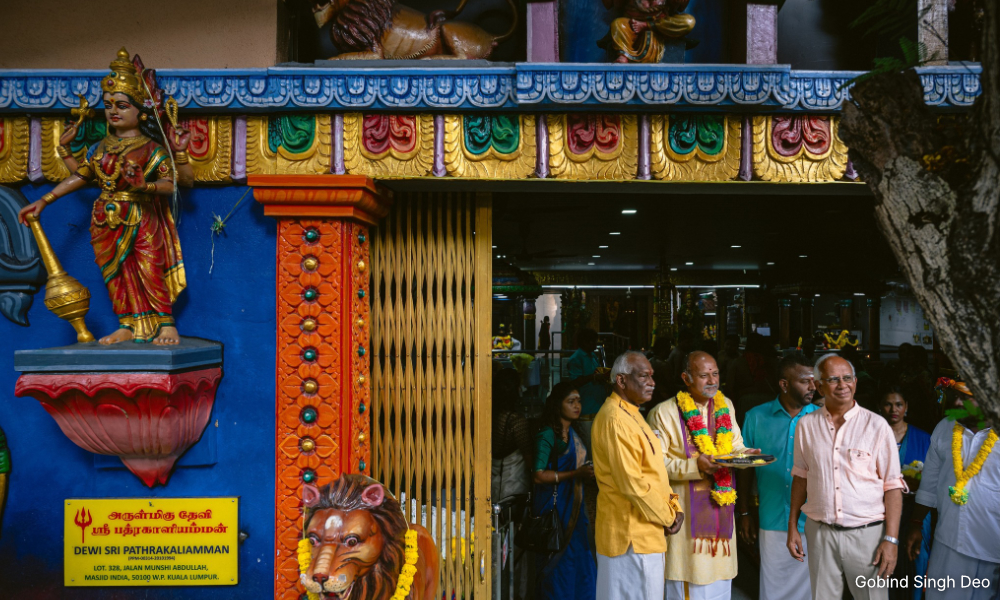
On the same day, at a religious event held at the Sri Pathrakaliamman Temple in Masjid India, Kuala Lumpur, Digital Minister Gobind Singh Deo affirmed that issues involving temples and other places of worship will now be managed in accordance with a process determined by the cabinet last week.
These statements reflect a positive shift in approach and are welcomed.
It must be recognised that providing land and amenities for essential public needs, such as housing, hospitals, schools, places of worship, burial and cremation grounds, as well as cultural and recreational facilities, is a fundamental responsibility of government.
While current land laws and local government regulations governing new structures were only enacted by the federal government in 1965, many places of worship of all faiths, including Muslim, were established during the colonial period.
At that time, landowners in plantations, tin mines, government departments, and agencies permitted their workers to build places of worship, schools, community facilities, graves, and crematoriums on their land.
Many of these structures continue to exist today. Muslim facilities were subsequently formalised by the respective state governments through their religious departments. The same recognition and regularisation must now be extended to non-Muslim places of worship.
While this issue exists across several states in Peninsular Malaysia, the most acute problems are found in Selangor and Kuala Lumpur.
Development at the expense of communities
The situation changed significantly after 1974, when the Selangor government ceded almost the entire mukim of Kuala Lumpur to the federal government under an agreement with the sultan of Selangor.
Initially, the impact was not immediately felt. Over time, however, large tracts of land in Kuala Lumpur were acquired for major development projects.
This resulted in the displacement of many Indian plantation and government workers and their communities in areas such as Taman Tun Dr Ismail, the Jalan Duta corridor, the entire Damansara zone, Bukit Jalil, Bangsar/Bukit Kiara, and Sentul.
Homes, schools, and temples were lost in the process. These were communities that had served the country for generations. It is unreasonable to hold them responsible for the status of structures built with the tacit approval of employers and authorities at the time.
A similar pattern followed in Selangor. Since the 1800s, Indian labour had contributed significantly to making Selangor the richest and most developed state in Malaya.
Yet, the ceding of Kuala Lumpur, the creation of Putrajaya, and the acquisition of land for KLIA, Shah Alam, and the National Sports Complex led to the displacement of large numbers of Indian workers and their places of worship.
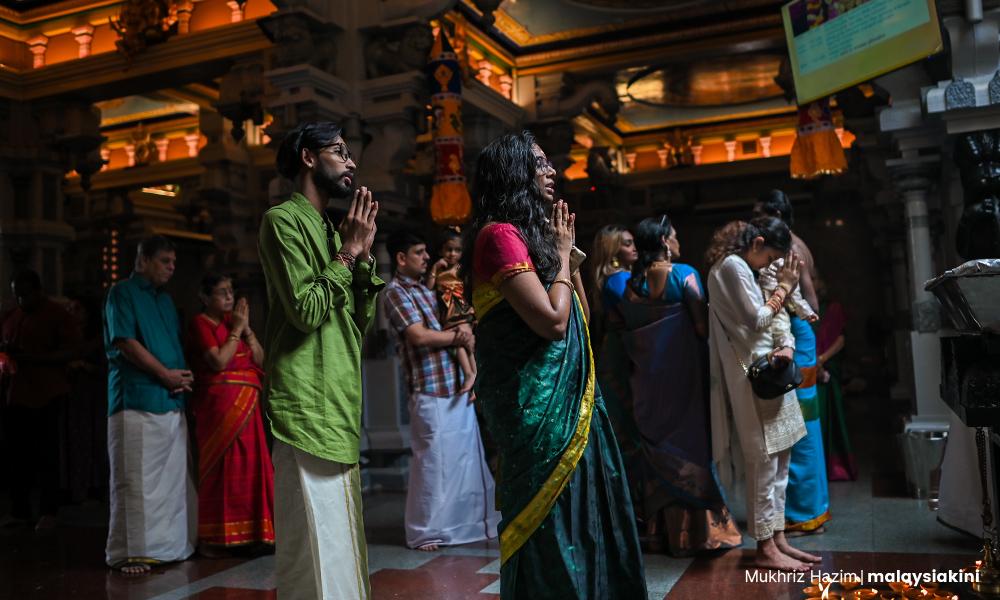
Putrajaya, our beautiful federal administrative capital, was built on land where Indian workers and their communities were similarly displaced. Given this history, it is unjust to label these structures as merely “illegal” without acknowledging the circumstances under which they came into being.
I therefore welcome the recent announcements and efforts by government leaders, including Federal Territories Minister Hannah Yeoh and Selangor exco member V Papparaidu, who have both met with the leaders of the Malaysian Consultative Council of Buddhism, Christianity, Hinduism, Sikhism, and Taoism (MCCBCHST), indicating a willingness to address the excesses arising from the classification of these structures as illegal, and to seek solutions through due process.
It is my hope that the cabinet will act swiftly to implement a fair and transparent mechanism that recognises historical context, protects religious freedom, and upholds social harmony. - Mkini
A VAITHILINGAM is a former president of Malaysia Hindu Sangam and former president of the Malaysian Consultative Council of Buddhism, Christianity, Hinduism, Sikhism, and Taoism (MCCBCHST).
The views expressed here are those of the author/contributor and do not necessarily represent the views of MMKtT.

No comments:
Post a Comment
Note: Only a member of this blog may post a comment.