


MALAYSIA must reduce smoking. On that, almost everyone agrees. Every day, doctors, nurses, pharmacists, teachers, parents and community advocates witness the damage caused by tobacco: heart attacks, strokes, lung disease, cancer, breathlessness, grieving families and preventable deaths.
But the solution to a public health crisis should not be shaped by the same industry that helped create it.
A recent newspaper article argued that Malaysia should learn from Sweden and Japan by embracing “smoke-free” nicotine products such as heated tobacco, snus and nicotine pouches. The message is appealing: if smokers cannot quit, offer a “less harmful” alternative.
However, the article was authored on behalf of Philip Morris International (PMI), a company that shipped nearly 617 billion cigarettes globally in 2024. Its interest in shaping tobacco policy is commercial, not public health-driven.
Malaysians deserve the full picture.

It is true that burning tobacco produces harmful chemicals that cause serious disease. But it is misleading to assume that reducing smoke automatically translates into safe or effective public health outcomes. “Less harmful” does not mean harmless.
Heated tobacco products still deliver nicotine, a highly addictive substance. They still expose users to toxic compounds. The World Health Organisation has repeatedly cautioned that these products are toxic, potentially carcinogenic, and not proven to help smokers quit.
The Union for International Cancer Control has also stated that there is no evidence smokeless products reduce smoking rates.
That distinction matters. In public health, claims must be evaluated based on independent evidence, not corporate messaging. The key questions remain: does it reduce harm at population level, who benefits, who is exposed, and who funds the narrative?
The Sweden example is often cited as proof that oral nicotine products have solved smoking. But the reality is more complex. Lower smoking rates do not automatically mean lower nicotine dependence.
A population may shift from cigarettes to other nicotine products without truly breaking addiction.
Independent organisations, including AT Switzerland and the Smoke Free Partnership, have described the “Sweden model” narrative as part of a coordinated tobacco industry communication strategy that downplays the role of strong regulation, taxation, advertising bans and cessation support in reducing smoking rates.
Sweden’s Public Health Agency itself stated in 2025: “There is nothing in the research showing that snus or white snus is an effective smoking cessation tool.”
At the same time, youth nicotine use remains a concern. E-cigarette use among young people aged 16 to 29 has increased significantly in recent years, raising questions about whether new products are replacing one form of addiction with another.
Japan is also frequently cited as evidence of success. Cigarette sales have declined since heated tobacco products entered the market, but this does not necessarily mean widespread cessation.
Studies suggest product substitution and dual use remain common. Some users continue smoking cigarettes alongside heated tobacco products.
The US Food and Drug Administration has also declined to authorise claims that heated tobacco products reduce disease risk, noting that for dual users, the overall risk is unlikely to be substantially reduced.
Concerns have also been raised internationally about industry influence on research and policy narratives around these products.
This pattern is not new.
In previous decades, tobacco companies promoted “light” and “low-tar” cigarettes as safer alternatives. They were not. The strategy has remained consistent: reframe the product, shift perception, and maintain consumption.
This is why conflict of interest matters. Tobacco companies are not neutral health actors. Their responsibility is to shareholders, not public health outcomes. If new products maintain nicotine dependence, the business model survives even if the product changes.
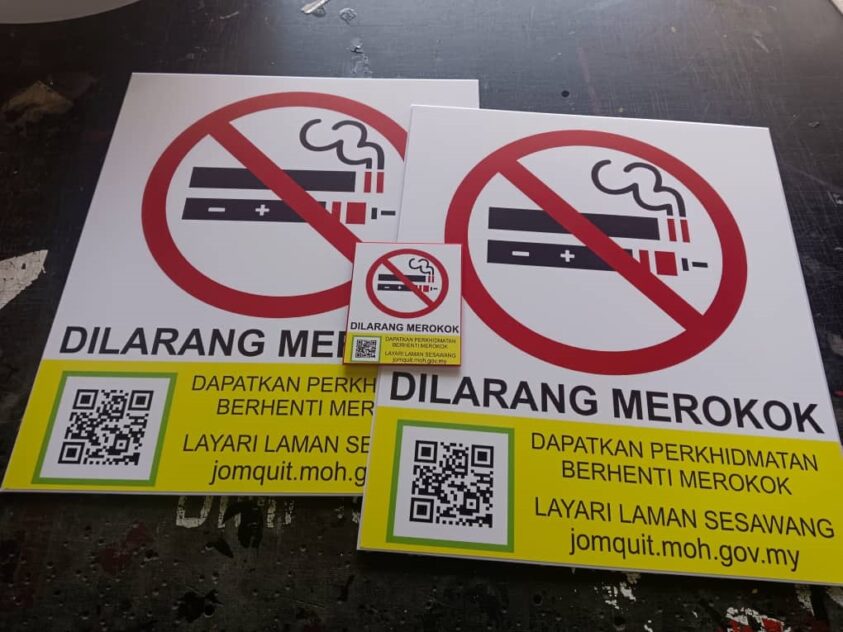
Malaysia has already taken an important step through the Control of Smoking Products for Public Health Act 2024 (Act 852), which recognises that cigarettes, vapes and heated tobacco products all require regulation.
Malaysia’s official tobacco endgame target is to reduce smoking prevalence to below 5% by 2040. That distinction is important. Public health messaging must remain accurate, transparent and consistent.
At Universiti Malaya, we see the consequences of tobacco use not as statistics but as patients: young stroke victims, COPD patients struggling to breathe, and families confronting preventable loss.
Malaysia does not need shortcuts designed by the tobacco industry. It needs stronger enforcement, improved cessation services, wider access to nicotine replacement therapy and approved medicines, trained counsellors, school-based prevention programmes, protection against youth marketing, and honest public education.
For smokers who are struggling to quit, compassion is essential. Support must be accessible, non-judgemental and evidence-based. But compassion must not be used to justify the expansion of nicotine addiction through alternative products.
The key question is not whether Malaysia should adopt what appears to “work” elsewhere. The real question is who defines what works, and whose interests are being served.
Malaysia’s path forward must be guided by independent science, public health ethics and the responsibility to protect the next generation.
Dr Mohd Hafyzuddin Md Yusuf is a lecturer and Emergency Physician at the Emergency Medicine Academic Unit, Faculty of Medicine, Universiti Malaya, and Dr Jazlan Jamaluddin is a lecturer and Family Medicine specialist at the Department of Primary Care Medicine, Faculty of Medicine, Universiti Malaya.
The views expressed are solely of the author and do not necessarily reflect those of MMKtT.
- Focus Malaysia.

No comments:
Post a Comment
Note: Only a member of this blog may post a comment.