

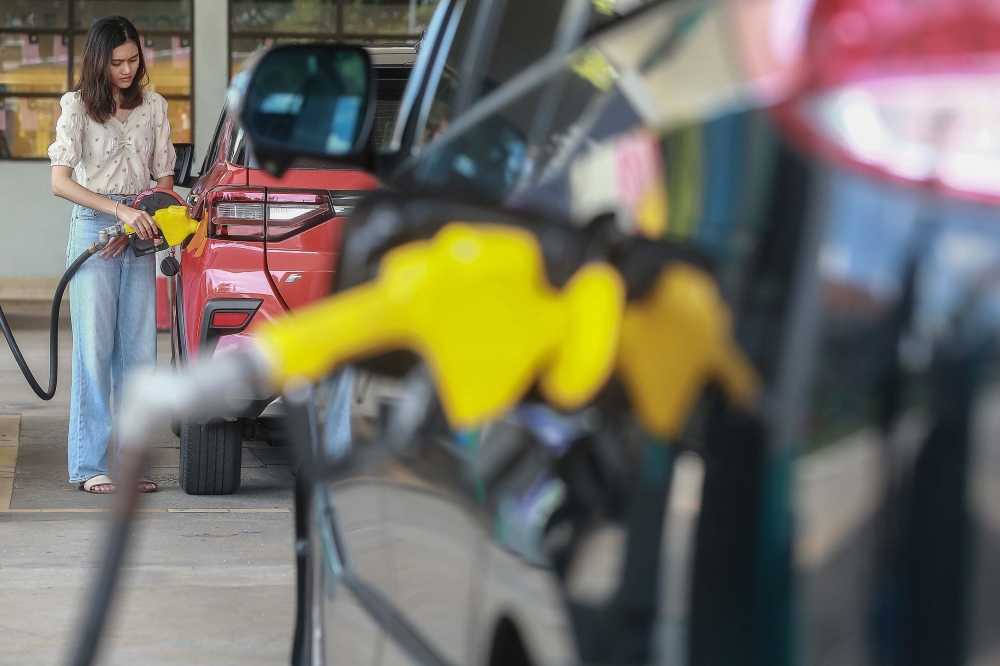
MALAYSIA MAY lower the monthly RON95 fuel quota under the BUDI95 scheme to 150 litres as part of broader measures to protect domestic fuel availability amid global supply uncertainties linked to the conflict in West Asia.
While no official implementation date has been announced, such a move remains possible as the BUDI95 system is able to capture detailed fuel consumption patterns, giving the government greater flexibility in adjusting subsidies and managing supply according to prevailing conditions.
Deputy Finance Minister Liew Chin Tong said available data shows that most Malaysians consume well below the current monthly quota.
At present, the cap is set at 200 litres a month, following an earlier reduction from 300 litres.
He noted that the previous adjustment had limited impact on the wider public, with data indicating about 80 per cent of Malaysians use less than 200 litres of petrol monthly.
“The next possible threshold is 150 litres. Around 60 per cent of the population consume below this level, while half of Malaysians use less than 100 litres per month,” he said during a fireside chat titled Malaysia’s Response to Global Energy Crisis.
He explained that moderating fuel consumption is necessary to ensure national supplies can continue to be distributed steadily, even if at more measured levels.
Special attention, he added, must be given to lower-income households and motorcycle riders, who are more exposed to sudden spikes in fuel prices.
Motorcycle users, for example, are estimated to use only about 50 litres of petrol monthly and should continue receiving stronger subsidy support to ease cost-of-living pressures.
Beyond economic considerations, Liew said the policy also has implications for social and political stability, particularly in ensuring vulnerable communities are not disproportionately affected during uncertain times.
Government spending on fuel subsidies has reportedly surged almost tenfold after crude oil prices climbed sharply following worsening geopolitical tensions in West Asia since late February.
Separately, he said Putrajaya is still formulating a targeted diesel subsidy model for Sabah and Sarawak, similar to the BUDI95 framework.
Over the longer term, he said Malaysia must speed up investments in public transport infrastructure, electrification and denser urban planning to gradually reduce dependence on oil.
Liew also described BUDI95 as more than just a targeted subsidy mechanism, saying it serves as a key demand-management tool to ensure the country maintains sufficient fuel reserves should geopolitical tensions drag on.
He added that data generated through the programme now offers clearer insight into national fuel consumption trends, allowing more precise subsidy calibration based on real-time needs.
According to him, the government’s immediate concern is not purely fiscal consolidation or trimming subsidy expenses, but ensuring fuel security can be maintained for an extended period if global conflicts or instability continue.
“If Malaysians understand the need to moderate consumption in order to preserve supply continuity, fiscal pressures can eventually be managed as a secondary outcome,” he said. — Focus Malaysia

No comments:
Post a Comment
Note: Only a member of this blog may post a comment.