


The Madani government’s May 1 announcement of a path to RM3,000 in minimum wage by 2030 for workers must be appreciated for its intent.
Local workers do deserve higher wages, and a wage floor that rises is, in principle, a wage floor that lifts the lowest-paid.
While better wages are necessary, raising them without first creating the economic conditions to sustain them is not reform.
The Institute for Strategic Analysis and Policy Research (Insap) supports the goal but our concern lies with what the policy will actually deliver to the workers it claims to protect, and nowhere more sharply than in Sabah.
Income disparity between Sabah and the rest of Malaysia is not a new problem. It is a long-standing structural feature of the federation.
It is visible in every measure that matters: household income, poverty incidence, the share of high-value industry, and the depth and breadth of the wage distribution.
Sabahans have lived with that gap for decades, and as such, a wage policy designed without regard to it does not close the gap but widens it.
The arithmetic for Sabah is uncomfortable. Under the announced 2030 trajectory, the projected minimum wage-to-median wage ratio for Sabah, what economists call the “Kaitz ratio”, sits well above 100 percent.

In plain terms, that means the wage floor the federal government proposes to mandate in Sabah by 2030 is higher than what the median Sabahan worker is expected to earn.
This is a warning signal of a weak wage structure and deep regional income disparity. A wage floor that sits above the median is an economy stretched past what it can hold.
Wage policy vs productivity
When wage policy outruns productivity, investment, and job creation, businesses do not become more competitive overnight.
Research has shown that hiring slows down while automation accelerates and informalisation rises. As a result, quality jobs become scarcer, and they become scarcer in precisely the states where high-value industries are thin, and wage depth is shallow.
That is the position Sabah is in today, and that is the position the announced trajectory will deepen.
Peninsular Malaysia may still be able to absorb the shock through its larger urban economies, stronger industrial ecosystems, and the depth of the Klang Valley labour market, but Sabah cannot.
Sabah’s infrastructure is thinner, has higher logistics costs, and the industrial mix is narrower. Asking Sabahan employers to carry the same wage step as their peninsula counterparts, on the same timeline, with none of the parallel economic support, is to ask Sabah to pay for a policy designed for the peninsula.
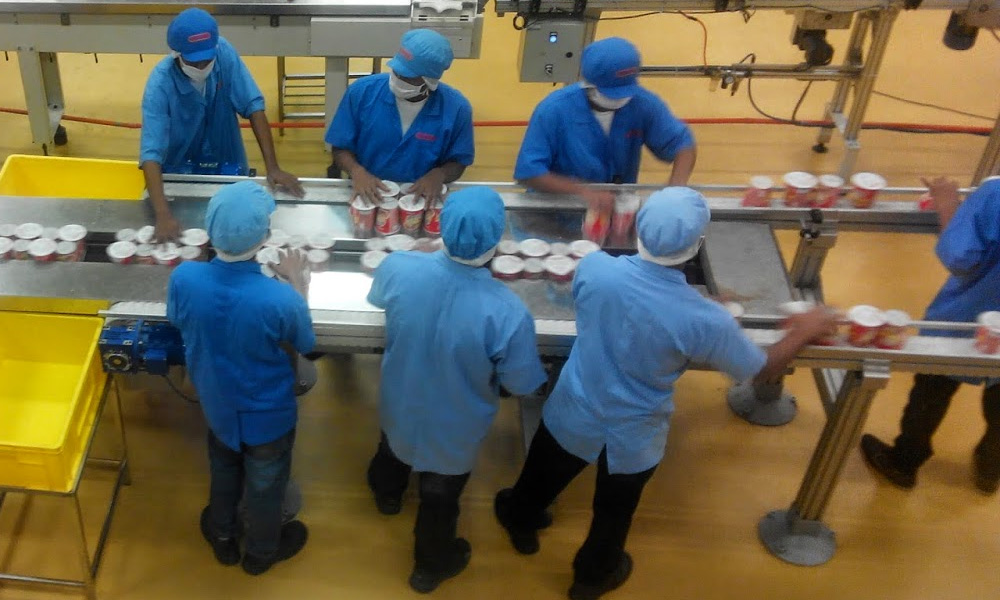
Without parallel reforms in infrastructure, logistics, industrial upgrading, skills development and private investment attraction, a one-size-fits-all wage policy will widen the development gap between Sabah and Peninsular Malaysia further.
The cost will fall first on Sabahan workers, through the jobs they lose, the hours that disappear, and the smaller employers who cannot survive the step. The dignity of the worker is measured by the work the worker can actually find.
Infrastructure, industrial upgrading
Insap urges Putrajaya to pair its wage announcement with a credible regional economic plan for Sabah.
This includes investment in infrastructure and logistics to bring the cost of doing business down, industrial upgrading to bring high-value jobs to where they are needed most, skills development calibrated to the sectors that can sustain higher wages, and a sectoral and state-level phasing arrangement that recognises Malaysia’s economic diversity is not a problem to be flattened by a federal mandate but a reality to be reformed with care.
The same principle applies to every state whose absorption capacity is closer to Sabah than to Selangor.
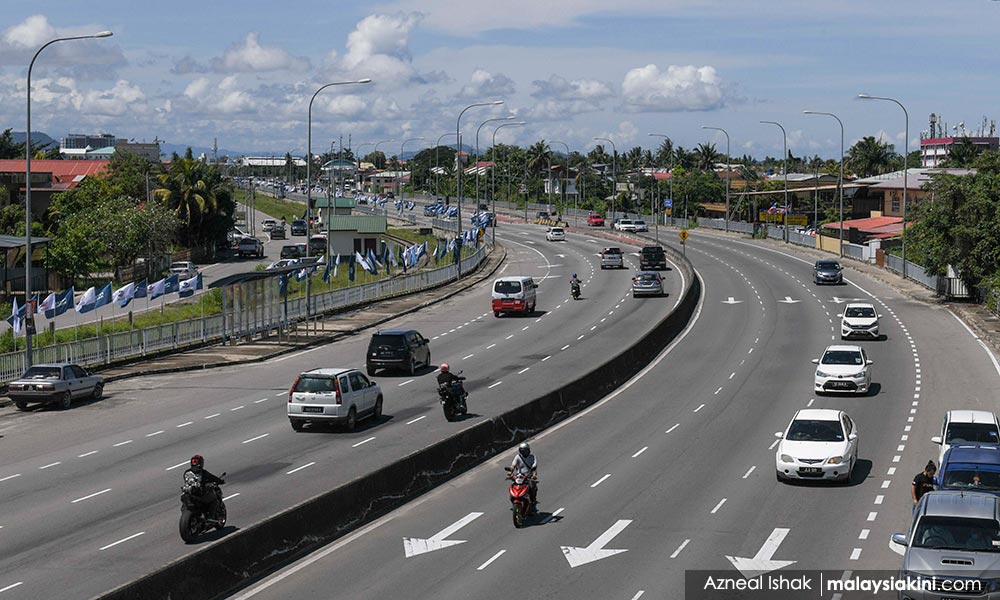
Workers deserve higher wages, and they also deserve actual jobs to earn them. A policy that raises wage floors while shrinking the quality of employment that delivers them is a policy that ultimately provides neither economic mobility nor long-term dignity to Sabahans.
The federal government must take Sabah’s predicament seriously, design wage reform with Sabah at the table and not over it, and deliver the parallel economic conditions that will make the wage promise more than a promise on paper. - Mkini
PAMELA YONG is the chairperson of the Institute of Strategic Analysis and Policy Research.
The views expressed here are those of the author/contributor and do not necessarily represent the views of MMKtT.

No comments:
Post a Comment
Note: Only a member of this blog may post a comment.