


“That the Pan-Malaysian Islamic Party, or PAS, would develop into the biggest and strongest opposition party in postcolonial Malaysia was neither a fact that was predetermined nor necessary, though it happens to be a reality today.”
This seminal observation by political scientist Farish A Noor in “The Malaysian Islamic Party PAS 1951-2013: Islamism in a Mottled Nation” captures a profound truth that contemporary analysts frequently overlook.
Why does this observation matter so deeply today? Because in the realm of empirical political science, the enduring strength of a political party cannot be measured by the ephemeral highs and lows of a single electoral cycle. Instead, its longevity is determined by a rigorous metric: party institutionalisation.
In his foundational work “Political Order in Changing Societies” (1968), Samuel P Huntington posited that for an organisation to achieve genuine institutional density, it must exhibit four core structural dimensions: adaptability (the capacity to survive generational and environmental shifts), complexity (the multiplication of sub-units and organisational depth), autonomy (the ability to exist independently of specific charismatic individuals), and coherence (the degree of internal consensus and unity).
Expanding on this framework, political scientist Scott Mainwaring, in “Building Democratic Institutions: Party Systems in Latin America” (1995), introduced another vital variable: a highly institutionalised party must possess deep roots in society, where the party is not merely a vehicle for elite contestation but an intrinsic, trusted part of the community’s identity.
When we apply these rigorous academic matrices to the Malaysian landscape, PAS emerges with an unassailable case as the most structurally stable and institutionalised political party in the nation.
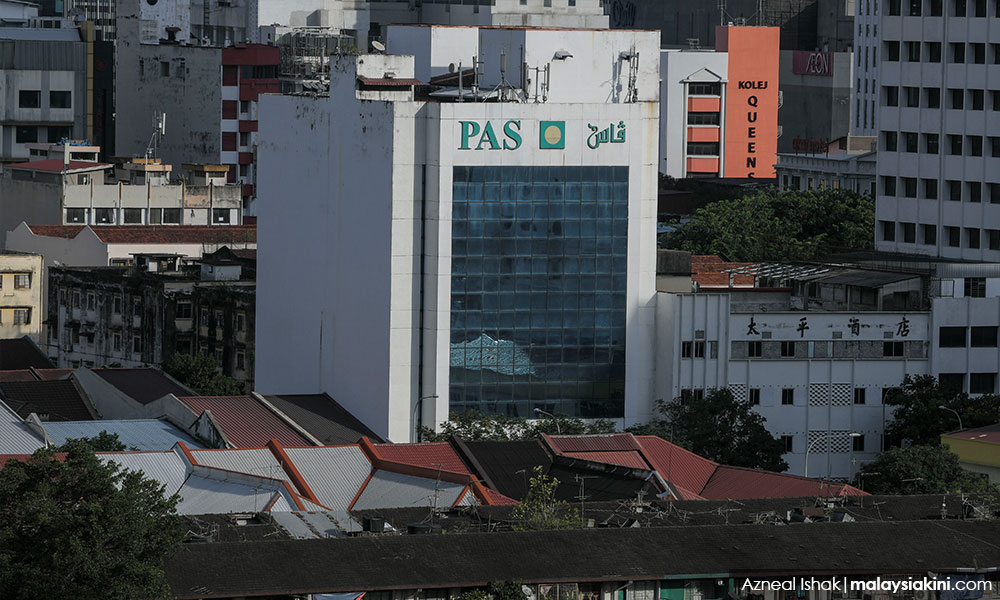
The mirage of seniority: PAS vs Umno
Naturally, sceptics will point to history and ask: Is Umno not the older, grander institution?
In political sociology, age alone does not equate to institutional resilience. While Umno is older and historically sat as the hyper-dominant hegemon of Malaysian politics, its trajectory over the last few decades reveals an institutional fragility.
Umno’s history is punctuated by cataclysmic internal schisms that birthed splinter parties - from Semangat 46 to Bersatu and, tangentially, PKR - significantly eroding its traditional voter base and ideological monopoly.
PAS has similarly faced ideological friction and fractures. Yet, the critical difference lies in the systemic outcomes: its schisms never undermined the parent organisation.
Rather than collapsing inward, PAS demonstrated what Nassim Nicholas Taleb terms antifragility - growing stronger and more refined through volatility - culminating in its current status as the single largest party by seat count in the Dewan Rakyat.
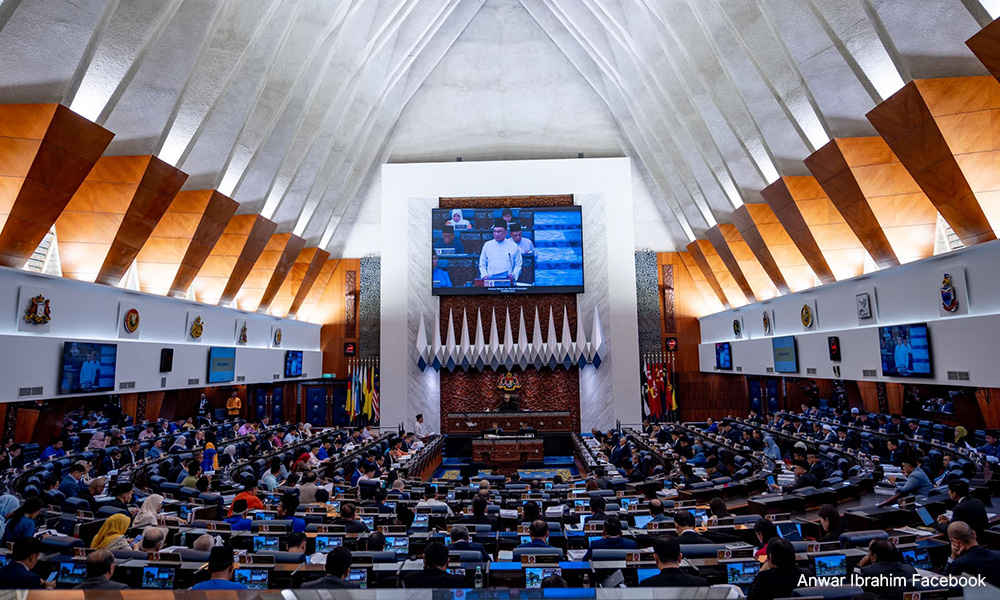
The jurisprudence of agility: Tahalluf and ta’awun
From the perspective of Huntington’s adaptability, PAS has proven to be a masterclass in strategic agility.
Since 1951, it has successfully navigated every conceivable political epoch: it has been a stalwart opposition force, a federal coalition partner in the 1970s, and a foundational pillar of diverse partnerships, including Barisan Alternatif, Pakatan Rakyat, Muafakat Nasional, and currently, Perikatan Nasional.
Critically, this fluid navigation of the macro-political terrain is not driven by secular opportunism; rather, it is anchored in the robust framework of Islamic political jurisprudence (siyasah syar’iyyah).
PAS determines its political alignments through two distinct, scripturally grounded principles: tahalluf siyasi (political alliance) and ta’awun siyasi (political cooperation).
When PAS enters formal, binding coalitions with other political entities, it operates under the parameters of tahalluf siyasi. This framework draws its historical and theological legitimacy from covenants of mutual protection and governance in early Islamic history, notably the Charter of Medina.
This allows PAS to enter structured coalitions - like PR in the past or PN today - based on clear, mutually agreed-upon terms that protect the public interest (maslahah) without compromising its ultimate objectives.
Conversely, when formal structural alignment is either unviable or unnecessary, PAS skillfully deploys ta’awun siyasi. Rooted in the Quranic injunction to cooperate in matters of righteousness, piety, and civic benefit, this concept allows for strategic, issue-based collaboration.
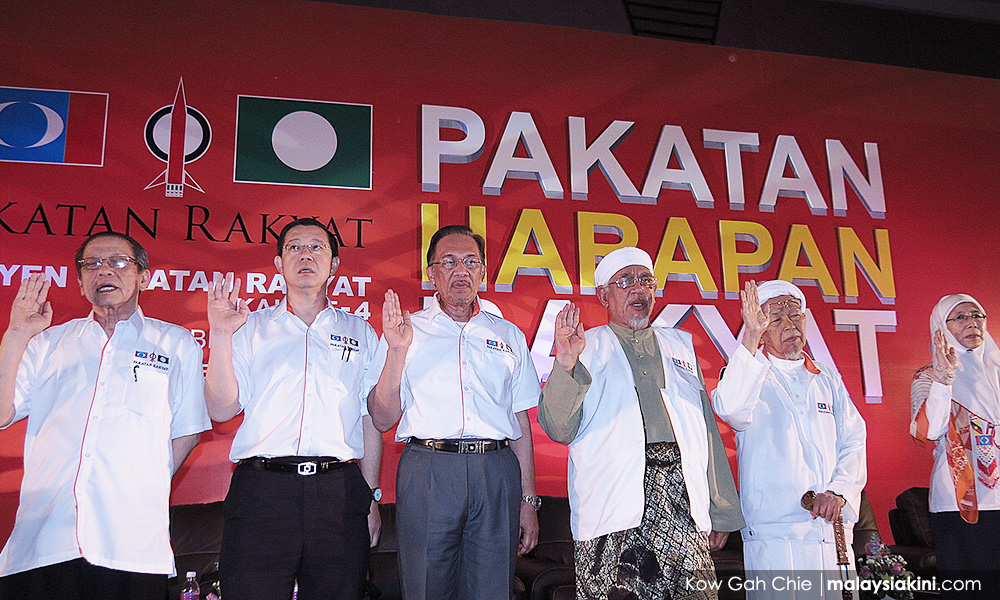
It was this flexible yet principled mechanism that guided PAS during the creation of the Muafakat charter and its subsequent cooperation with various federal and state administrations.
By framing its external relationships around these clear religious parameters, PAS ensures that while its tactical partnerships evolve to suit the era, its core foundational identity remains completely uncompromised.
Structural complexity and organic leadership succession
In terms of Huntington’s complexity, PAS transcends the traditional definition of an electoral machine. It operates as a highly sophisticated, multi-layered socio-political ecosystem.
Structurally, it balances the executive execution of the central working committee with the profound oversight of the syura council.
Far from being a merely symbolic advisory body, the syura council acts as an institutional mechanism of internal checks and balances.
Crucially, it holds the ultimate constitutional authority within the party to vet and endorse all electoral candidates.
This institutional separation of powers ensures that while the executive wing evaluates tactical political viability, the theological council strictly assesses a candidate’s integrity, character, and unyielding adherence to foundational Islamic principles.
This dual-layered filter prevents the centralisation of power, creating a rigorous internal vetting system that safeguards the quality and credibility of the party’s representatives before any name ever reaches the ballot box.
This organisational complexity has been further refined by the dynamic maturation of its specialised wings. Alongside the traditional pillars of Dewan Ulama, Dewan Pemuda, and Dewan Muslimat, the party has structurally integrated two critical echelons: Dewan As-Sabiqun and the Dewan Himpunan Pendukung PAS (DHPP).
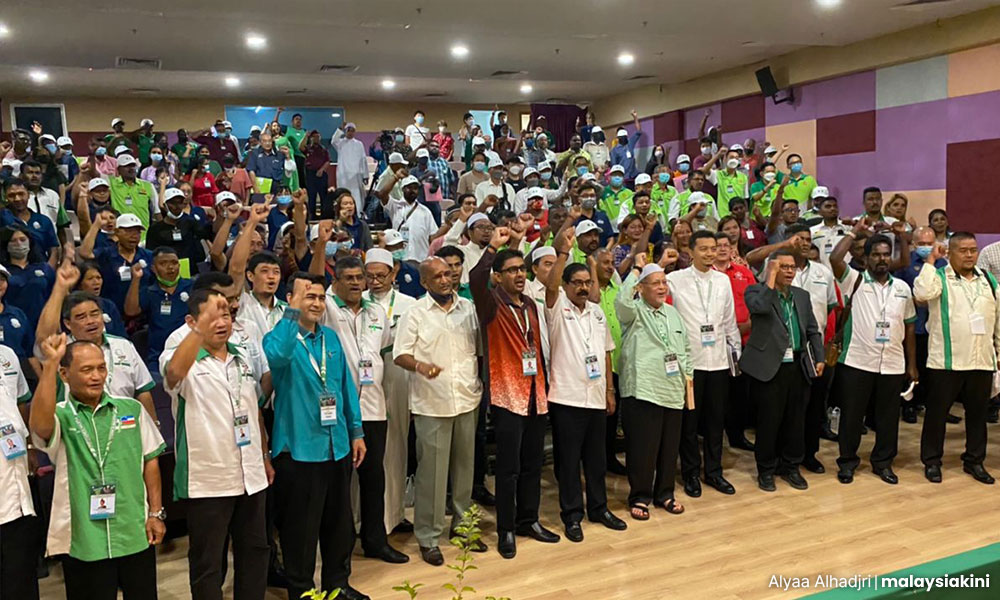
The elevation of Dewan As-Sabiqun (the veterans’ wing) serves as the institutional memory of the party, formalising a framework where the generational wisdom, lifelong dedication, and historical experience of senior pioneers are structurally channelled to guide modern party strategy.
Concurrently, DHPP’s growth represents an expansive, inclusive step forward in constitutional complexity, demonstrating that PAS’ foundational Islamic principles are fully capable of fostering broad, cross-communal governance within a pluralistic nation.
Crucially, this robust network does not merely reflect organisational depth; it serves as a comprehensive ecosystem for organic leadership development and civic continuity.
While conventional political parties frequently struggle to cultivate new leadership or manage sudden succession crises, PAS’ strength lies in a holistic pathway of personal growth grounded in shared moral values (tarbiyah), lifelong community activism, and structural discipline.
This structure represents a deep-seated community commitment. It begins by providing trusted, value-based educational options to families - spanning Pasti (preschools), Sriti (primary schools), and Smiti (secondary schools) - which foster a strong sense of moral and civic responsibility.
As individuals mature, this foundational ethos naturally translates into hands-on public service through the humanitarian deployments of Khidmat Malaysia and Jabatan Amal.
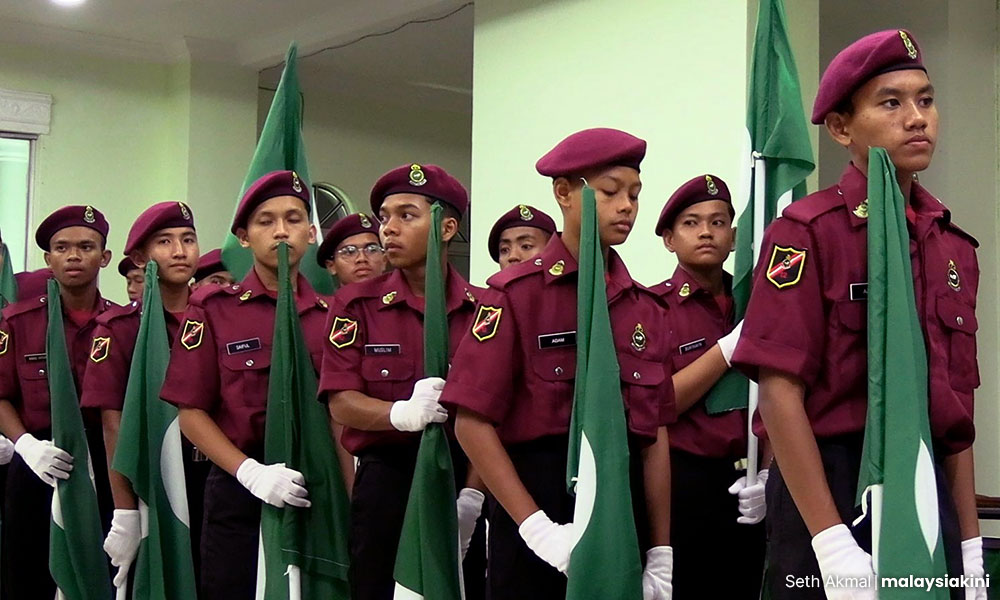
Consequently, new generations of leaders emerge organically from a lifetime of shared values and proven dedication to welfare work.
Leadership transitions within PAS are therefore never an ad-hoc, frantic response to political currents, but a stable, predictable evolution of its own ecosystem.
Academic nuance: In political science, this extensive structure achieves what is known as social encapsulation - a phenomenon where a party embeds itself so thoroughly into the daily socio-economic, educational, and spiritual fabric of the community that it becomes entirely indispensable to the electorate, completely insulating its support base from the volatile shifts of standard electoral cycles.
Institutional autonomy: Leadership beyond personalities
Huntington’s criterion of autonomy demands that an institution outlive its founders and patriarchs. PAS has successfully institutionalised its leadership transitions across distinct ideological eras - moving smoothly from the nationalist-Islamism of Burhanuddin al-Helmy, to the era of Asri Muda, to the ulama-led revamps under Yusof Rawa and Fadzil Noor, and into the contemporary leadership of Abdul Hadi Awang.
The faces at the apex alter, but the institutional machinery continues uninterrupted.
This autonomy manifests sharply in contemporary dynamics. Even when holding immense legislative leverage, PAS has consistently eschewed immediate, populist demands for the premiership, displaying a high level of political maturity and statespersonship.
A poignant case in point is the recent transition within PN, which saw the chairpersonship of the coalition entrusted to PAS vice-president and Terengganu Menteri Besar, Ahmad Samsuri Mokhtar.
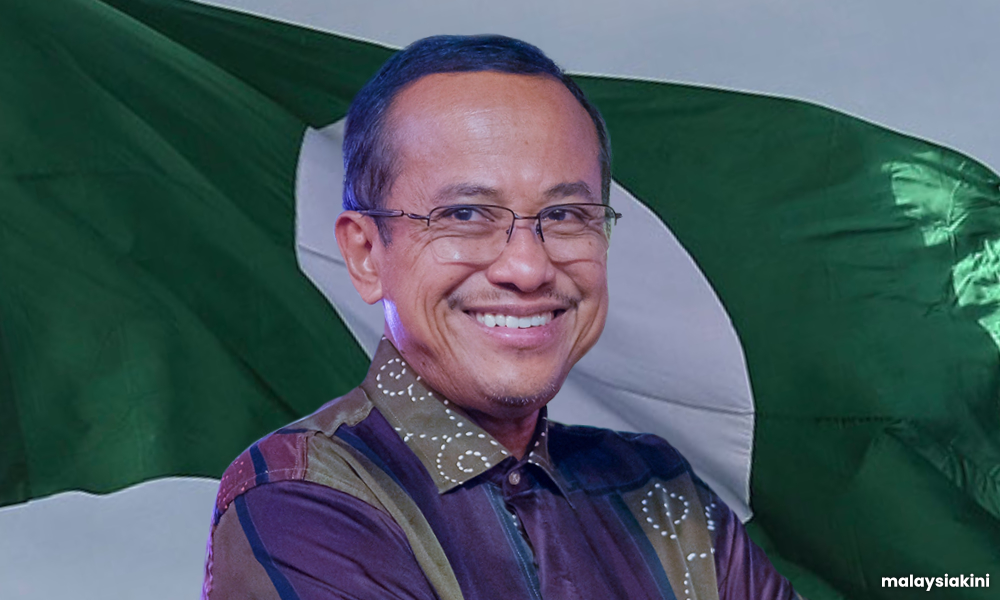
This strategic devolution demonstrates that the legitimacy of PAS is anchored in institutional collective bargaining, rather than being concentrated within the cult of personality of a singular figurehead.
Coherence and the true definition of ‘machinery’
This feeds directly into coherence. While external observers often misinterpret internal debates within PAS as signs of imminent fracture, the party’s historical trajectory shows that when a crisis peaks, the structural core remains unified and disciplined.
This internal discipline is what powers its legendary jentera (machinery). In the vocabulary of Malaysian politics, “machinery” is often reduced to the superficial optics of flags draped along rural roads during a two-week campaign window.
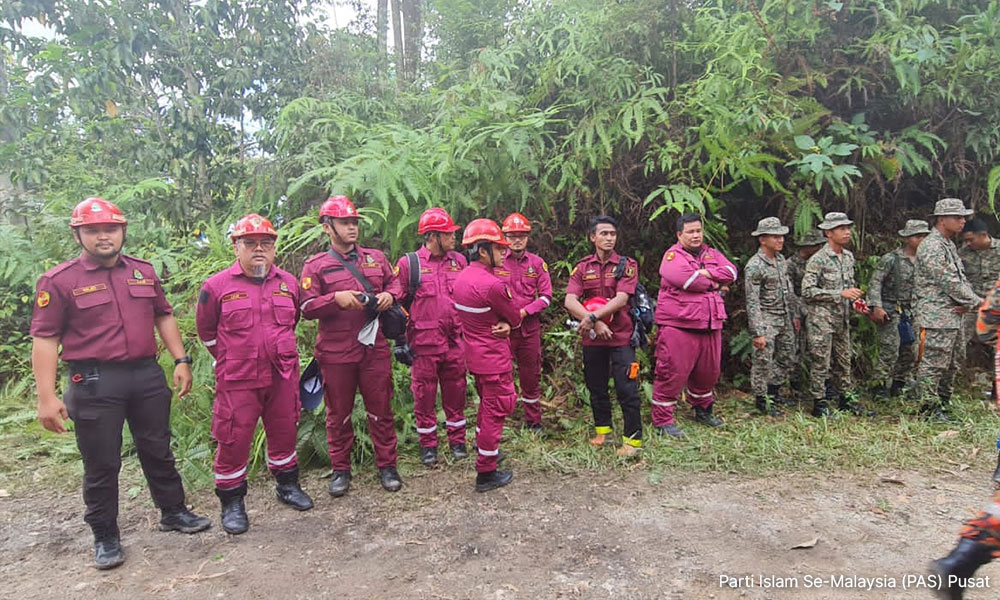
For PAS, the machinery is an evergreen, year-round civic apparatus. It is the capacity of a party to mobilise thousands of disciplined volunteers during national crises without relying on state resources.
We witnessed this during the 2019 Sungai Kim Kim toxic pollution crisis in Pasir Gudang, where Khidmat Malaysia and Jabatan Amal deployed rapidly to provide ground-level relief.
Similarly, during the heightened public health challenges of the Covid-19 pandemic, the party launched the nationwide Amal Mega Blood Donation 2021 (AMBD2021) campaign.
Orchestrated across 58 locations simultaneously in direct collaboration with the National Blood Centre, this massive civic mobilisation successfully amassed 5,351 bags of blood in just three days, directly reinforcing critical national healthcare reserves when supplies were dangerously low.
This is a manifestation of what Mainwaring defines as a party’s “roots in society” - an organic presence that functions seamlessly even when the party is operating completely outside of federal power, funding, or charismatic leadership.
The long view
After nearly three-quarters of a century, PAS has done more than just survive; it has consolidated. Today, it commands the largest single-party bench in Parliament and holds sprawling legislative majorities across the state assemblies of the Malay heartland.
Yet, electoral data is merely a trailing indicator. The definitive proof of the strength of PAS lies in its institutional permanence - its uncanny ability to function as the same stable structural organism after seven decades, across generational leadership handovers, through profound systemic splits, and within a rapidly evolving nation.
To borrow the framing of Farish, this level of endurance was never an accident of history. In the theoretical language of Huntington and Mainwaring, it is the textbook definition of a highly institutionalised political force.
And in the simpler, more brutal vernacular of realpolitik: many parties can engineer a wave to win an election. Very few can endure for 75 years - and emerge from those decades stronger than they have ever been. - Mkini
YUSFARIZAL YUSSOFF is the Selangor PAS information chief.
The views expressed here are those of the author/contributor and do not necessarily represent the views of MMKtT.

No comments:
Post a Comment
Note: Only a member of this blog may post a comment.