


Johoreans head to polls in two days amid a campaign that has been rhetorically heated but not “hot” for ordinary voters.
It is useful to look back at the features of voting behaviour in Johor to understand what might happen this Saturday.
Drawing from my analysis of estimated voting using ecological inference, statistical analysis of polling station and “saluran” results over the past three elections, I lay out some patterns that point to the important trends that will shape the results.
Here are questions about voting in Johor that are important to watch? The lens of this analysis focuses on ethnicity and youth voting patterns.
1. Will Malay voters return to BN? The answer yes - but how much?
Malay voters comprise 53 percent of Johor’s electorate, making up a majority of voters in 40 seats. It is only half of these seats where the Malays comprise a super-majority.
Malay voting is especially important in the Malay heartland in the north and eastern parts of Johor, seats such as Endau and Bukit Naning.
As will be developed below, it is crucial in the Felda/Felcra areas, impacting 20 seats. The Malay vote will also be decisive in areas where there have been long-established Malay villages in southern Johor, in seats such as Kempas, Larkin and Tiram, where Pakatan Harapan is hoping to win over support.
Among the ethnic communities, the swing in support among Malays has had the biggest impact on voting in the three recent elections due to the number of Malay voters across many seats in the state.
Perikatan Nasional, formed in 2020 as a partnership between PAS and Bersatu, tripled the support among Malays in the 2022 general election (GE2022) from what PAS received on its own in the 2018 general election (GE2018).
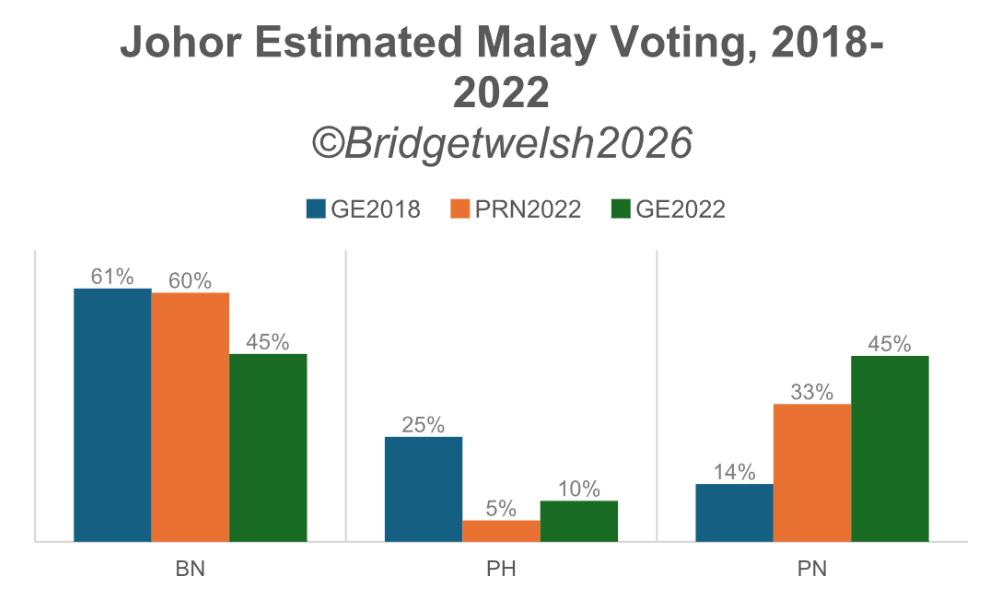
This coming election, Malay voters are expected to move away from PN for a variety of reasons, not least of which is the split within the coalition between Bersatu and PAS, the lack of a strong ground and uneven social media PN campaign, devoid of resources, and the fact that the coalition is only contesting in 33 of the 56 seats.
The PN “opting out” will especially contribute to a Malay vote swing.
Umno-BN is dependent on winning back Malay support if it wants to hold onto a strong majority of seats. Umno-BN is hoping for a return to 60 percent support and a possible boost to 70 percent, around caretaker Johor menteri besar Onn Hafiz Ghazi’s popularity.
Keep in mind traditionally, before GE2018, this figure was over 70 percent.
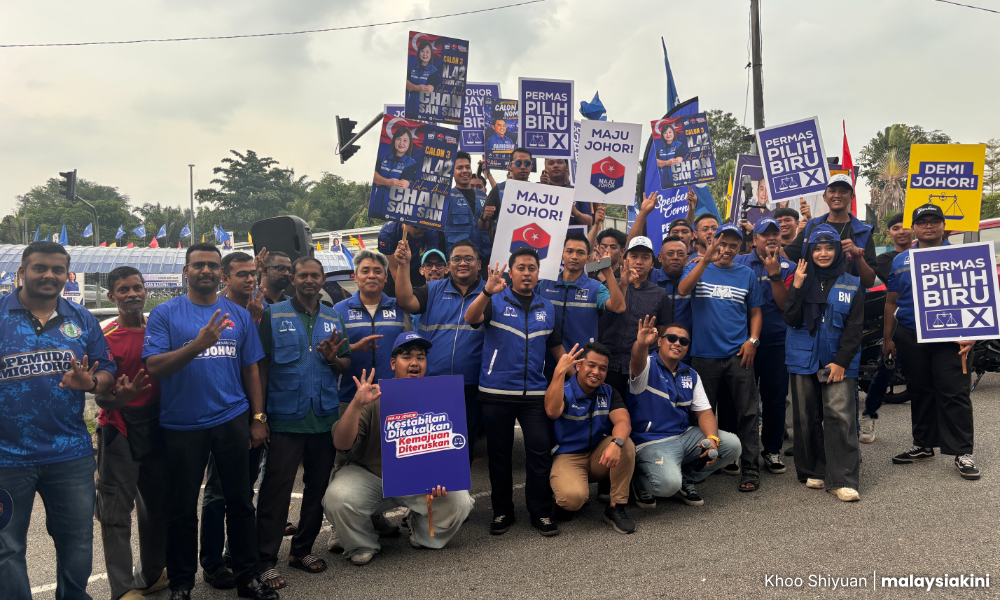
Whether there will be a minimum 15 percent swing to BN to secure the competitive seats in the Malay heartland in the north and eastern parts of Johor, seats such as Endau and Bukit Naning are dependent on how votes will swing from Bersatu supporters.
In these more urban areas, Harapan is hoping to capture some of the traditional disenchantment with PN.
They want to return to their support of 25 percent of Malay support in Johor, which fell precipitously in the last two elections.
Despite an uphill task for Harapan in swinging support, many Malays do support the coalition, and this has made the urban and semi-urban seats surrounding Johor Bahru and Batu Pahat competitive this election.
2. Will Felda voters return to BN? The answer yes – but youth gap in support persists
The heart of Malay voters is in the Felda and Felcra areas, comprising two main areas, the Pengerang-Kota Tinggi-Mersing corridor in the east where Umno-BN has remained strong.
But the opposition has made gains in some seats and the rebel north and West Segamat-Muar-Batu Pahat region, which has a long history of political activism. There are over 80 Felda/Felcra settlements, comprising 180,000 settlers, with over half a million Johorean voters.
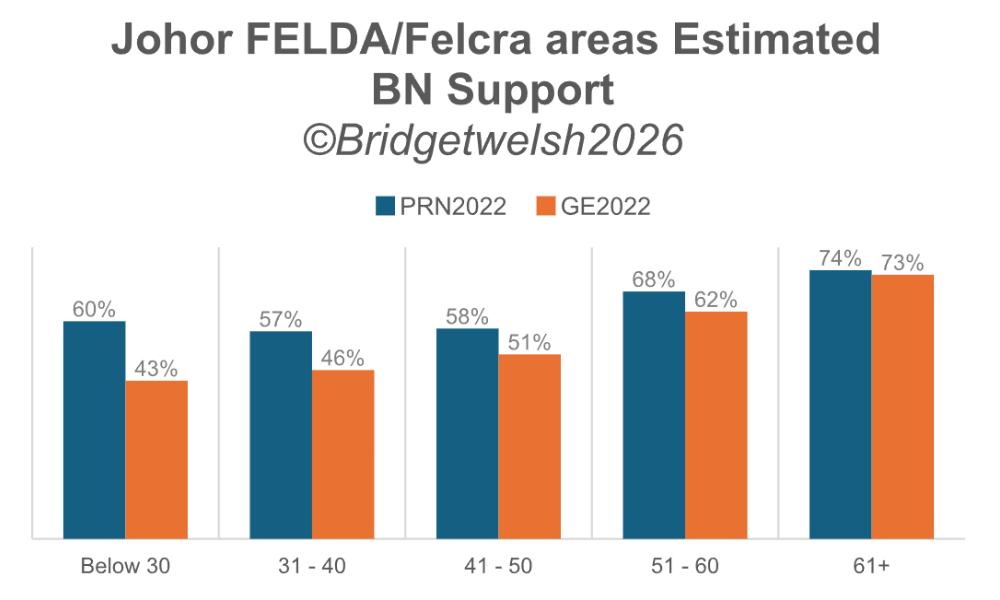
The Felda/Felcra voting pattern shows that GE2022 involved significant erosion of Umno-BN support, especially among younger voters.
The difference between Umno-BN support among older settlers and the second and third generation of Felda voters is a 30 percent decline.
Research on the ground also points to variation among the historic ethnic origin of Felda/Felcra voters, with Malays with Javanese roots more inclined to BN compared to Malay Bugis voters.
The youth gap in Umno-BN support was also accentuated by an estimated 17 percent drop in turnout among younger voters, compared to only an estimated eight percent turnout among older voters.
Umno-BN is banking on its resolution of over 27,000 land titles in the settlements working to its advantage. Issues remain, especially impacting second and third generation voters.
Turnout in these rural/semi-rural areas will be significant in shaping the overall result, with mobilisation to bring out the vote intensive in the last few days of the campaign.
3. Will the Chinese vote swing? Yes, but by how much?
The media has focused on the Chinese voters, as there is a focus on whether this vote will move away from Harapan to Parti Bersama Malaysia and Muda or even back to Umno-BN, to the MCA.
Chinese voters comprise 36 percent of total Johor voters, making up a majority in nine seats and comprising a significant third in another 24 seats.
The Chinese swing historically was pivotal in the victory for Harapan in 2018 and the retention of seats in the 2022 election, especially relevant for the DAP in state seats.
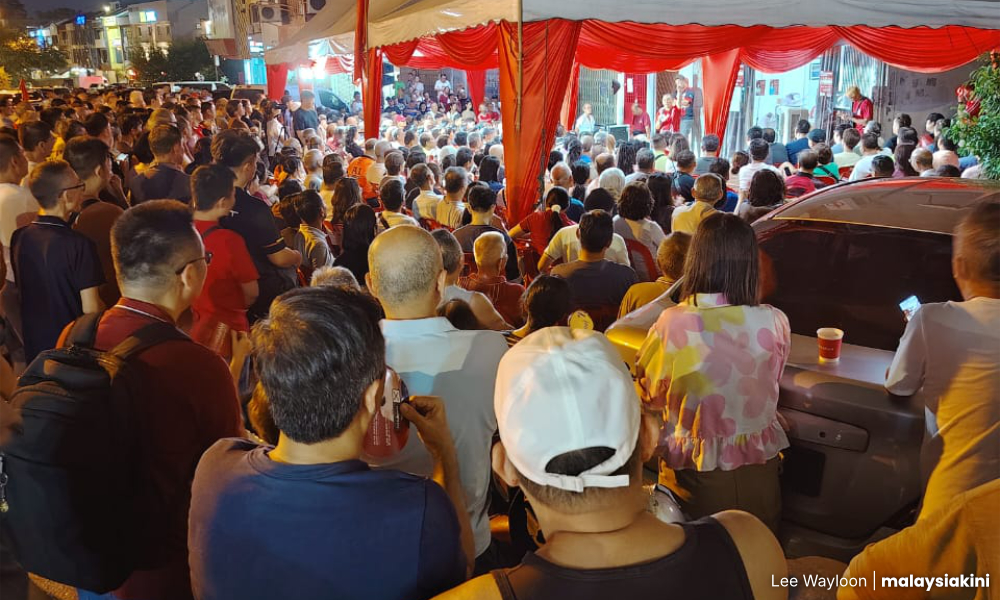
The DAP held 10 seats, with some of these on thin margins such as Jementah and Perling, having lost four seats in the 2022 state election: Yong Peng, Bekok, Paloh and Pekan Nanas, giving the MCA a political lifeline after years of political decline.
These seats, notably Yong Peng and Pekan Nanas, remain competitive this election as well. The local betting odds on the DAP at the moment are six seats, with the election a few days away.
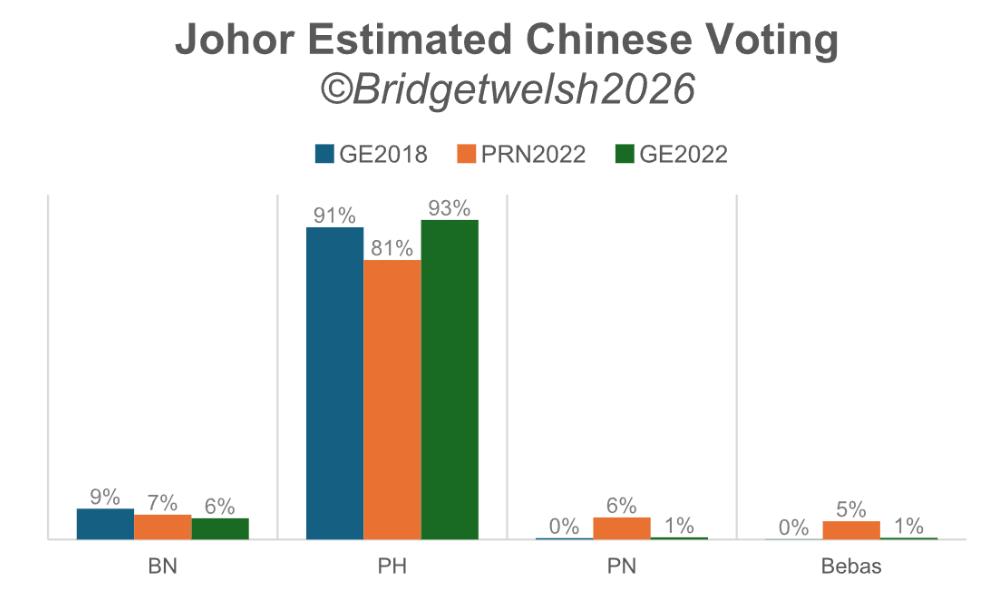
The arguments around a voting swing for the Chinese include “punish” Harapan for lack of reforms and policies negatively impacting the Chinese community (in education and business) and support for Onn’s leadership, a key factor locally.
There is a counter-dynamic, a possible retention due to Umno-PAS fears and the Najib Abdul Razak pardon - two issues that have dominated the social media campaign, and, most important of all, the many Chinese voters who find favour with Anwar despite issues of concern and see Harapan as the “only choice” among the options.
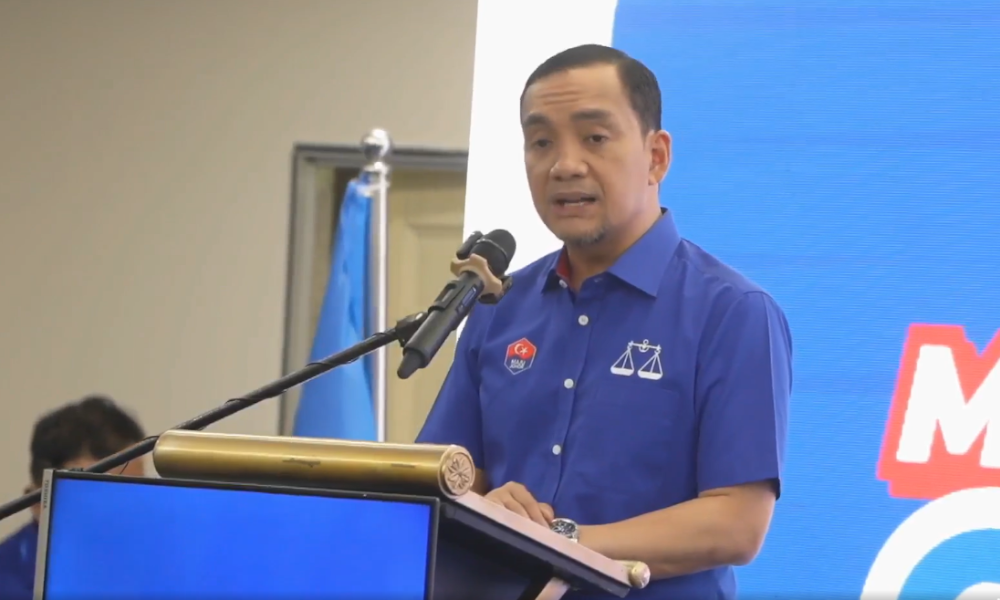
Bersama is hoping to capture the disappointment and is positioning itself as the choice. The support for “bebas”(independent)/other candidates - Warisan in previous elections - suggest these is a reservoir of voters seeking alternatives to build on.
On the ground, Chinese voters are certainly paying attention to Bersama where it is contesting. Bersama has focused its limited resources, flags and posters, in Chinese areas of constituencies.
Analyses to date weigh heavily on the Chinese swing away from Harapan, with figures ranging from a 20 percent to 30 percent swing, with this accompanied by a drop in turnout, discussed below.
The swing was an estimated 40 percent in Sabah’s November polls, although in that case, there was a more “acceptable” alternative, Warisan. Johor has many factors impacting the Chinese vote.
Some of the disenchanted vote will move to Bersama, with the party hoping that this will continue to gain traction to win through effective splitting of the vote.
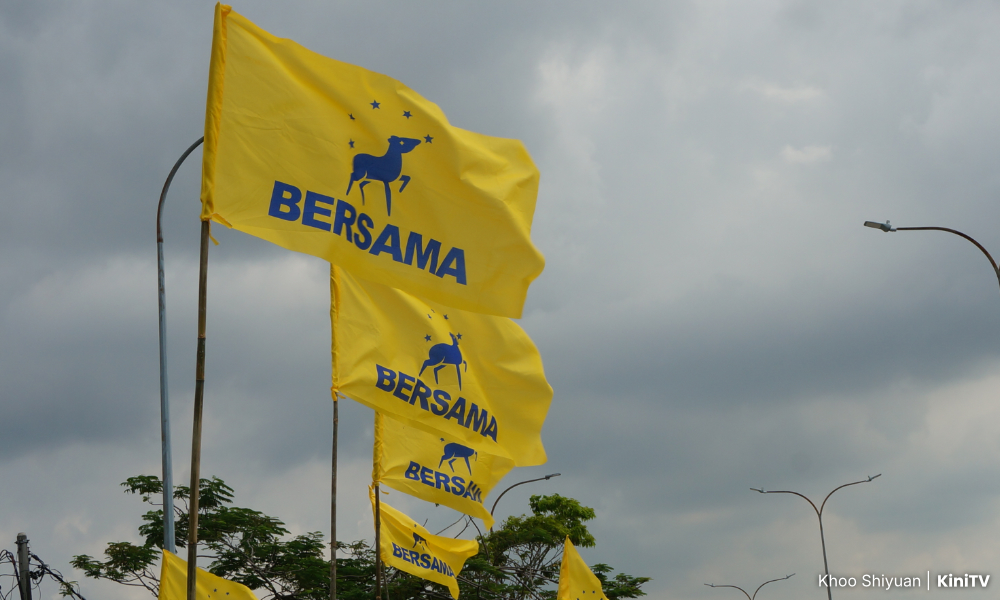
Keep in mind to hold onto deposits, the party needs to win 12.5 percent. Much of the disenchanted vote will be reflected in turnout.
Umno-BN wrestles with winning over Chinese voters. MCA faces serious legacy issues in winning over Chinese voters, as does Umno-BN whose problems in receiving support from the Chinese are well known, from corruption to racialised politics.
Chinese support for Umno-BN has not reached above 10 percent in the last three elections. This time round it is expected to break the 10 percent threshold, potentially reaching 20 percent in some areas, depending on seats.
In recent days, there have been competing claims that Chinese support will come back to Umno-BN and non-grounded electoral analyses that suggest as many as 53 seat victories based on this pattern; all of these are part of the psywar around this evocative swing.
My own ground analysis is that Chinese vote for Harapan remains stronger than others suggest but is uneven across areas. Also, there is considerable movement and indecision among Chinese voters, especially younger ones, with reports of Chinese outstation voters coming home this election compared to Covid-19 times.
The last few days of the campaign will be decisive in shaping turnout. The consequences of these contradictory currents are that it makes for interesting contests, a point that will be discussed in part 2.
4. What about Indian voters? Where are they going?
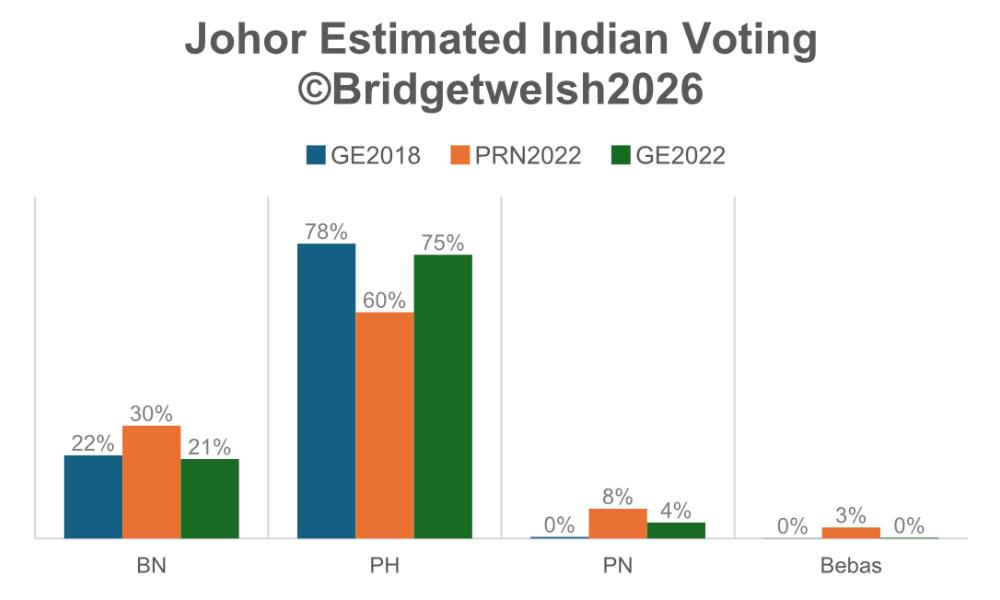
Not to be left out are Indian voters who comprise seven percent of the overall vote and make up more than 10 percent of the vote in 14 of the seats will influence outcomes.
Some of the close races for Indian voters include Bukit Batu, Kota Iskandar, Perling, Johor Jaya and Tiram.
Unfortunately, in the course of the campaign, they have been left out, with mobilisation focused locally.
One of the features of the Johor campaign has been a lack of substantive discussion of issues and performance of parties in the state.
Only recently has there been attention to data centres. Political campaigns have not moved narratives toward solving problems.
There are 18 Indian candidates running, 10 percent of the overall number of candidates. Harapan is fielding five, with the other coalitions BN and PN fielding four.

These low figures underestimate their importance and the key role they play in parties/coalitions. The battle is for Harapan to win back the 15 percent of support lost in the 2022 state election and for BN to win greater support.
Ironically, DAP’s “red herring” attack on Najib - saying that Najib will be released actually takes away from Indian support, as Najib remains quite popular among Indian voters, especially grassroots, for his Indian blueprint and commitment to looking into the problems the community is facing.
Since he was voted out of office, there has been inadequate attention to Indian issues. Indian voters will be decisive in the close races, with 15 seats still open a few days out from polls.
5. What about turnout? Where will it reach?
The biggest question being asked is about turnout. How high will it get given the lack of a “mood”?
Low turnout in the 2022 state election, especially among Chinese, which reached an estimated 41 percent, has been touted as a reason for the Umno-BN victory in the last state polls.
“Free” buses, “Dear You” movie narratives, calls to families, and scare tactics have all been used to pull back Chinese voters.
High turnout will be critical for the DAP in over half of its seats such as Johor Jaya and Jementah, and for Harapan more generally in seats in urban areas.
Turnout was low for all communities in the last general election, but it was lowest among the Indian and Orang Asli communities.
Indian voter turnout is as important to watch, along with support. As I will explain tomorrow, Indian voters are moving in a different way altogether this election, more tied to candidate and ethnic loyalties.
Across coalitions, the voter mobilisation is ramping up, as machinery is starting to target getting the core supporters to come out.
For minority communities to have turnout levels above 65 percent will be challenging, given the discontent on the ground. The same is also the case for Malays, but this turnout is expected to be higher given more enthusiasm on the ground for Onn.
6. What about young people? Will they turn out?
Among voters from an age cohort lens, the group that I am observing closely are younger voters, those under 30.
Over the last few elections, there was not much differential between younger voters and older ones in turnout levels around a particular election.
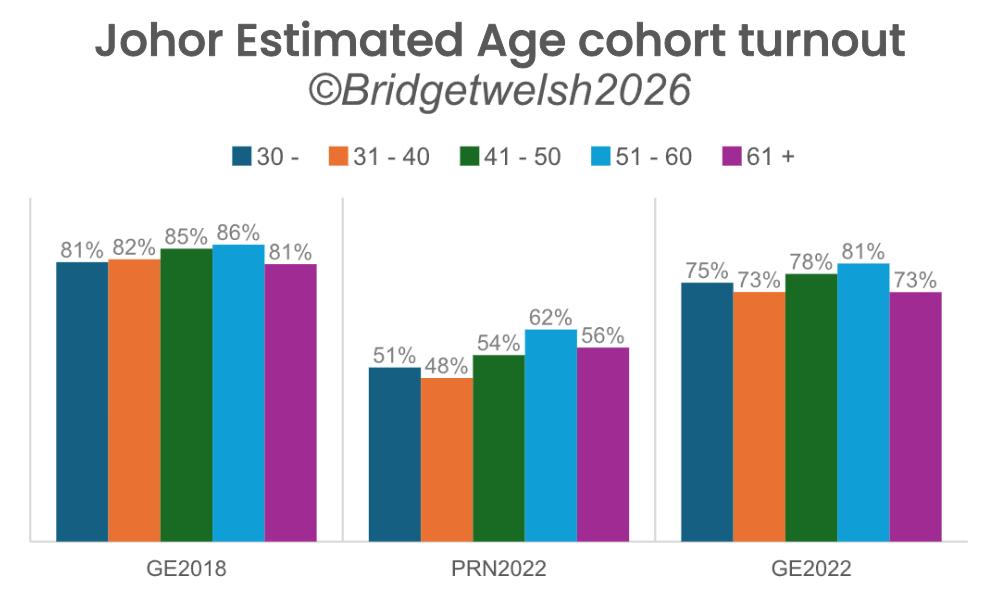
What will be interesting to observe is if youth are an outlier in lower turnout this round, shaped by the exam schedule, high costs of returning home, and greater disengagement among many.
Umno-BN has the advantage among the youth as they have had greater mobilisation of younger people through programmes such as Jelajah Orang Johor events, including morning gatherings, subsidised food sales, community sports, and cultural carnivals which have been going on this year. - Mkini
In Part 2, I will turn to particular voting behaviour issues in this poll and look at predictive scenarios.
BRIDGET WELSH is an honorary research associate of the University of Nottingham’s Asia Research Institute and a senior associate fellow at The Habibie Centre. Her writings can be found at bridgetwelsh.com.
The views expressed here are those of the author/contributor and do not necessarily represent the views of MMKtT.

No comments:
Post a Comment
Note: Only a member of this blog may post a comment.