


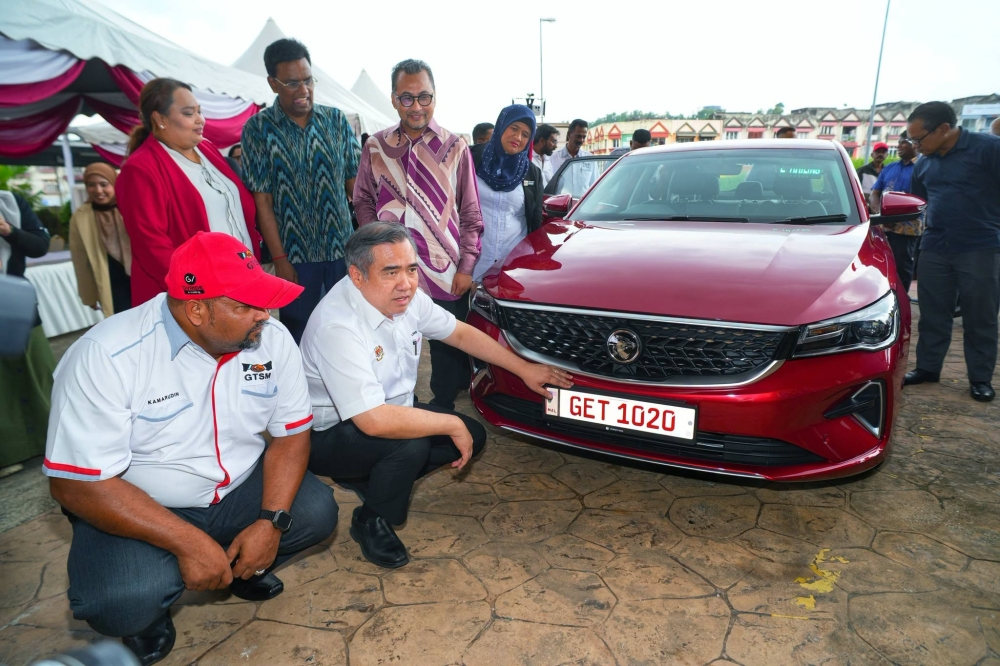
KUALA LUMPUR, July 31 — For many of Malaysia’s ageing taxi drivers, dwindling passengers are only part of the problem.
Many are still driving decades-old vehicles they do not own while paying daily rental fees that leave little room to improve their earnings or replace their taxis.
Why was the programme designed?
According to the Land Public Transport Agency (APAD), the number of active taxi vehicle permits in Peninsular Malaysia fell to 35,388 as of March 2026 from 76,031 in 2019.
It was this situation that prompted the government to review existing policies and consider how it could better support the industry.
Rather than offering a one-off subsidy, the Transport Ministry worked with the Ministry of Finance, Proton, EON Bank and insurers to develop what became the National Madani Taxi Reform Programme.
The programme combines tax exemptions, rebates, easier financing and direct permit ownership to help drivers replace ageing taxis, lower the barriers to ownership and modernise the industry.
Transport Minister Anthony Loke said the programme was inspired not merely by statistics, but by what he repeatedly witnessed during constituency programmes with taxi drivers.
During festive aid programmes, he would ask taxi drivers to line up their vehicles before distributing assistance.
“I felt very sad when I saw the condition of the cars, they are very, very bad.
“Some had broken air-conditioners, windows that no longer worked and bonnets that would not close properly.
“They are really old drivers, and they need this as a means of earning an income. But at the same time, we know it is very hard for them to get passengers.
“With that kind of condition, they would not be able to compete because passengers simply would not consider them as an option as they want a safer and better car,” Loke told Malay Mail in an interview.
Loke said many of the drivers he met were older drivers who had spent decades in the industry but struggled to keep up with changes in the transport landscape.
“It’s not a big population, but we can’t abandon them.
“They are disadvantaged in many aspects, and it’s very hard for them to catch up with the changing environment,” he said.
How does the programme work?
Loke said the government’s objective was to lower the barriers preventing taxi drivers from replacing ageing vehicles and owning the taxis they operate.
“The idea is to lower the barrier so that they can own a new car.
“Hopefully with a new car, and by adopting technology, they can compete and provide better services to the public,” he said.
According to Loke, the programme does not rely solely on government funding and was designed as a collaboration between government agencies and several private sector partners.
The programme is only open to individual taxi drivers with a valid driving licence and Public Service Vehicle (PSV) licence. It is not available to taxi companies or corporate fleet operators.
What do drivers get?
Under the programme, eligible taxi drivers receive:
- A new Proton S70 1.5T i-GT Premium;
- Full exemption from sales tax and excise duty on eligible new national taxis announced under Budget 2026;
- A RM2,000 rebate from Proton;
- A further RM3,000 government incentive for drivers who trade in their existing taxis, bringing the total rebate to RM5,000;
- Financing through participating financial institutions with no down payment;
- Lower insurance premiums negotiated specifically for taxi drivers;
- Priority vehicle inspection at Puspakom or any licensed Motor Vehicle Inspection Centre (PPKM); and
- Flexible daily repayment schemes.
Drivers would still be responsible for loan repayments, but the programme is designed to reduce upfront costs and financing hurdles.
The programme was initially backed by a RM10 million allocation under Budget 2026, with Prime Minister Datuk Seri Anwar Ibrahim later announcing an additional RM10 million following strong response from taxi drivers.
Loke added that financing had long been one of the biggest obstacles.
“Even if they have the opportunity to buy a new car, chances are most of them won’t be able to obtain financing,” he said.
“So we worked with EON Bank and participating financial institutions to provide financing without much hurdle.
“There is no down payment involved and drivers can repay through a low daily repayment scheme.”
Ending the middleman model
The programme also seeks to dismantle one of the taxi industry's longest-standing practices — drivers renting both their vehicles and permits from taxi companies.
Under the National Madani Taxi Reform Programme, eligible drivers can own both their taxi and the operating permit directly, reducing reliance on intermediary leasing arrangements that have long formed part of the industry’s business model.
The government says the move is intended to reduce rental costs so drivers can retain more of their earnings while building ownership of their livelihood instead of continuing to pay daily rental fees.
More than replacing old taxis
Loke said the programme was ultimately about transforming the taxi industry, not simply replacing ageing vehicles.
“If we are able to change a few thousand of the old taxis to newer taxis, then we change the image of the taxi industry.
“We transform it by not having the traditional outlook of taxis, making them more attractive and creating additional revenue streams for drivers,” he said.
He added that the programme also aimed to improve public confidence in taxi services by introducing safer and more comfortable vehicles while reducing maintenance costs for drivers.
Loke said the government also hoped taxi drivers would gradually adopt technology, including e-hailing platforms, to compete more effectively in today’s transport landscape.
“We hope they can come on board, use these platforms, compete and provide better services,” he said.
Despite the decline in taxi numbers, Loke said the government could not simply allow the industry and its remaining drivers to be left behind.
“We can’t just say that because we already have e-hailing, we forget about the taxis.
“This is quite a vulnerable group which the government has a responsibility to handhold and help,” he said.
How the new ownership model works
APAD began rolling out the programme on July 3 by issuing individual taxi permits under the new ownership model.
Eligible taxi drivers must first obtain an individual taxi permit from APAD before proceeding with financing arrangements for the designated Proton S70 through participating financial institutions.
Applicants are also required to hold a valid Public Service Vehicle (PSV) licence and register as sole proprietors with the Companies Commission of Malaysia (SSM), with Proton and participating banks facilitating the vehicle financing process once the permit is approved.
For Loke, the reforms are not merely about replacing ageing taxis, but about giving veteran drivers a fairer chance to remain in an industry that has changed dramatically with the rise of e-hailing services.
- malaymail

No comments:
Post a Comment
Note: Only a member of this blog may post a comment.