



WE have all had days like this. Perhaps you’re fasting, feeling unwell or simply too busy to eat. As bedtime approaches, a familiar thought crosses your mind.
“I hardly ate anything today. Surely I can skip brushing my teeth just this once.”
It sounds perfectly reasonable. After all, if there is little or no food left in your mouth, what exactly is there to clean?
Surprisingly, the answer has very little to do with food.
Many people think brushing is simply about removing leftover food. In reality, your mouth remains active every minute of the day, whether you are eating or not. Saliva continues to flow, the lining of your mouth constantly renews itself, and millions of bacteria continue to live, grow and interact on the surfaces of your teeth.
That is why your toothbrush still has work to do, even on days when your appetite does not.
Almost immediately after brushing, your teeth become coated with a thin protective layer called the pellicle.
Formed naturally from saliva and other substances in the mouth, it helps protect the teeth from drying out. At the same time, it provides bacteria with a surface to attach themselves.
Our mouths naturally contain hundreds of different species of bacteria. Most are harmless and many even help maintain a healthy balance within the mouth.
Once they attach to the pellicle, they begin organising into communities, with different species settling where conditions best suit their needs.
Together, these bacteria form what dentists call a biofilm. Think of it as a bustling neighbourhood rather than isolated bacteria. They communicate, protect one another and continue multiplying.
Left undisturbed, this community becomes increasingly mature and more difficult to remove.
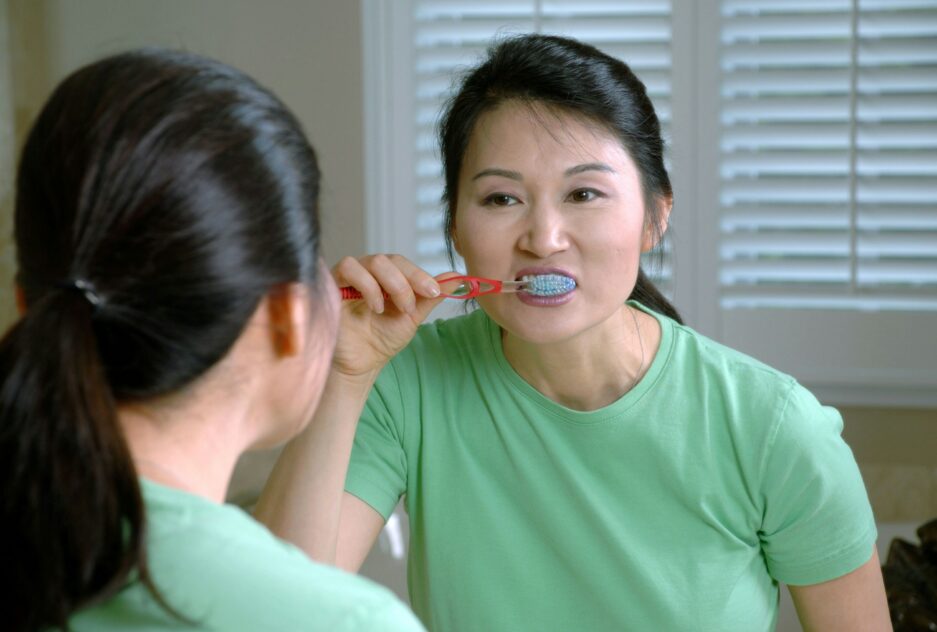
This is why brushing is not simply about removing food. It is about disrupting the biofilm before it develops into something that can damage your teeth and gums.
When biofilm is removed regularly through proper brushing, beneficial bacteria help keep harmful ones under control. But when brushing becomes inconsistent, that balance begins to shift.
Some bacteria produce acids that attack the tooth surface, increasing the risk of tooth decay. Others trigger inflammation that damages the gums and, over time, the bone supporting the teeth.
Tooth decay and gum disease remain the world’s most common oral diseases, and both begin with the same biofilm that naturally forms every day.
In other words, plaque continues to develop whether or not you have eaten a large meal. Food can accelerate the process, but it is not the reason plaque forms in the first place.
That is why daily brushing remains essential. For people with healthy teeth and gums, brushing gently twice a day for at least two minutes, together with cleaning between the teeth using dental floss, is generally enough to remove biofilm before it causes problems.
People with gum disease often require more thorough cleaning because bone loss and receding gums create spaces that an ordinary toothbrush cannot reach. In such cases, interdental brushes and single-tufted brushes are often recommended to clean these areas more effectively.
Depending on your condition, your dentist or periodontist may also recommend additional oral care products tailored to your individual needs.
The next time you visit your dentist, don’t just ask whether your teeth are free of cavities. Ask about the health of your gums as well. Healthy gums provide the foundation that helps your teeth last a lifetime.
So the next time you find yourself thinking, “I hardly ate today, so I probably don’t need to brush,” remember that your mouth never really takes a day off. Neither do the bacteria that live there.
Your toothbrush isn’t just cleaning away food. Every day, it quietly disrupts a microscopic community before it has the chance to become a much bigger problem.
The author is a Consultant Periodontist and Associate Professor at the Faculty of Dentistry, Universiti Malaya.
The views expressed are solely of the author and do not necessarily reflect those of MMKtT.
- Focus Malaysia

No comments:
Post a Comment
Note: Only a member of this blog may post a comment.