


The Kuala Lumpur High Court has ordered the government and police to pay RM195,000 in damages to 13 individuals for unlawful arrests during a Covid-19 candlelight vigil on Aug 19, 2021, with each individual receiving RM15,000.
The court also ordered five percent interest on the judgment rate per annum until it is fully paid by the defendants.
However, no order was made as to costs.
In his ruling, judge Anand Ponnudurai said no reasonable person placed in the position of the plaintiffs would believe that he or she remained free to disregard police instructions and walk away.
“Their identity card had been retained. Their requests to travel independently had been refused. They were required to board police vehicles. Those who initially refused were compelled to do so.
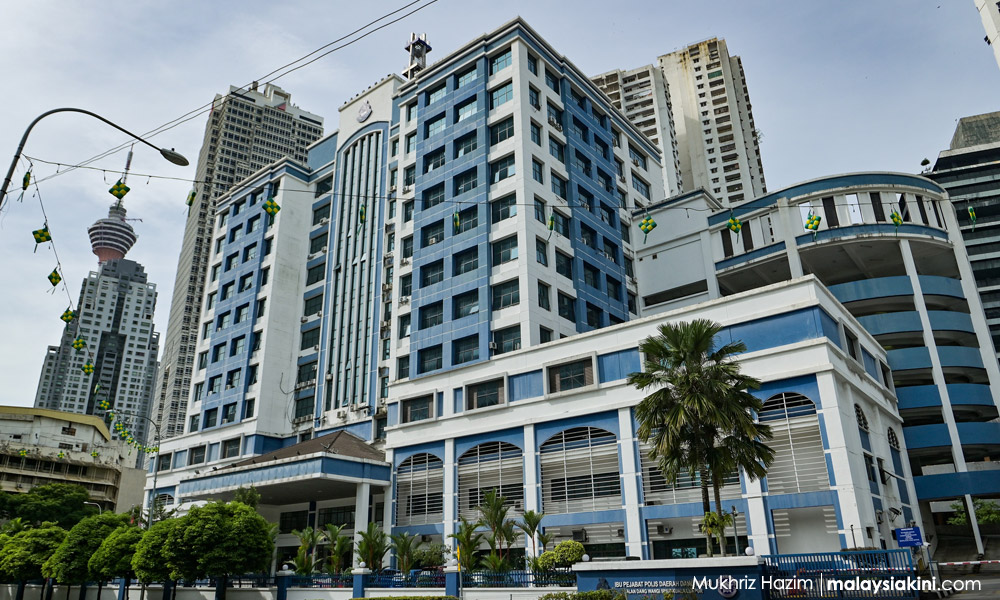
“Upon arrival at the Dang Wangi district police headquarters (IPD), they remained under police control until their eventual release.
“Those circumstances admit of only one realistic conclusion. Whatever terminology may have been employed by the police officers at the scene, the plaintiffs had, by that stage, been deprived of their liberty in a manner amounting to an arrest in law,” he said.
Anand also pointed out that no arrest warrant was issued at that time.
Unlawful detention
The judge also held that the individuals’ detention at the police headquarters was also unlawful, adding that the matter cannot be separated from the illegality of the arrest.
“When an arrest is unlawful, any subsequent deprivation of liberty which is directly dependent upon that arrest ordinarily cannot be justified merely because investigative or administrative steps were thereafter undertaken.
“Put differently, the lawfulness of the detention cannot be divorced from the legality of the arrest which gave rise to it.
“The court therefore concludes that the plaintiffs’ detention at the IPD Dang Wangi constitutes false imprisonment arising directly from the unlawful arrests.
“The plaintiffs have accordingly established this aspect of their claim,” said Anand.
However, the judge stressed that his conclusion should not be understood as suggesting that every investigative detention following an arrest is necessarily unlawful, as each case depends on its merits.
In this case, Anand held that the vigil attendees were denied timely legal representation during their detention and that the government is vicariously liable for the authorities’ conduct.
The 13 individuals filed the suit on Dec 30, 2021, naming the government, Home Ministry, the police as well as 23 police officers involved in the arrest as defendants.
The plaintiffs are Nur Qyira Izzati Yusri, Nalina Nair, Thulsi Thivani, Loh Kar Mun, Noor Suhana Ishak, Subatra Jayaraj, Thamelinggem Pillai, Ilaiya Barathi, Addy Samsudin, Dinesh Venkitesan, Khairi Zulfadhli Abu Bakar, Asraf Sharafi Azhar, and Wong Yan Ke.
The plaintiffs claimed they were unlawfully arrested, assaulted, and battered during their arrest and that their constitutional rights were breached.
Facilitate constitutional rights, not frustrate
Meanwhile, the court held that the unlawful arrest breached the individuals’ constitutional rights under Article 5(1) and 5(3) of the Federal Constitution.
Article 5(1) states that no person shall be deprived of his life or personal liberty save in accordance with the law, while Article 5(3) safeguards an individual’s right to legal representation during detention.
Article 10(1)(b) stipulates that citizens have the right to assemble peaceably and without arms.
“The court accepts that police officers remain entitled to regulate access to police premises for legitimate security and administrative reasons.
“However, administrative arrangements must facilitate rather than frustrate the exercise of constitutional rights,” Anand said.
However, the judge dismissed the plaintiffs’ claims under Article 10(1)(b) on rights to assembly peaceably as well as tort of misfeasance in public office.
He also dismissed the plaintiffs’ claims of excessive force involving assault and battery.
“There is no evidence that the plaintiffs were punched, kicked, or otherwise assaulted in the manner sometimes encountered in cases involving police brutality.
“Neither are there any medical records produced that disclose injuries consistent with significant physical violence,” Anand said. - Mkini

No comments:
Post a Comment
Note: Only a member of this blog may post a comment.