


Police have confirmed that all Rohingya individuals in a group who camped outside the United Nations High Commissioner for Refugees (UNHCR) office in Kuala Lumpur possess valid UNHCR documents, amid concerns raised by various human rights organisations.
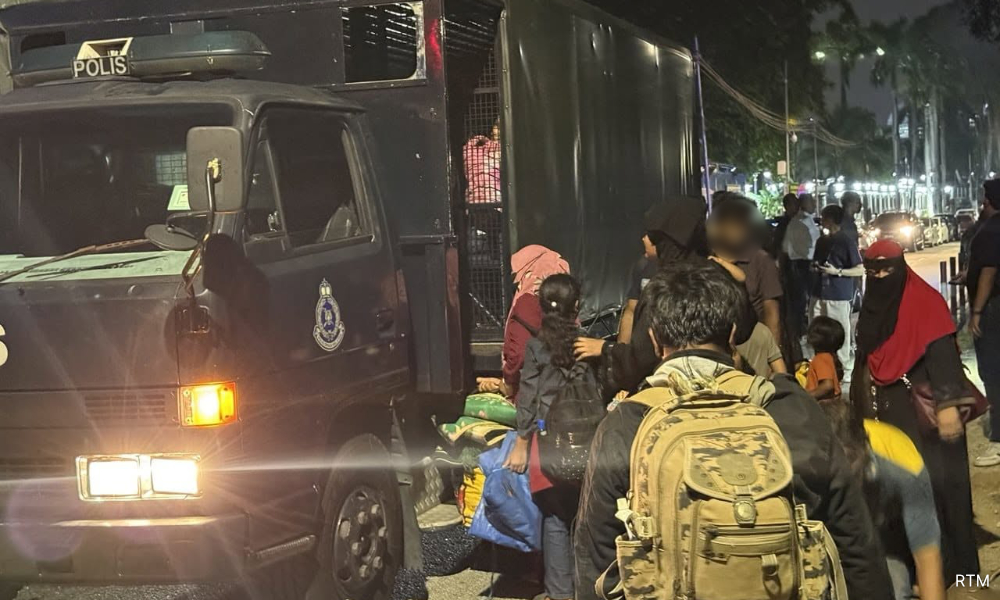
In a statement today, Kuala Lumpur police chief Fadil Marsus said the Rohingya, who were exiled from their native Rakhine state in Myanmar by force, are being temporarily housed at the Kuala Lumpur police headquarters while the UNHCR works on further action.
Besides the 110 Rohingya refugees, comprising 57 adults and 53 children, police also relocated one Iraqi man, one Somali woman, and one Indonesian woman during the process, which took place around 8.40pm last night.
While Fadil did not mention if the three non-Rohingya individuals possessed valid UNHCR documents, he said representatives from the UNHCR office were present at the scene alongside officers from the Kuala Lumpur Criminal Investigation Department (CID).
Repatriation process
Last night, Bernama reported that the National Security Council is expected to be involved in coordinating the case, with individuals lacking UNHCR cards to be handed over to the Immigration Department.
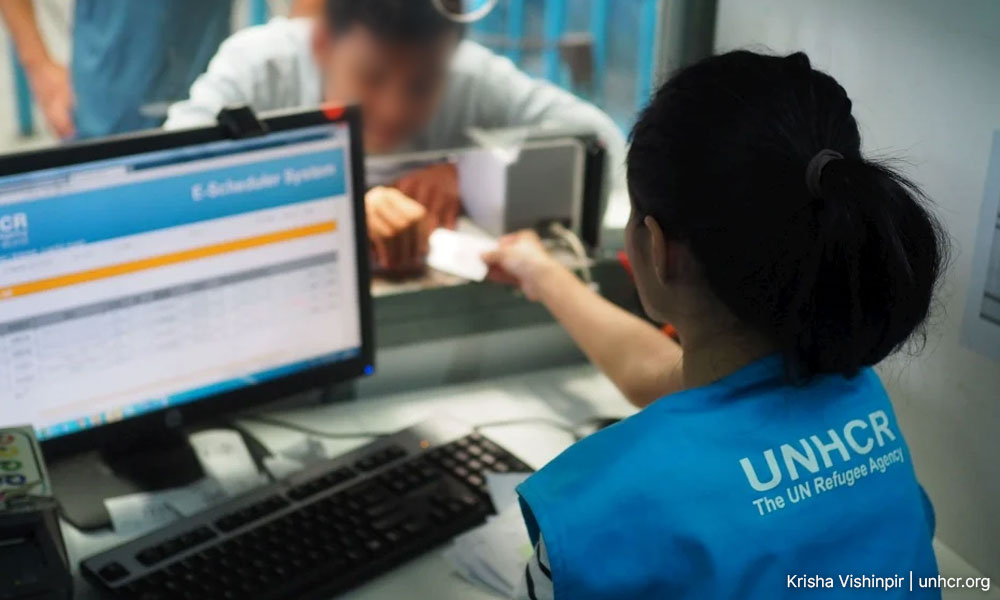
They are then expected to be sent to a detention depot before being repatriated to their country of origin.
It was previously reported that the group had resorted to camping in front of the UN refugee agency’s office yesterday after they were allegedly driven out by locals from their settlement in Penang.
According to Harian Metro, the group had rented three buses headed for Kuala Lumpur after fearing for their personal safety due to supposed threats from residents.
In a statement yesterday, Seberang Perai Utara police chief Anuar Abdul Rahman said the relocation of 121 refugees from the former Penaga tsunami site in Kuala Muda, Kepala Batas was carried out voluntarily and coordinated by various government agencies.
Prime Minister Anwar Ibrahim had earlier affirmed that every individual in Malaysia must comply with its existing laws as a sovereign nation and directed authorities to take “firm action” against the group.
“They cannot simply choose to occupy any part of the city… those who do not have permits must be dragged to immigration (depots), while those found with valid permits must be issued a warning,” Anwar said.
Stance ‘deeply concerning’
In response to the prime minister’s remarks, Amnesty International Malaysia said Anwar’s “deeply concerning” stance has turned a fundamentally humanitarian situation into an enforcement issue.
“These were Rohingya refugees, including women and children, who reportedly travelled to Kuala Lumpur seeking assistance after being displaced from their homes.
“Yet, instead of providing protection and support, the prime minister’s response resulted in the arrests of entire families and threats of immigration action,” its spokesperson Divya Shesshsan Balakrishnan said in a statement today.

He warned that viewing the matter solely through the lens of detention, immigration offences, and removal could risk obscuring how those involved are in need of protection, with statements from the government “significantly contributing” to the fueling of stigma, discrimination, and hostility towards people seeking safety.
“If Malaysia is serious about taking greater responsibility for refugee management, it cannot allow detention and deportation of those in need of protection to be the foundation of its approach.
“Refugees and asylum seekers should be treated with dignity and in accordance with their human rights, as people who need protection, whether or not Malaysia has ratified the 1951 Refugee Convention,” he added.
Urging Putrajaya to immediately halt any planned deportations and forced returns of Rohingya and other Myanmar nationals to their country of origin, Divya highlighted that the principle of non-refoulement prohibits returning individuals to places where they face a real risk of persecution, torture, or other serious human rights violations.
‘Safety and dignity’
Expressing similar sentiments, the Myanmar Ethnic Rohingya Human Rights Organisation in Malaysia (MERHROM) said the only “durable solution” for the Rohingya genocide survivors is resettlement, considering how they cannot be deported as they are stateless.
Requesting that the Malaysian government and the UNHCR hold talks with resettlement countries to increase quotas for Rohingya refugees, the group’s president, Zafar Ahmad Abdul Ghani, appealed for regional and world leaders to ensure justice for the persecuted community.
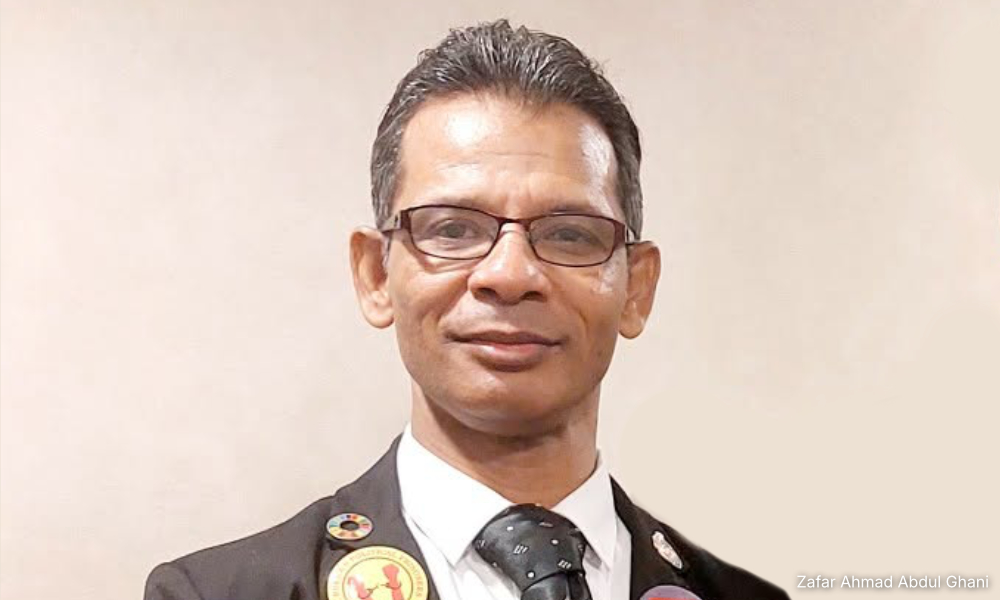
“Our only hope is safety and dignity. Becoming refugees doesn’t mean we become less human than you.
“We do not choose to be refugees and asylum seekers. We do not choose to leave our families and our countries. We were forced to flee to save our lives,” he added in a statement.
Last month, Malaysian Humanitarian Aid and Relief (Mahar) urged the UNHCR to expedite the resettlement of Rohingya refugees in Malaysia, stressing that the country is only a transit nation and not a permanent resettlement destination.
The call came amid increased hate campaigns against the persecuted community, who have been exiled from their native Rakhine state in Myanmar by force, with some online comments demanding that they now be “chased out” of Malaysia.
Leave no one behind
Separately, two other rights groups also argued that as a member of the international community and a party to the UN 2030 Agenda for Sustainable Development, Malaysia has undertaken principles on leaving no one behind, reducing inequalities, and promoting inclusive societies.
“These commitments do not disappear at the gates of an immigration detention depot, nor can national security become a blanket justification for ignoring basic human dignity and international human rights standards.
“Malaysia has every right to enforce its immigration laws, but law enforcement without accountability is not good governance,” North South Initiative and Beyond Borders said in a statement today.
It also urged the Home Ministry to distinguish between undocumented migrant workers and refugees or asylum seekers, stressing that dealings with the former should involve enforcement that follows the chain of responsibility all the way to employers, recruiters, and agents.
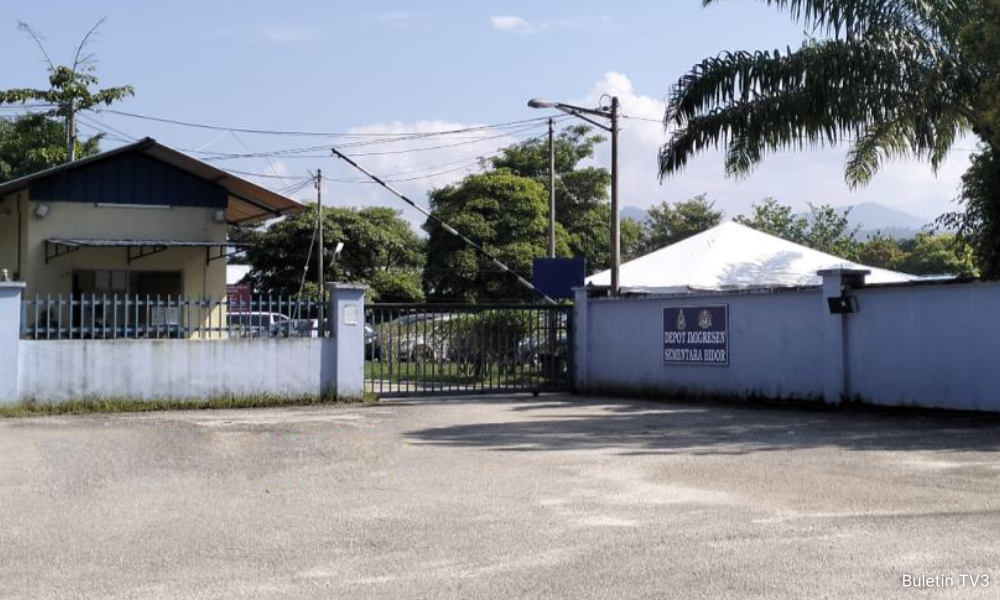
Additionally, it also expressed concerns about the issue of overcrowding in detention facilities, noting that the government has a duty to ensure that people in its custody are treated humanely and have access to adequate healthcare, sanitation, and basic necessities.
“If the conditions are humane and the government has nothing to hide, then transparency should not be a threat. Independent monitoring should be welcomed, not treated as an inconvenience.
“A detention system that cannot withstand independent scrutiny is a system that demands greater scrutiny, not less,” the groups added. - Mkini

No comments:
Post a Comment
Note: Only a member of this blog may post a comment.