


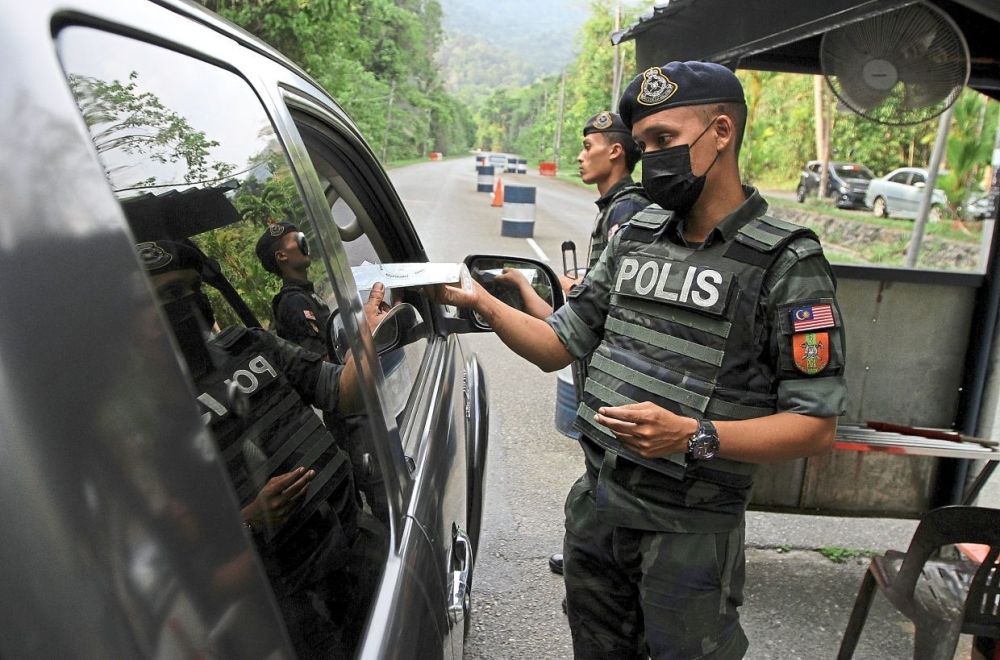
MALAYSIA has long projected an image of internal stability, even as it sits at the heart of global trade routes and depends heavily on migrant labour.
That stability, however, is increasingly tested not by overt unrest but by quieter vulnerabilities along its borders and within its migration management systems.
A growing body of cases linking extremist facilitation networks, document fraud, and migrant mobility particularly those intersecting with Nepal should prompt a hard reassessment of Malaysia’s border security posture.
The real lesson is not about nationality or religion but about how poorly governed documented and undocumented migration can evolve into a serious national security vulnerability.
Malaysia hosts millions of foreign workers across construction, manufacturing, plantations, and services. Among them are hundreds of thousands of Nepali nationals who form an essential part of the workforce.
The overwhelming majority are law-abiding individuals seeking economic opportunity. Yet when large migrant inflows are managed through fragmented systems, outsourcing chains, and weak oversight, they generate blind spots.
Those blind spots are not only exploited by traffickers and labour syndicates, but increasingly by extremist facilitators who understand that modern security failures occur less at the fence and more in the paperwork.
The case of Mahendra Jung Shah illustrates this danger. Shah, a Nepali national later linked to ISIS facilitation activities, was not a battlefield radical or charismatic recruiter.

He was a logistical node that moving through labour and travel channels, leveraging weak documentation controls, and exploiting the anonymity that migrant ecosystems can provide.
His trajectory underscores a critical shift in how extremist threats operate: ideology is often secondary to access, mobility, and cover. When individuals like Shah are able to move through multiple jurisdictions, sometimes under legitimate visas, the threat lies not in who they are publicly, but in what systems fail to notice privately.
The Nepal-ISIS connection more broadly highlights structural risk. Nepal has been repeatedly identified by regional analysts as a transit and facilitation space for extremist-linked networks, not because it is deeply radicalised, but because of weak documentation controls, porous borders, and limited inter-agency coordination.
When individuals emerging from such environments enter Malaysia legally or otherwise, Malaysia effectively imports not just labour, but the risk profile of the systems they passed through. If Malaysian screening, monitoring, and enforcement mechanisms are inadequate, those risks do not disappear; they embed themselves quietly within the labour ecosystem.
Malaysia’s border challenges are therefore twofold.
The first is document fraud within legal migration channels. Work permits, professional visas, and business passes are often processed through layers of agents and outsourcing firms. This creates opportunities for falsified credentials, recycled identities, sponsorship abuse, and visa category switching.
Past cases of deported individuals later reappearing under new identities point to gaps in data integration between immigration, police, and security agencies. Deportation, in such circumstances, becomes a temporary disruption rather than a permanent safeguard.
The second challenge is the persistent presence of undocumented migrants: those who enter through maritime routes, land borders, or who overstay visas.

These populations often exist outside formal systems, invisible to the state. Undocumented status does not imply criminal or extremist intent, but it creates ideal conditions for exploitation and concealment.
Extremist facilitators and organised crime networks thrive where people fear detection and lack legal protection. An undocumented worker is far less likely to report coercion, suspicious activity, or recruitment attempts, even when they sense something is wrong.
The convergence of migration crime and security threats is no longer theoretical. Modern extremist networks rely less on overt ideological recruitment and more on logistics: forged documents, travel facilitation, employment cover, and financial flows disguised as remittances.
Labour routes become cover stories; construction sites and factories become anonymity zones. What begins as a border control failure can quietly evolve into a counter-terrorism problem.
Malaysia must therefore rethink border security as a continuum, not a checkpoint. Security does not end when a migrant clears immigration at an airport or crosses a maritime boundary. It extends through employer registration, workplace monitoring, visa renewals, financial transparency, and exit tracking.
Fragmentation between agencies like immigration, labour departments, police, maritime enforcement, and intelligence units that creates exploitable seams. Extremist-linked facilitators do not require systemic collapse; they need only systemic inconsistency.
A key lesson from the Mahendra Jung Shah case and the broader Nepal experience is the danger of focusing solely on ideology. Waiting for clear signs of radical belief is ineffective when threats operate through facilitation and logistics.
Early-warning indicators are often mundane: repeated use of the same labour agents, clusters of workers tied to a single sponsor, abnormal document patterns, or unexplained financial movements
Border security, in this sense, becomes a matter of administrative intelligence, not just armed enforcement.

Policy responses must follow this reality. First, Malaysia needs deeper integration of migration and security databases across agencies, ensuring that individuals flagged for serious immigration or security violations cannot simply re-enter under new identities or visa categories.
Second, labour recruitment agencies and outsourcing firms must be treated as part of the national security ecosystem, subject to rigorous audits and meaningful penalties for non-compliance.
Third, undocumented migration must be addressed through credible regularisation pathways combined with targeted enforcement: approaches that reduce fear-driven invisibility rather than periodic crackdowns that push communities’ further underground.
Equally important is community engagement. Migrant communities are not threats; they are often the first line of insight. Workers who feel protected by the system are more likely to report exploitation, document fraud, or suspicious approaches. Security built on trust is far more resilient than security built solely on raids and detention.
The Nepal-ISIS nexus ultimately serves as a warning about how small governance failures accumulate into strategic risk. Malaysia’s borders; physical and bureaucratic are under constant pressure from global mobility.
The question is not whether migrants pose a threat; they do not. The real question is whether Malaysia’s border and migration systems are robust enough to prevent bad actors from hiding among the many who come simply to work.
In an era of globalised movement, national security is no longer defined by fences, patrol boats, or airport scanners alone. It is defined by coordination, data integrity, and the ability to see beyond the point of entry.
Malaysia’s future security will depend less on how many people it keeps out, and more on how well it governs those it lets in.
R. Paneir Selvam is Principal Consultant at Arunachala Research & Consultancy Sdn Bhd (ARRESCON), a think tank specialising in strategic and geopolitical analysis.
The views expressed are solely of the author and do not necessarily reflect those of MMKtT.
- Focus Malaysia.

No comments:
Post a Comment
Note: Only a member of this blog may post a comment.