


“Do not obey in advance. Most of the power of authoritarianism is freely given. In times like these, individuals think ahead about what a more repressive government will want, and then offer themselves without being asked. A citizen who adapts in this way is teaching power what it can do.”
- Timothy Snyder, On Tyranny: Twenty Lessons from the Twentieth Century
There is this old Buddhist shrine on the roadside in a sometimes quiet but often bustling suburb in Petaling Jaya. It has been there for decades. Nobody really knows who built it.
For decades in this racially diverse neighbourhood, the roadside shrine had endured. School children passed by it on their way to and from school. Adults drove past it on their way to work and on the drive back.
There was nothing extraordinary about it; it was just there, and if you noticed, it was well-tended, and there were the usual offerings, but nobody really paid attention to it.
The shrine was part of the scenery. Part of the life of the community.
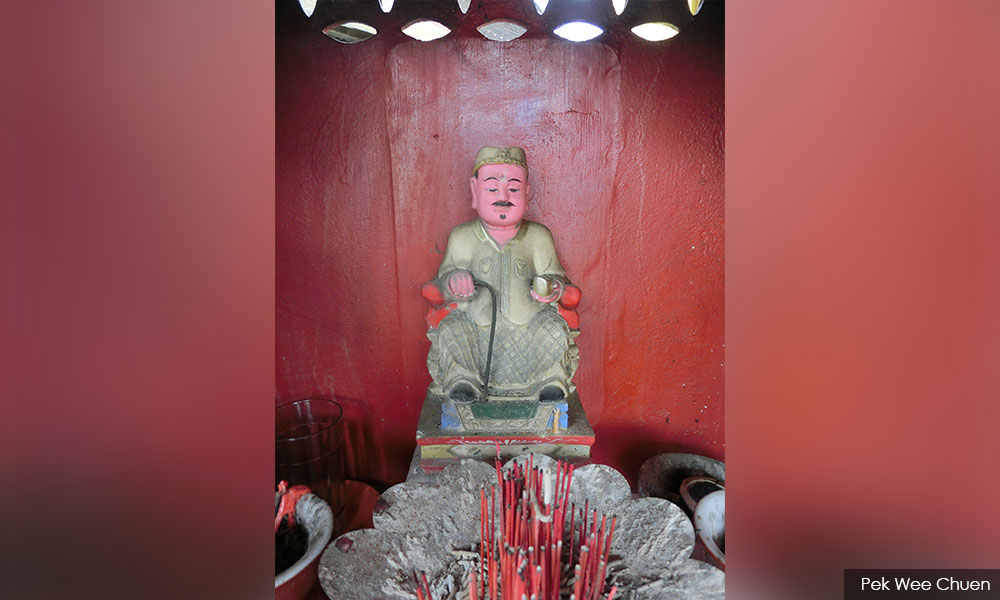
But the shrine is no more. Or rather, the red structure remains, but it is empty. The porcelain inhabitant who for decades stood guard in the neighbourhood has vanished. No more offerings or lit candles, just a derelict red structure remains.
I was told that people were afraid in the current climate that the shrine would be desecrated. That its immobile guardian within would be defiled. Better safe than sorry, they told me.
It was not as if the road was earmarked for municipal business or construction. Some folks were just worried; in this current climate, you have to be cautious, they said.
So, something which has been there for decades is no more. Soon, the red structure would be removed, and it would be as if it never existed in the first place.
Why ‘defend’ a religion?
I understand the impulse to protect what is sacred. After the supposed land activist, Tamim Dahri Abdul Razak, stepped on a Hindu religious symbol and made a mockery of the state security apparatus, people understood that their religion needed defending.
After the prime minister announced that state governments need to handle illegal temples, people rightly embraced the need to protect and preserve what is sacred to them.

For decades, I never understood this pathological need by some to defend their religion.
Truth be told, the concept was alien to me. I defined it as propaganda meant to control and maintain power over the majority.
It was a political tool that the establishment used to maintain order. I never understood how a religion, any religion, needed to be “defended”.
When the prime minister talked of “illegal” structures and “victory” over the demolition of a structure which predated municipal laws, people became rightfully worried about the way they observed their religions.
After all, these structures existed for decades under various permutations of ketuanism (supremacy) and endured.
While there had been flashpoints, there was never an organised, state-enabled attempt to disrupt the racial equilibrium when it came to places of worship, for the most part.
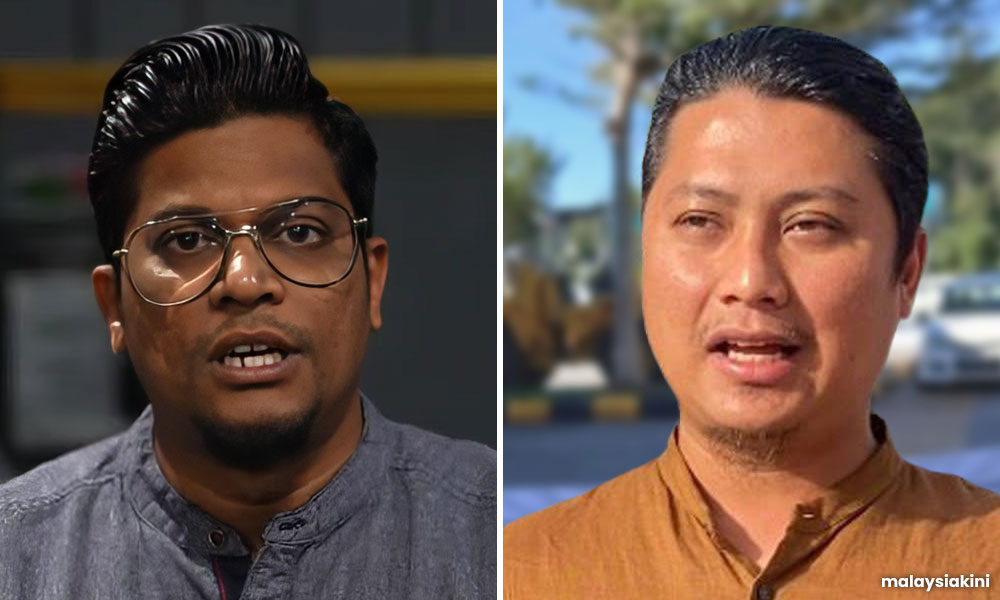
PSM deputy chairperson S Arutchelvan recently wrote a piece which I mostly agree with, and I understand the need to make this a class issue and not a racial one.
The problem with this kind of argument is that it smashes into the reality of race in this country, which is embedded in mainstream politics.
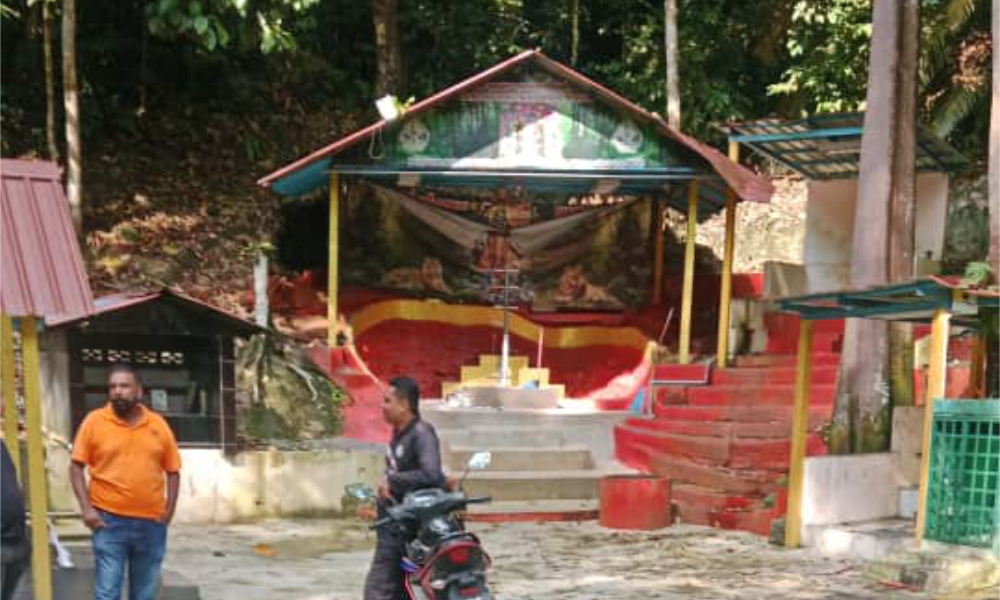
Arutchelvan wrote - in defending urban pioneer settlements, such as the mostly Malay-Muslim communities of Kampung Aman, Kampung Chubadak, Kampung Rimba Jaya, Berembang, and others - that PSM has seen surau and mosques built on untitled land, supported by politicians and residents.
But this is about race and religion, because you have to wonder why on earth, besides corporate interests, would anyone be interested in “illegal temples” if not to demonstrate the superiority of their religion over that which they are attempting to demolish.
And yes, temples and the Hindu community are low-hanging fruit.
Oppression
You have to ask yourself, why now? We have all these extremists either engaging in the destruction of temples or claiming that all this is a legal endeavour.
The fact of the matter is that not one of these temples caused any form of social, economic, or legal dysfunction in this country.

Hindu temples are in your face. While Christian places of worship are subject to strict rules when it comes to Islamic sensitivities - the cross, for instance, apparently has a debilitating effect on some people - Hindu temples are gaudy architectural provocations for people who believe in the supremacy of their faith.
Legacy temples are also a reminder of how the Indian community built this country. Cities may have grown around temples, and without the Chinese, there would be no cities, as former prime minister Dr Mahathir Mohamad reminds us.
However, this has given rise to strategists who delude themselves into thinking that they come from technical backgrounds, but only demonstrate such expertise by demolishing and stepping on sacred symbols.
They are the problem, but the state makes the victims of their harassment the problem. Their crusade reeks of an inferiority complex made worse by a state which thinks it is defending race and religion.
Not only is this malicious, but it also creates an atmosphere where people with not much power feel powerful. This, in turn, becomes a distraction from the failings of an all-powerful state.
Folks like Tamim and controversial preacher Zamri Vinoth prove this every time Madani does not censure them.
Rational Malaysians should keep in mind that the establishment portrays non-Muslims as the ones causing disharmony. This is the narrative that is being reinforced by the powers that be.
This is why it is not only about the destruction of temples but also the obliteration of history. Most importantly, this is about compliance.
Temples are not only symbols of dissent in this climate, but also a reminder of why non-Muslim religions need to be defended. - Mkini
S THAYAPARAN is Commander (Rtd) of the Royal Malaysian Navy. Fīat jūstitia ruat cælum - “Let justice be done though the heavens fall.”
The views expressed here are those of the author/contributor and do not necessarily represent the views of MMKtT.

No comments:
Post a Comment
Note: Only a member of this blog may post a comment.