


They were not loose arrangements. Each was legally binding and held the parties to terms, obligations, and conditions precedent and antecedent.
A rocket scientist would not be needed to solve this problem. Simple arithmetic would provide the answers, but together with them come bigger headaches caused by interfering politicians.
So, here’s the question: If A had been compelled to share its annual revenue of RM10 million with B, which was then an unknown party, and a 10 percent levy by C, how much would A have lost over nine months?
It’s straightforward – nine makes three-quarters as revenue of a calendar year, and the answer is RM4.5 million, leaving A with a meagre RM3 million.
Why would anyone want to enter such deals?
To put it in context, if A is a local council in Selangor, B is a third-party parking concessionaire, and C is the state government, it will all fall into place.
More issues to tackle
Flashback to the pre-launch of the Selangor Intelligent Parking (SIP) system in June last year: Selangor executive councillor Ng Suee Lim outlined the terms - the concession company was expected to invest RM200 million to develop the system’s infrastructure, including the installation of about 1,800 CCTV cameras at parking lots.
Ratepayers in Selayang, Shah Alam, Subang Jaya City Council (MBSJ), and Shah Alam who were dragged into the state vs local council imbroglio nine months ago have even more issues that have to be addressed now.

Is the RM200 million “investment” for real or just a sweetener to appease the protests and objections from the people and the lawmakers?
Ng said the move is part of the state government’s efforts to boost parking revenue, which currently amounts to only about 30 percent collection from 1,000 designated bays.
“We target a collection rate of over 60 percent and hope to reduce double parking in busy areas,” Ng said.
“The concessionaire will handle both fee collection and enforcement, under close supervision from the councils and state government.
For good measure, Ng threw in this: “It is important to note that the local councils will not bear any operational costs and are expected to collect more revenue than before due to system efficiency improvements, digitalisation, and centralised monitoring.”
But the concessionaire does not have enforcement power nor legal authority, and any document related to public parking must be in the name of the councils.
Cameras nowhere to be seen
In a previous article, I wrote: “Does MBI Selangor, a state-owned company, have the power to appoint contractors or concessionaires? Does the private company have the power to enforce parking regulations, even if it is under the supervision of council staff? Can they legally issue a summons for non-payment of parking fees?
“It is akin to saying that the power to stop, search, and arrest can be delegated to security guards under the supervision of the police!”
Motorists in these four areas continue to use the Selangor Smart Parking app, developed earlier by the state, while summonses, parking tickets, and related enforcement documents are still issued directly by council staff.
How do I know this? Over the past two weeks, I visited these four areas and uncovered even more - the much-touted CCTVs are nowhere to be seen, not even the pillars or posts where the cameras were supposed to stand.
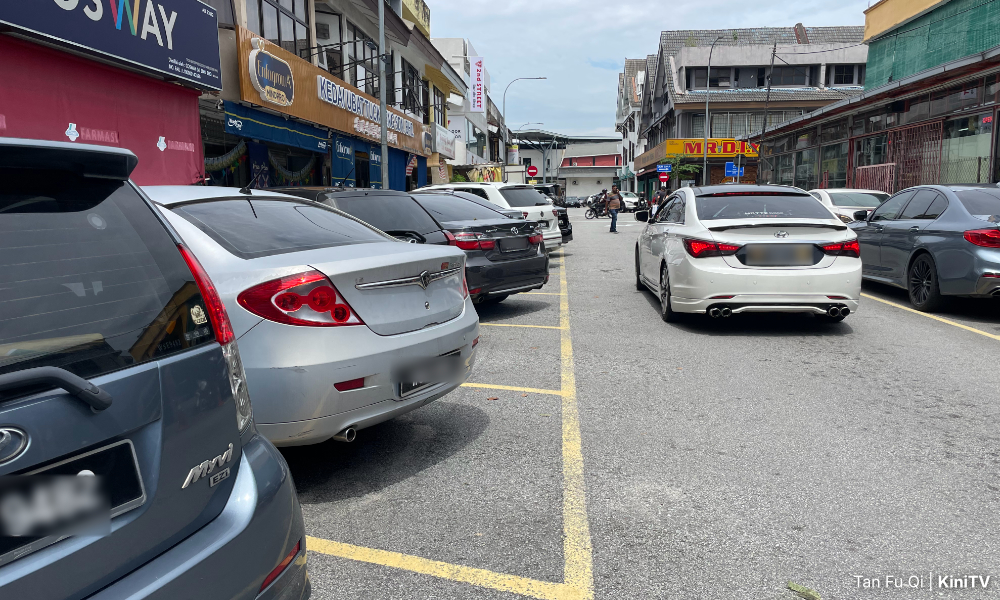
To put in colloquial Malay, it’s “habuk pun tak ada!” (absolutely nothing, zero, not a single thing.)
Bleeding revenue
Nine months after the four councils had hurriedly (more reluctantly) signed the contracts, there seems to be disappointment, but those affected, including some councillors, have sealed their lips, fearing not being re-appointed.
So, where is the value-added service, which comes at a huge cost or, in the case of the councils, a huge loss of revenue?
This is not a parking policy - it is a masterclass in political accounting. The RM200 million “investment” is waved like a magic wand, yet the arithmetic shows councils bleeding revenue while concessionaires fatten their margins.
The promised infrastructure remains invisible, enforcement powers remain muddled, and the public is left wondering whether “smart” parking is just another euphemism for dumb governance.
The deeper rot lies in the governance model itself. Councils are stripped of autonomy, ratepayers are treated as captive wallets, and the state government positions itself as visionary while outsourcing accountability.
What was sold as efficiency is in fact denseness - a financial model where losses are trivialised, and profits privatised.
It is the bureaucratic sleight of hand that turns public accountability into private gain, dressing up opacity as innovation.
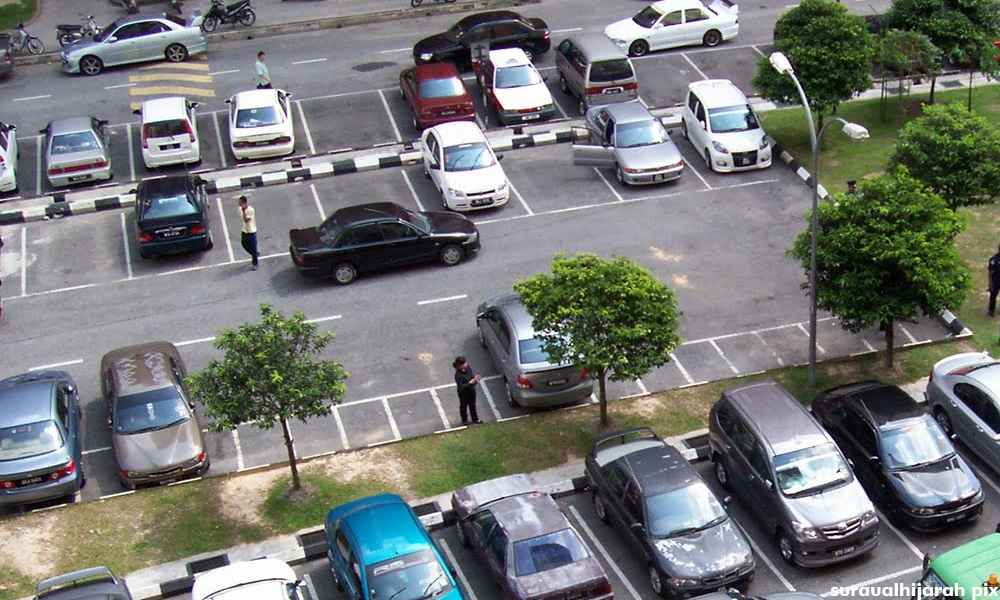
The councils are told they will “collect more revenue,” but the arithmetic shows otherwise: they are reduced to junior partners in their own jurisdictions, while concessionaires enjoy guaranteed returns.
This is not efficiency. It is a distortion. Losses to councils are brushed aside as inconsequential, borne silently by ratepayers, while profits are ring-fenced for private actors under the banner of “smart governance.”
Dense, opaque model
In reality, the model is neither smart nor efficient - it is dense, opaque, and structurally tilted against public interest.
Until Selangor can demonstrate tangible infrastructure, transparent accounts, and genuine accountability, the SIP scheme remains a cautionary tale: a system where efficiency is weaponised as rhetoric, denseness is institutionalised as policy, and the public is left subsidising illusions.
This experiment risks becoming a parable of modern Malaysian governance - where slogans of digitalisation and innovation mask the same old patronage politics.
The question is not whether more revenue will be collected, but whether the people will ever see it, or whether it will vanish into the black box of concessionaire contracts.
Until the state can show tangible results - cameras installed, enforcement clarified, transparent accounts published - this remains less a “smart” system than a costly illusion.
And illusions, unlike parking bays, cannot be monetised forever. - Mkini
R NADESWARAN is a veteran journalist who strives to uphold the ethos of civil rights leader John Lewis: “When you see something that is not right, not fair, not just, you have to speak up. You have to say something; you have to do something.” Comments: citizen.nades22@gmail.com.
The views expressed here are those of the author/contributor and do not necessarily represent the views of MMKtT.

No comments:
Post a Comment
Note: Only a member of this blog may post a comment.