


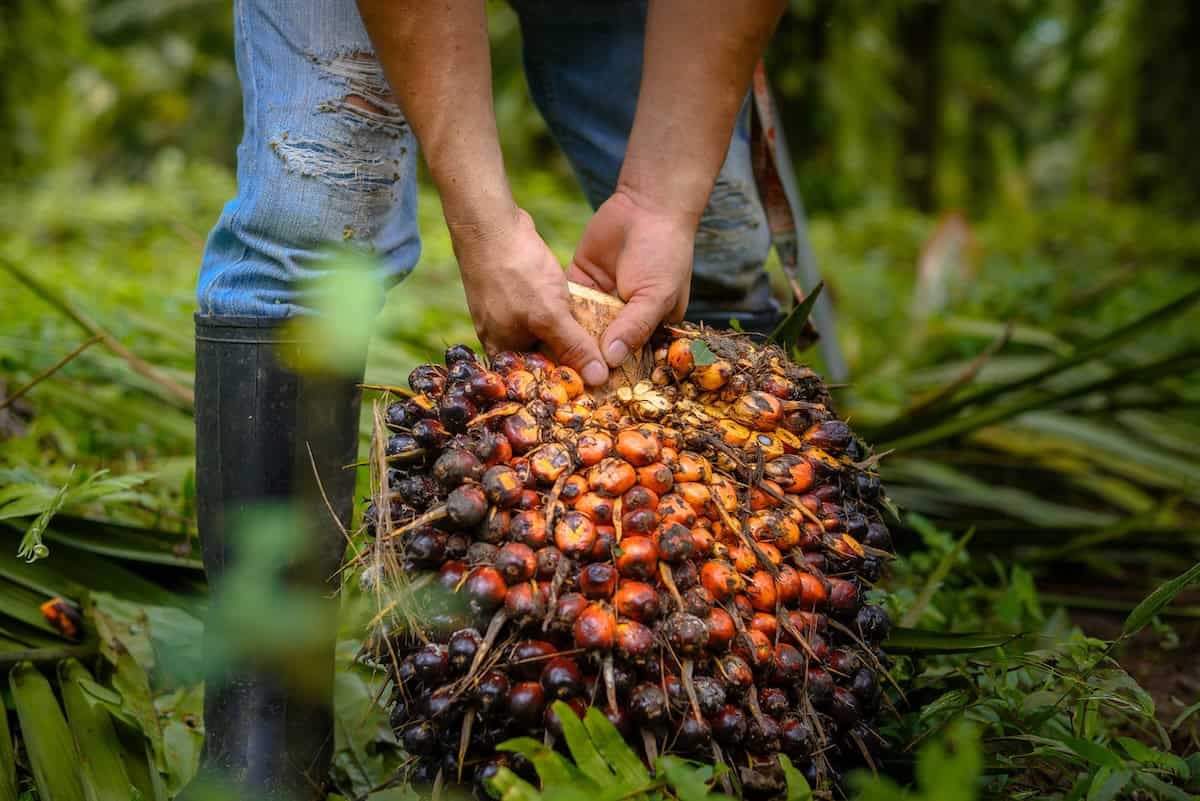
MALAYSIA’S plantation sector remains one of the backbone industries of the economy, with palm oil at its core.
In recent years, the sector has been shaped by a mix of structural challenges and cyclical opportunities.
Despite these pressures, the outlook often turns favourable during periods of global uncertainty.
Palm oil tends to benefit from supply disruptions in other edible oils like soybean and sunflower oil, as well as from higher crude oil prices that lift biodiesel demand.
This positions Malaysian planters as indirect beneficiaries of geopolitical tensions and energy market volatility.
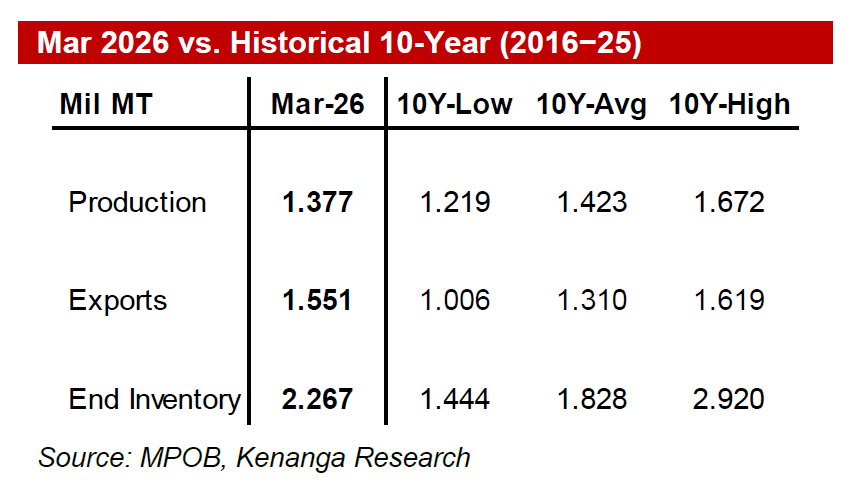
Note that March 2026 production uptick to 1.377 mil MT, at -1% year-on-year (YoY) probably marks the start of this year’s seasonal upcycle.
Despite stronger month-on-month (MoM) production, inventory closed 16% lower in March at 2.267 mil MT and came in 7% below Kenanga, but 3% above consensus, expectation.
The MoM dip in inventory was due a surge to near 10-year high in exports.
That the strong March exports of 1.551 mil MT occurred alongside firmer March crude palm oil (CPO) price of RM4,321 per MT (up 6% MoM, -9% YoY from unusually strong RM4,724 last year), this inelasticity in exports to higher prices suggests rising food security concerns arising from the Middle East conflict.
As such, whether the current Middle East conflict sees a ceasefire or otherwise, supportive demand for edible oils including palm oil is expected as buyers stock up for another quarter or two.
Quarter one is often the slowest production quarter and quarter one calendar year 2026 (1QCY26) looks to be so with output in Feb and Mar hugging the past 10-year production trendline.
“March’s closing inventory stayed above historical average but it is the lowest year-to-date and we expect Malaysian inventory to approach the 10-year average in 2Q due to stronger exports as countries build up reserves in the event of supply or shipping disruptions,” said Kenanga.
From availability of fertiliser as some exporters are reducing or halting sales to higher fertiliser costs, up more than 20% since end February, new planting are affected while rising energy cost is crippling distribution costs and affecting the supply of affordable packaging material for food.
Even worse for edible oils, CY26 global supply was already looking tight even before the conflict.
With the spike in energy prices, the demand for bio-diesel has surged along with the demand for edible oil such as palm oil.
Although planters face rising fertiliser and energy costs, the sector is expected to be a net gainer as edible oil prices have surged with CPO prices rising from RM4,019 in Jan to RM4,500-RM4,700 per MT in Apr.
Also, consumption is expected to be resilient and grow 3%-4% YoY or more depending on bio-diesel demand.
Further note that Malaysia started CY26 with high palm oil inventory thanks to record harvest in CY25, and many planters have locked in fertiliser at lower prices up till mid-CY26 with SDG even locking-in its entire year’s requirement already. — Focus Malaysia

No comments:
Post a Comment
Note: Only a member of this blog may post a comment.