


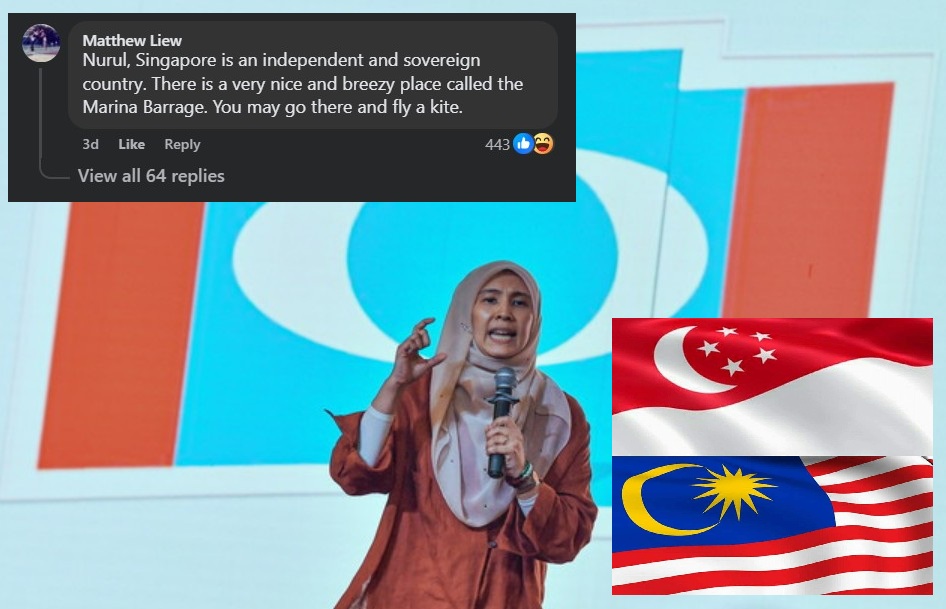
POLITICIANS should be aware of their boundaries rather than letting their party’s ideology or making what is seemingly a populist stance getting the better of them when passing remarks on international matters, especially those involving sovereign nations.
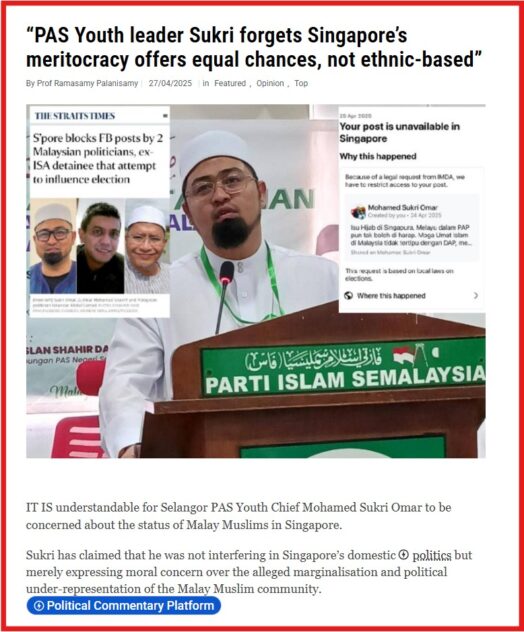
Whether it has to do with the welfare of Singaporean Malay citizens or if our southern neighbour considers Israel a close, long-standing security partner or “unwritten ally”. Malaysians simply have to accept and respect that as their rights of choice in accordance with the principles of sovereign equality and non-interference.
Such is the bitter truth after brickbats were hurled at PKR deputy president Nurul Izzah Anwar for being a “busy body” after she described the statement by Singapore’s Foreign Minister Dr Vivian Balakrishnan on the republic’s refusal to negotiate with Iran concerning safe passage through the Strait of Hormuz as “both revealing and regrettable”.
“They reflect not prudence but a narrow strategic posture that prioritises alignment over regional responsibility and international law,” declared the former Permatang Pauh MP in a recent PKR statement.
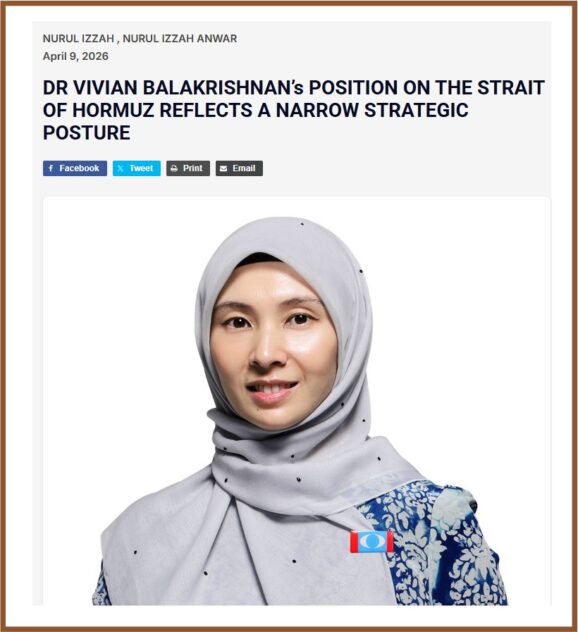
“Iran is the target of war crimes by the US and Israel with huge losses of civilian lives and infrastructure. Its controls on the straits are an attempt to seek a durable peace. Malaysia has consistently upheld the principle that diplomacy must be exercised, not abandoned.”
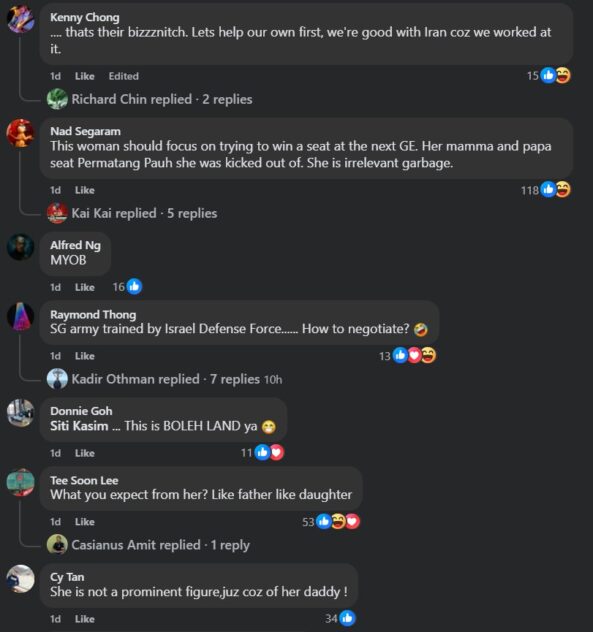
For her criticism, the de facto #2 in PKR after Datuk Seri Anwar Ibrahim who happens to be her father ended up getting admonished by patriotic Singaporeans as summed up by this social media post by Singapore Matters.
‘Mind your own business’
“She should mind her own business. Singapore doesn’t tell Malaysia how they should respond to a crisis. Neither should she tell us what to do,” rebuked the digital content creator focused on highlighting local Singaporean stories, government policies and national updates.
Paying a toll where freedom of navigation is enshrined in international law is not negotiation. It’s submission.
Singapore takes the side of the law. That’s the way it has always been because Singapore needs a rules-based order to survive and thrive.
As postulated by human rights activist and lawyer Siti Kasim, “this isn’t about silencing anyone but about understanding boundaries”.
In other words, while Nurul Izzah is entitled to her view that Singapore’s “posture appears less about neutrality and more about echoing the strategic preferences of external powers whose interests do not always align with those of our region”, this may not necessarily rhyme with Singapore’s national/foreign interest.
“There’s a difference between expressing an opinion and appearing to tell another sovereign state how it should act. When Malaysian political figures speak on sensitive cross-border issues, it can easily be interpreted as interference whether intended or not,” observed the Orang Asli advocate.
Foreign policy is not conducted through personal commentary. It requires consistency, discipline and clear official channels.
As a prominent figure, Nurul Izzah’s words carry weight. That makes it even more important to be measured – especially when the issue involves another country’s decisions.
We should be careful not to blur the line between having a view and overstepping into matters that are not ours to direct.
Thankfully, PMX has put the matter to rest by contending that Singapore’s refusal to negotiate with Iran over access to the Strait of Hormuz was within its rights.
“It is their view and their business. Ours is to maintain good relations,” he told reporters after Friday prayers at Kampung Cheras Baru on Friday (April 10).
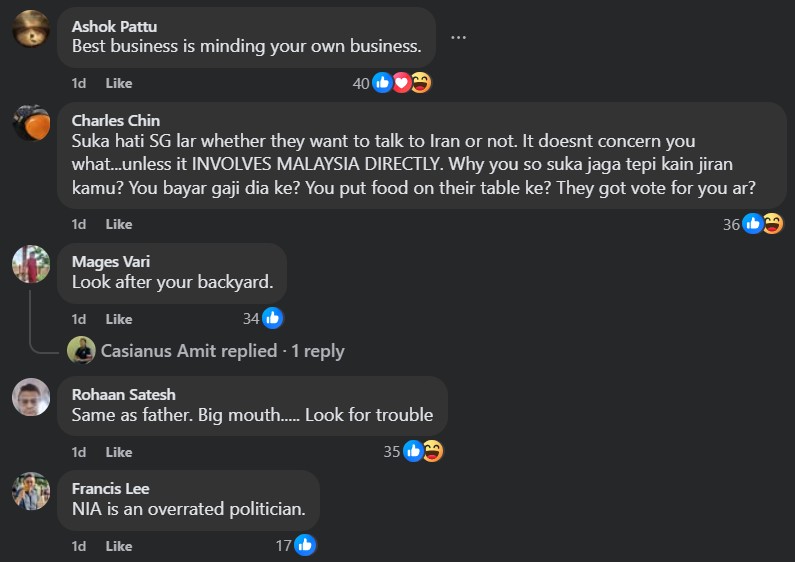
Interestingly, not only Singaporeans but Malaysians, too, felt that Nurul Izzah had over-stepped her boundaries.
- focus malaysia

No comments:
Post a Comment
Note: Only a member of this blog may post a comment.