


If you ask the average person to describe Tourette's Syndrome, they will likely mimic a sudden, loud outburst, sometimes bordering on or being outright obscene.
This instinctive association with swearing stems from coprolalia, an involuntary vocal tic characterised by the utterance of vulgar or socially inappropriate language, which has come to define the condition in the popular imagination.
The clinical reality, however, is far more nuanced. Tourette's is a neurodevelopmental disorder rooted in the brain's basal ganglia, a cluster of structures responsible for regulating movement and motor control.
When these systems misfire, the result is tics; sudden, repetitive, and largely uncontrollable movements or vocalisations.
These can range from simple motor tics such as blinking and throat clearing to more complex vocal expressions, including echolalia, the repetition of sounds or words, and, in rarer cases, coprolalia.
Coprolalia, despite its outsized reputation, affects only a small minority. While Malaysia lacks official data on Tourette’s, the US Centres for Disease Control and Prevention estimates that only about one in 10 people with Tourette’s experience it.
Yet public perception continues to be shaped by viral clips, comedy sketches, and a broader lack of awareness. For many, Tourette’s remains synonymous with swearing.
This narrow and misleading image reduces a complex neurological condition to its most sensational expression, obscuring the reality of those navigating life with a brain that does not want to conform to social norms.
Swearing ‘near’ people, not ‘at’ them
According to Tourette’s advocate Ann Khoo, the primary issue for those with coprolalia is a fundamental misunderstanding that they do it with intent.
“People often misunderstand us for having a foul mouth or for swearing at people. But actually, it's something that we cannot help,” Khoo explained.
In reality, the words are involuntary tics shaped by the brain’s tendency to latch onto sounds, words, or stimuli in the surrounding environment.
This can overlap with echolalia, where individuals with Tourette’s repeat words or phrases they hear, further complicating how their behaviour is perceived.
Additionally, because the words uttered are often taboo, bystanders tend to perceive people with Tourette’s as making a personal attack or displaying signs of anger.
Despite years of advocacy to dispel misconceptions, public reaction remains one of ignorance and hostility.

Formally diagnosed with Tourette’s when she was 14, theatre performer Ho Lee Ching shared that she often encountered instances where people urged her to “just control” involuntary tics.
Ho recalled an incident at her university library in which a staff member took issue with her vocal tics, despite her sitting in a designated area for noise and discussion.
Even after Ho attempted to explain her condition, the staffer insisted that she needed to “control” herself in a public space or find a corner to "calm" herself.
“I was shocked. Am I supposed to just stay at home then?” she said.
The experience left her questioning where she was expected to exist, and if her presence is tolerated only if she abides by society’s conditions.

For those living with Tourette's, it is not simply a matter of willpower, yet the expectations placed upon them create an impossible position.
“The more people ask us to control ourselves, the more we can’t,” Khoo explained, adding that suppressing a tic is akin to holding back a sneeze, possible for a short time, but ultimately unsustainable.
Khoo added that attempts to suppress tics in quiet or formal settings, such as classrooms, exam halls, or workplaces, can lead to a build-up of internal tension, resulting in more intense outbursts later.
Beyond the physical strain, the psychological toll can also be significant, contributing to anxiety, stress, and a heightened sense of self-consciousness.
Sensationalism amplifies stigma
Additionally, due to the controversial nature of coprolalia, combating stigma and misunderstanding remains an ongoing challenge.
Ho and Khoo believe that instances of coprolalia are frequently amplified for shock value, a pattern they lament as being perpetuated by media sensationalism.
They point to the recent Bafta Awards incident, in which activist John Davidson’s tics led to the involuntary utterance of a racial slur during the ceremony.
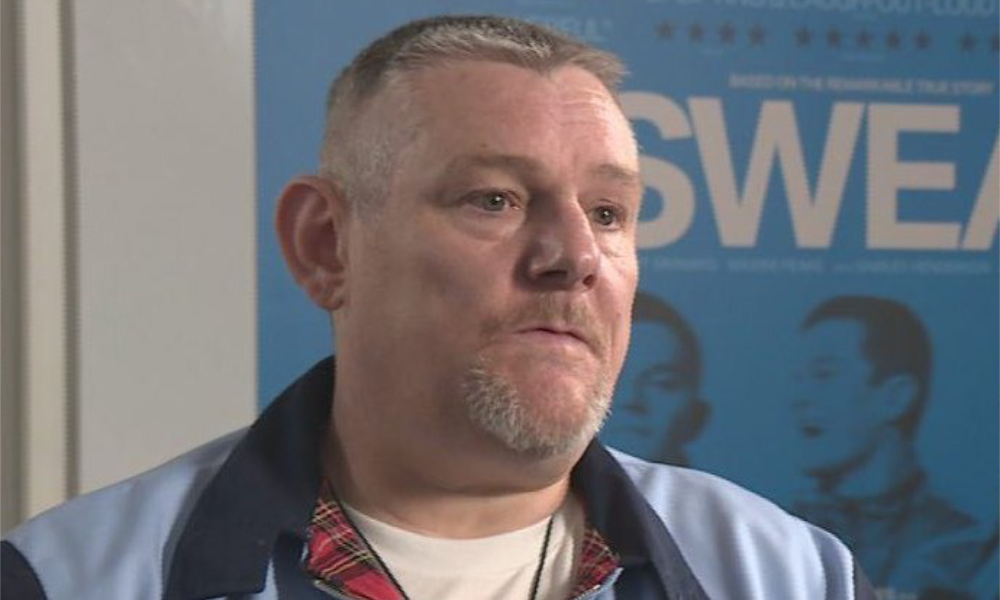
In that case, a pre-recorded segment featuring the incident was aired without editing out the vocal tic - a decision that, for both of them, felt deliberate and exploitative.
Khoo argued that such portrayals risk deepening public misunderstanding.
“They are putting two minority groups against each other. It’s very exploitative, using it for views and clips, and putting the Tourette’s community in a bad light,” she said.
By broadcasting offensive words produced by involuntary tics without proper context, the media risks reinforcing harmful stereotypes.
This portrays people with Tourette’s as intentionally provocative, rather than individuals managing a neurological condition.
Space in society
For those living with coprolalia, the goal is not sympathy, but something far more fundamental: understanding.
That begins with recognising that Tourette’s is not defined by its most extreme or sensational symptom.
It also means looking beyond first impressions and understanding that these behaviours are strictly neurological.
This includes giving individuals a fair shot in work and society, without their tics defining them.

Khoo stressed that this hope of inclusion should not be exceptional, but expected.
“I just want there to be no need for disabled individuals to ask for a fair chance. We want a go at it, just like everyone else,” she added.
This, she said, begins with creating environments in schools, workplaces and public spaces where individuals are not constantly expected to explain or justify themselves.
Ho, meanwhile, spoke of a simpler hope: the freedom to move through everyday life without having to deal with prying eyes.
“Hopefully one day, I can just wake up and decide to take the train, or book a Grab, or walk into a busy cafe and sit down.
“Without people going quiet, without becoming the centre of attention," she added. - Mkini

No comments:
Post a Comment
Note: Only a member of this blog may post a comment.