


Has Malaysia’s prime minister really become powerless since 2018? It is a claim that has gained traction in public discussion recently, often presented as an obvious reading of today’s more fragmented political environment.
Coalition tensions are more visible, negotiations are more public, and decisions sometimes appear slower.
What is often missed is that this conclusion is based only on what is visible.
The office of the PM remains one of the most powerful executive positions in the country. It can appoint and dismiss cabinet ministers, set national policy direction, and control the main tools of government. These powers remain intact.
It is important to be clear that this authority has not disappeared. What has changed is not the existence of power, but the conditions under which it is used.
Malaysian prime ministers have never governed in a vacuum. Since independence, leadership has always required managing coalitions, balancing regional interests, and dealing with internal party dynamics.
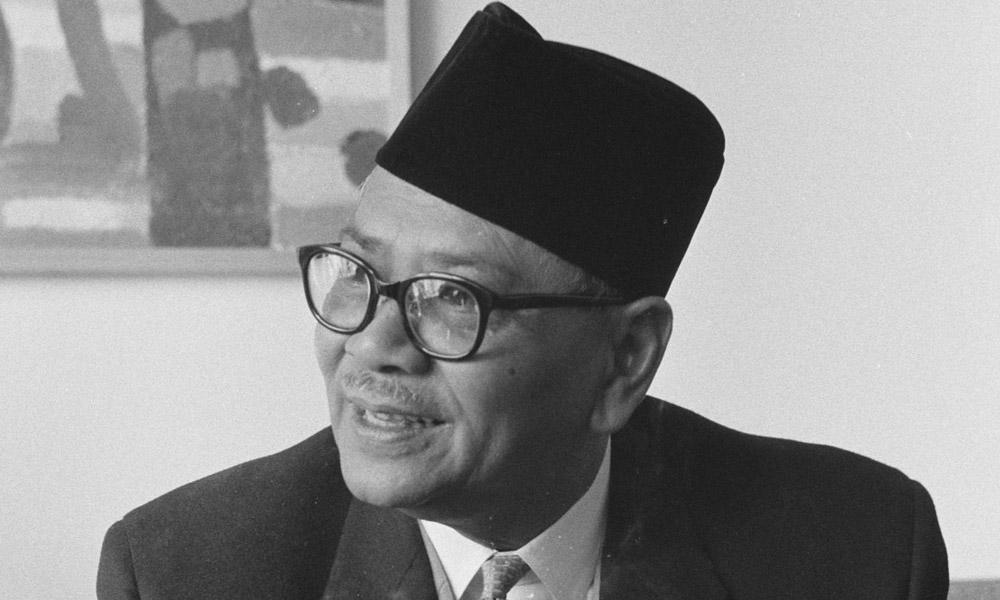
Even during the long dominance of the BN framework, executive authority depended on keeping coalition partners aligned, managing competing demands, and maintaining internal discipline through long-standing power-sharing arrangements involving parties such as MCA and MIC.
Constraint has always been there. It was just less visible.
What has changed after 2018 is not the constraint itself, but its structure. Political alliances are more fragmented, support is less predictable, and coalition partners are more assertive. What has changed is not power itself, but how it is used.
This is clear when we look at how coalition politics actually works. Before 2018, stability depended on alignment with parties such as MCA and MIC, where coalition discipline was maintained through established seat and cabinet arrangements.
Today, similar dynamics exist within coalitions such as Pakatan Harapan, involving parties such as DAP and others. The actors have changed. The logic has not.
This is not evidence of a weaker PM. It is evidence of a more fragmented political environment that requires constant balancing of competing interests.
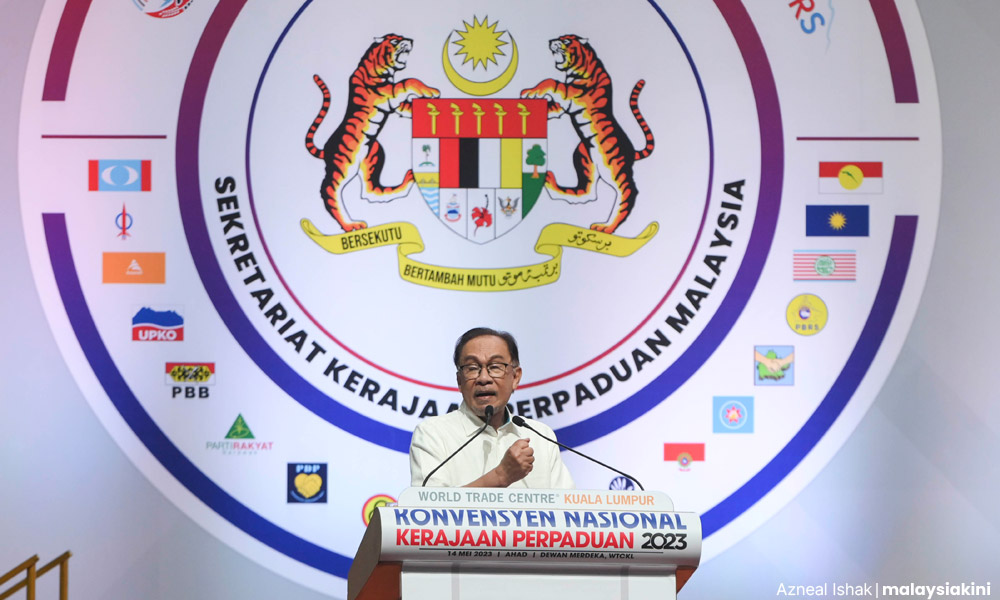
Relying on East Malaysian support
The role of East Malaysian parties shows this clearly. Sabah and Sarawak have long held strategic importance in federal politics, often described as crucial to maintaining parliamentary majorities.
This was evident in earlier coalition arrangements as well as more recent government formations, where East Malaysian support has often been decisive in maintaining stability.
Their influence did not emerge after 2018; it has long been part of coalition politics. The phrase “fixed deposit” is not new. What has changed is visibility and negotiating flexibility.
Clearly, coalition complexity did not begin after 2018. Constraint has always been part of the system. What has changed is how fragmented and unstable it has become.
What looks like instability should not be mistaken for loss of authority.
The idea that leadership today is only about survival is overstated. Negotiation has always been part of Malaysian governance. The PM still appoints and dismisses ministers, sets priorities, and leads the executive branch, as seen in periodic cabinet reshuffles across different administrations.
These powers have not been reduced. What has changed is the political cost of using them.
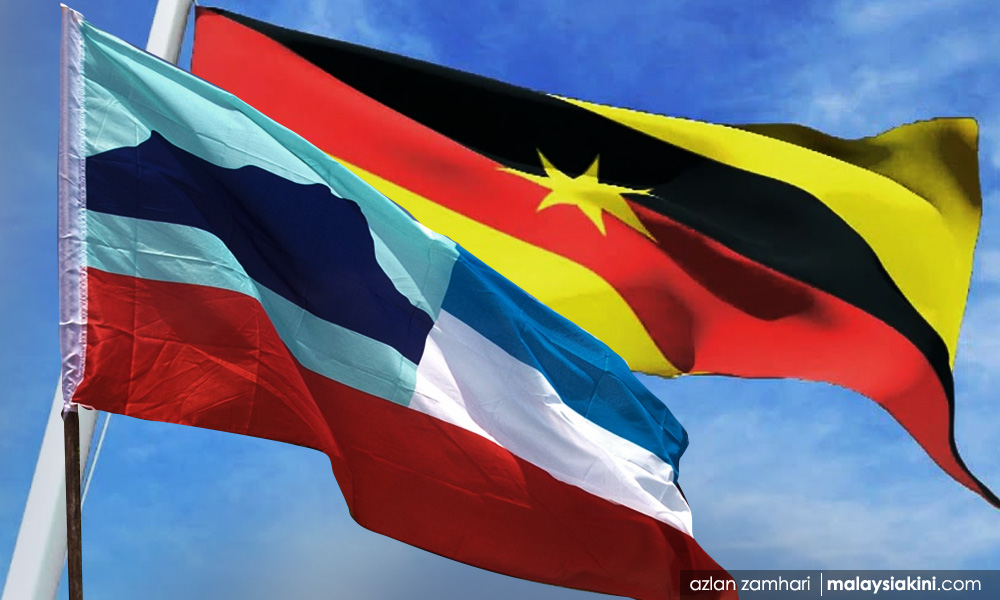
The idea of a leader who simply “commands” also assumes earlier prime ministers operated with near-absolute control. That was never the case.
Even in the strongest period of BN dominance, prime ministers had to manage coalition partners such as MCA and MIC, balance Sabah and Sarawak interests, and navigate internal factional pressures within Umno itself.
Even at the height of Dr Mahathir Mohamad’s authority, the internal Team A and Team B split could not simply be commanded away. Leadership has always depended on maintaining support, not overriding it. In that sense, “command versus survival” is a false binary.
The power to award positions
Restraint should not be mistaken for incapacity. A leader who does not act quickly is not necessarily unable to act. In a more fragmented environment, decisions require more careful balancing. This does not remove authority; it changes how it is used.
The PM still has the authority to appoint, dismiss, and restructure the cabinet, but every use of that power comes with consequences that must be weighed carefully.
Removing a senior figure in a governing party, for example, is not a simple administrative step. It can trigger internal divisions, strain coalition relationships, and weaken broader policy goals. In such situations, restraint reflects calculation, not weakness.
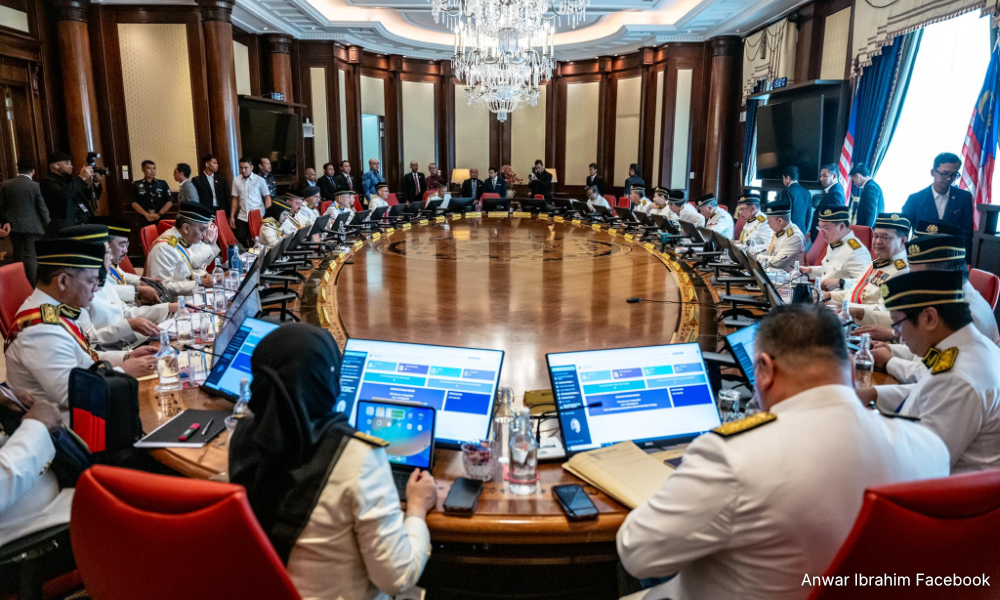
At the same time, complexity cannot become an excuse for inaction.
Reform does not sit only with the executive. It must pass through Parliament, where debate, procedure, and politics decide whether policy becomes law. Leadership is not just about making decisions, but about ensuring they survive the process needed to implement them.
These pressures are made worse by economic conditions. Rising living costs, subsidy burdens, and global uncertainty leave little space for hesitation. Leadership must balance caution with direction, and negotiation with delivery.
See how accountability works. There is a recurring pattern where investigations begin under strong public pressure, but over time, lose visibility. Updates become less frequent, conclusions remain unclear, and outcomes are not always clearly communicated.
Cases such as MACC chief Azam Baki’s share ownership controversy illustrate how initial urgency can fade, leaving the public uncertain about the final resolution.
Institutions such as the MACC show how prolonged uncertainty can affect trust. When processes are delayed or outcomes unclear, the issue goes beyond individual cases and becomes a question of consistency and transparency.
Malaysia has not entered an era of powerless leadership. What it has entered is an era where power is more visible, more contested, and more demanding to exercise.
The system has not become less powerful; it has become harder to ignore.
The PM has not lost power; we have mistaken complexity for weakness, and the greater danger is a public too ready to believe that he has. - Mkini
MARIAM MOKHTAR is a defender of the truth, the admiral-general of the Green Bean Army, and the president of the Perak Liberation Organisation (PLO). Blog, X.
The views expressed here are those of the author/contributor and do not necessarily represent the views of MMKtT.

No comments:
Post a Comment
Note: Only a member of this blog may post a comment.