


We, the undersigned organisations, demand accountability from the Attorney-General’s Chambers (AGC) over its decision of no further action (NFA) over Deputy Prime Minister Ahmad Zahid Hamidi’s family charitable foundation, Yayasan Akalbudi (YAB).
Zahid faced a total of 47 charges - 27 for money laundering, 12 for criminal breach of trust (CBT) and eight for corruption.
The case is extraordinary because the AGC withdrew all 47 charges on Sept 4, 2023, after the establishment of a prima facie case and four years of trial, allowing Zahid to secure a discharge not amounting to acquittal (DNAA).
This NFA appears to be a deliberate move to allow the deputy prime minister to apply for a discharge amounting to acquittal" (DAA).
How could a prima facie be established, yet the entire case collapses later to not even warrant investigation? Between the High Court and the AGC, the credibility of at least one party is now in question.
Dusuki the common thread
Attorney-General Dusuki Mokhtar personally has to account for the AGC decision on its legal basis, public interest considerations, representations received, and the internal review process that led to the NFA outcome.
For the record, the 2023 withdrawal was applied by Dusuki then as deputy public prosecutor.
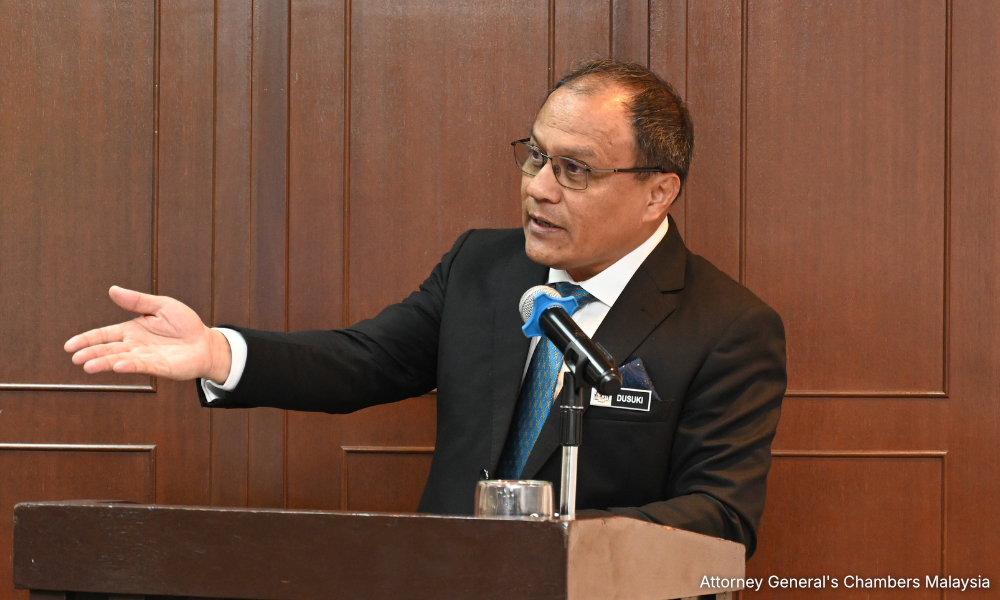
Then, a month after his appointment as the AG, the AGC withdrew its appeal against the High Court’s acquittal (DAA) of Zahid in his Foreign Visa System (VLN) case, where he faced 40 charges for awarding contracts in bringing in foreign labourers in his capacity as the then home minister.
The correlation of Dusuki’s involvement and Zahid’s discharges raises a legitimate question of the AG’s integrity until the AGC provides the rigorous justification we demand.
The timing of this NFA before the separation of AG and public prosecutor (PP) roles also invites speculation whether Prime Minister Anwar Ibrahim’s most important institutional reform is compromised by impunity to his most important ally.
While Article 145(3) guarantees the AG’s discretion to conduct or discontinue criminal charges, the public trust in the prosecution may be undermined by abuse with questionable decisions without detailed grounds for the public to scrutinise.
If this is not addressed, the public’s disappointment with the prosecution may continue after the AG-PP separation.

Therefore, we call for clear prosecutorial guidelines on discontinuing cases, especially those involving elected representatives and other powerful individuals; the requirement for a reasoned explanation when charges are withdrawn or not pressed in high-profile cases of corruption, power abuse, CBT, and money laundering; and independent oversight of major prosecutorial decisions.
AGC must explain
Public accountability must take precedence over confidentiality. The AGC’s statement announcing the NFA and its 2023 withdrawal provided no reasoning whatsoever for this decision.
The public has been given no information about:
What factors led to both decisions after the establishment of a prima facie case in 2022?
Whether new evidence emerged, and if so, what had changed?
What assessments were made in the public interest in prosecuting, withdrawing, and now discontinuing the investigation into the 47 serious charges?
Who within the AGC reviewed and approved both decisions?
What representations were made, and on what basis were they considered?
Both questionable decisions involving Zahid are sending a harmful message of a two-tier (dua darjat) justice system where powerful individuals enjoy impunity, eroding public trust in the criminal justice system and law enforcement.
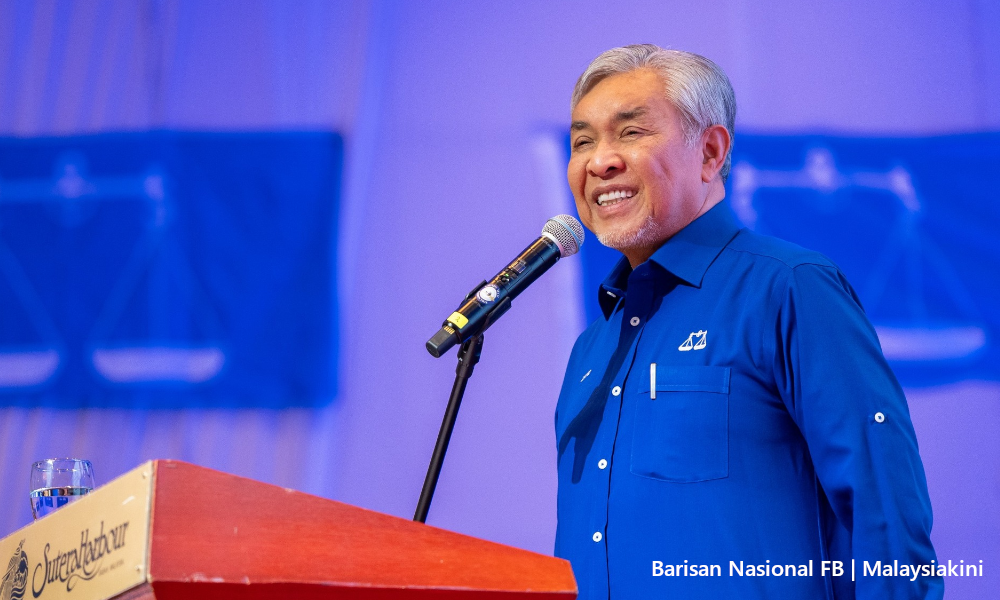
Both decisions are part of a troubling pattern in how corruption cases involving high-ranking elected representatives are handled in Malaysia - a pattern documented extensively in a Projek Sama research study titled “Do Politicians Still Get Away with Corruption after GE15?” (2025).
The home minister’s response that this falls “fully under the authority of the AGC” under Article 145 of the Federal Constitution does not address the fundamental issue: constitutional authority does not negate the responsibility for transparency and accountability in its exercise.
The power of prosecutorial discretion is not absolute - it must be exercised in good faith, free from improper considerations, and with regard to the public interest.
Corruption by public officials, more so with elected representatives, strikes at the heart of democratic governance. It encourages conspiracy theories and populism amidst democratic deficits.
The fight against corruption begins with holding the powerful accountable. Transparency is not optional - it is essential. - Mkini
This statement was jointly issued by PROJEK SAMA, BERSIH, and RASUAH BUSTERS.
The views expressed here are those of the author/contributor and do not necessarily represent the views of MMKtT.

No comments:
Post a Comment
Note: Only a member of this blog may post a comment.