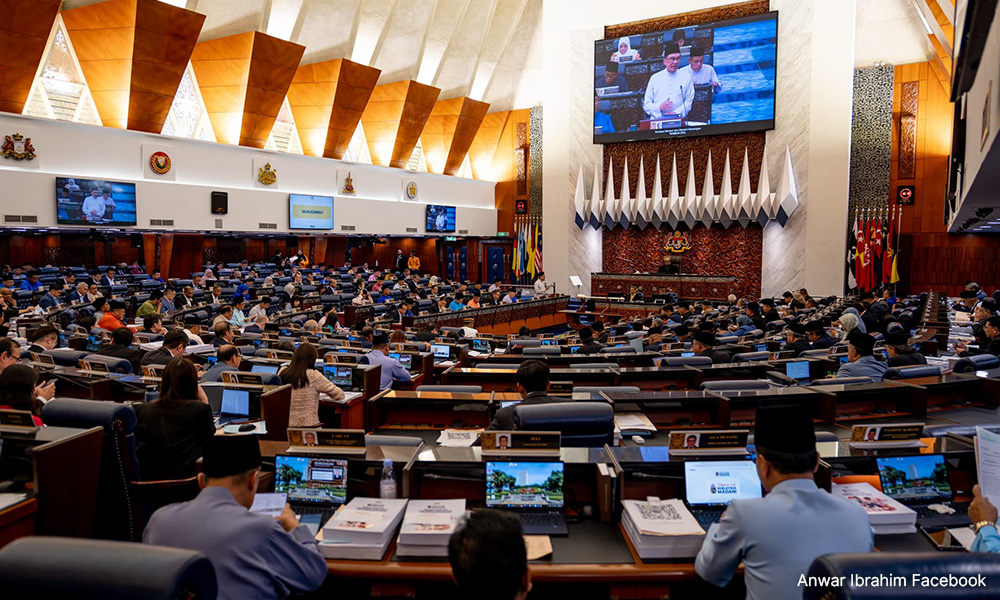
In his speech on Jan 5, Prime Minister Anwar Ibrahim announced the government intends to pass laws to separate the powers of the attorney-general and public prosecutor, limit the prime minister’s tenure to two terms, for a Freedom of Information Act, and for an Ombudsman’s Act for public complaints.
While his announcement on legal reform is welcome despite its lateness, much will depend on the wording of the legislation to ensure it is in line with the spirit of reform to curb corruption and abuse of power.
To illustrate my point, let’s take the watered-down Independent Police Conduct Commission (IPCC) Act passed in July 2022 under an Umno government.
It was a transformation of the earlier Independent Police Complaints and Misconduct Commission (IPCMC) Act proposed in 2018 under Pakatan Harapan, and conceived as far back as Abdullah Ahmad Badawi’s term as premier in 2003.
Since IPCC’s inception in July 2023 - the Madani government was already in power - news reports say 529 complaints were made, eight investigation papers were opened, and four were resolved.
It passed corruption cases to the MACC and others to the police, as it did not have any investigative powers. So much for the IPCC.
Thumbs down on IPCC
The Bar Council had a forum on IPCC in March 2025. It made the following findings:
Lack of investigative and disciplinary powers: Unlike the proposed IPCMC, IPCC has limited authority to prosecute or impose disciplinary measures, deferring key decisions to the Police Force Commission, which has a poor track record of addressing police misconduct;
Scope of misconduct: The scope of misconduct should be expanded, and the exclusion of misconduct under Sections 96 and 97 of the Police Act 1967 severely limits the powers of IPCC;
Limited investigative scope: IPCC has limited essential “search and seizure” powers, rendering its ability to conduct thorough investigations weaker than that of the Enforcement Agency Integrity Commission (EAIC);
Absence of mandatory public inquiries: There is no statutory requirement for IPCC to conduct public inquiries into deaths in custody or police brutality, which limits transparency and accountability;
Non-binding recommendations: IPCC’s findings are merely advisory, with no legal obligation for law enforcement agencies to act upon them, undermining its effectiveness.
Yes, reform not only crawls slowly forward in Malaysia but has a way of transmogrifying magically into anything but a reform along the way.
When the final act takes shape, the situation is often worse, not better.
Just look at the degradation in name - particularly “misconduct” to “conduct” - when the purpose of the law is to investigate misconduct of the police.
Despite IPCC officially commencing operations, it has not brought to light even one major instance of police misconduct, although there have been reports of abuse.
The most serious allegation was that three men were shot in cold blood, execution style, by the police.
There was a release of an alleged phone recording where a voice can be heard pleading to be spared before a shot is heard.
IPCC, passed when Umno controlled the reins of government, eminently qualifies as one of the laws that need to be changed. So, why is it not on the list of legal reforms?
Laws can be watered down
The evidence is that original intentions can be diluted to nothingness, as the IPCC Act shows beyond any reasonable doubt.
The way the government does this is to introduce the law to most people at the point of tabling. With its majority in Parliament, it is easily passed.
If the government wants real and transparent scrutiny - that’s a big if - of the new law and ensure that the spirit and purpose is adhered to as a true Madani government should, it must make the proposed legislation publicly available at least two months before it is tabled.
And make a public commitment to do so to ensure that everyone has an opportunity to weigh in with their opinions, enabling suitable adjustments where necessary before it becomes law.
That is what a responsible government thirsting for real reform will do, instead of a show. If this important measure is not implemented, the government drafters will merrily continue to push legislation to give excessive power to the government they serve.
Separating AG’s powers
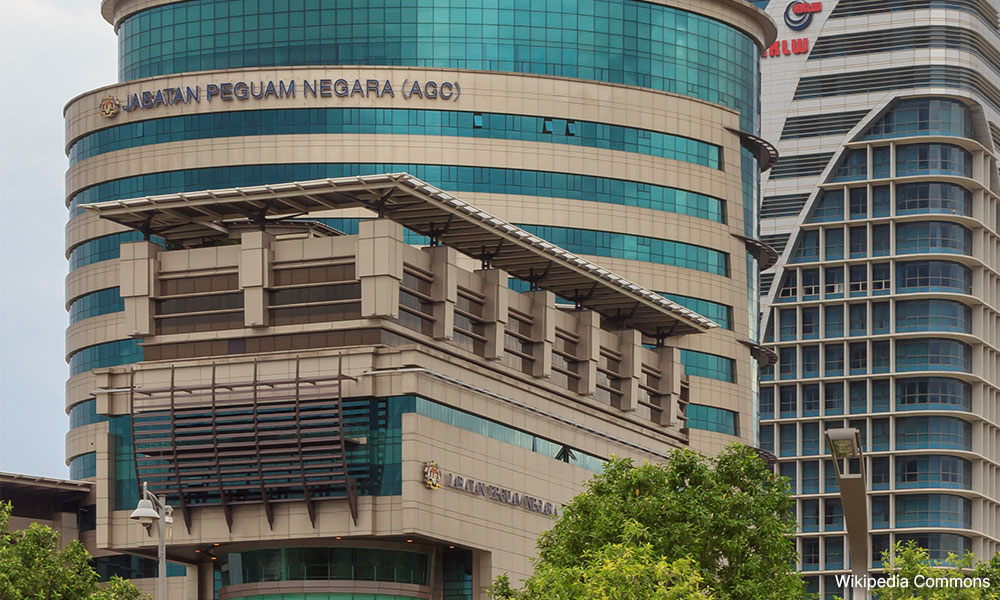
The most important of the legal reforms is the separation of the powers of the attorney-general as adviser to the government and the public prosecutor.
This is to strengthen judicial independence and reduce conflicts of interest, as the attorney-general is currently appointed by the government.
Unless the public prosecutor is independently appointed and does not report to the executive, it will be meaningless, as there will be explicit and implicit control of prosecution by the government. Simply separating the powers solves nothing.
The next two most important are an Ombudsman Bill to enable public complaints and a Freedom of Information Act to improve transparency in procurement, contracts, and governance.
The weakest of the proposed legislation is probably the two-term limit for prime ministers. At the current state of politics, it is highly unlikely that anyone stands the remotest chance of being a premier for more than one term, let alone two.
It’s something for the long term, although there are loopholes like passing the baton to designated successors, resulting in the new premier serving as a proxy for his predecessor.
Declassify 2018 reform report
Strangely, there is no mention of a document which has been in the government’s hands since 2018, when the Institutional Reform Committee (IRC) headed by former judge, the late KC Vohrah, made its report to the Council of Eminent Persons (CEP), headed by the late Daim Zainuddin.
The CEP was formed by then-premier, Dr Mahathir Mohamad.
That report, completed in less than 100 days, was promptly, for reasons unknown until today, classified under the Official Secrets Act, paradoxically one of the acts the committee was hoping to reform.
Calls for declassifying the report have fallen on deaf ears, including those of the Madani government.
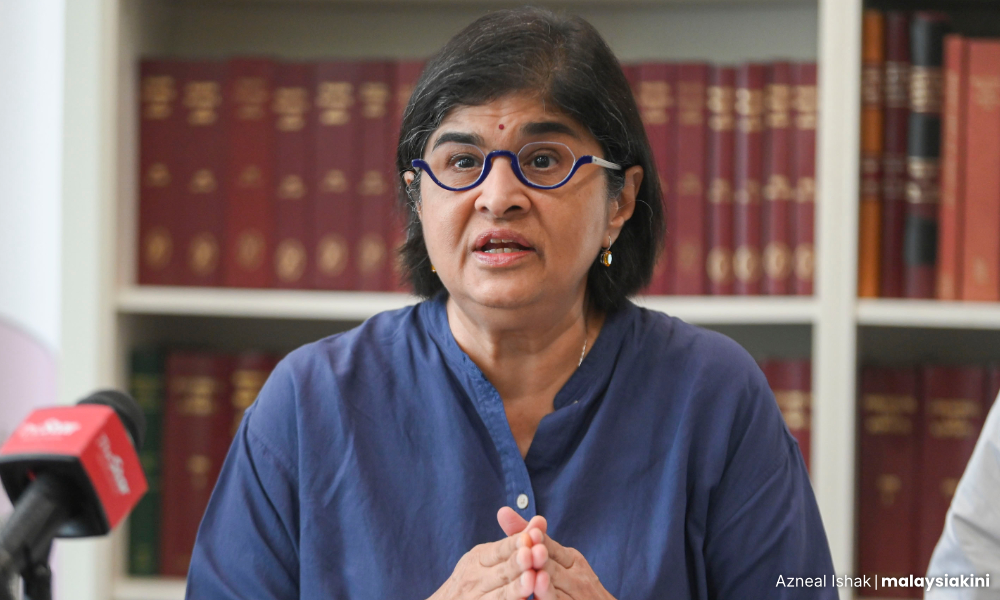
Here’s what one member of the committee, former Bar Council chairperson Ambiga Sreenevasan, had to say: “You remember we all spent three to four months in the excited belief that the Harapan government then in 2018 was going to bring reforms.
“So, we killed ourselves day and night, and now, I don’t know why I wasted my time to produce, with some other very, very eminent people, an institutional reforms report.”
Ambiga Sreenevasan
Another suggestion for Anwar: Why not make the report public now so that they are no longer held in suspense about its contents?
Or do we have to wait for the Freedom of Information Act to be passed for that?
That will educate the public on institutional reform and bring forth a healthy and free debate about what is needed going forward.
If we are to believe that the government is serious about institutional legal reform to curb corruption and other abuses of government, nothing less than these measures is necessary.
Otherwise, that “major” announcement on Jan 5 by the prime minister will be just hogwash. - Mkini
P GUNASEGARAM hopes against hope that these legal reforms will be meaningful.
The views expressed here are those of the author/contributor and do not necessarily represent the views of MMKtT.
No comments:
Post a Comment
Note: Only a member of this blog may post a comment.




No comments:
Post a Comment
Note: Only a member of this blog may post a comment.