


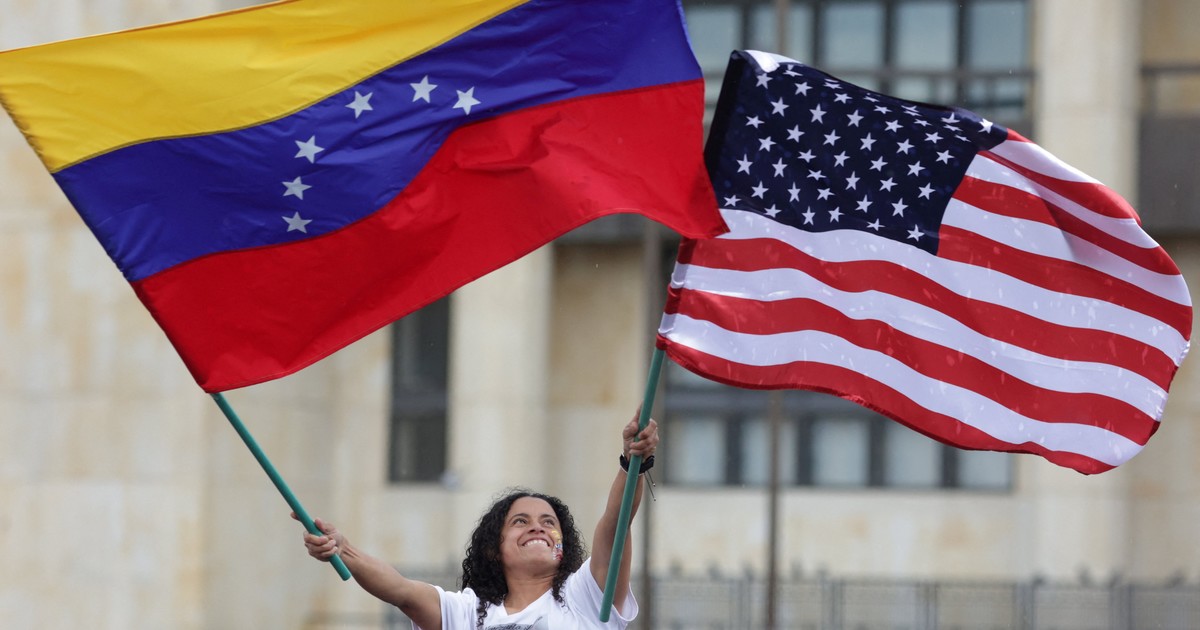
THE United States’ (US) offensive strategy in 2026, emerging under President Donald Trump’s second term, marks a decisive rupture from the post-Cold War order that Washington itself once championed.
The 2025 National Security Strategy (NSS) no longer cloaks American power in the language of liberal internationalism, humanitarian intervention, or collective security
Instead, it advances a starkly transactional worldview in which force, coercion, and material gain are explicitly legitimised as tools of statecraft. “America First” has evolved from campaign rhetoric into a governing doctrine, reshaping how US power is conceived, justified, and exercised.
At the core of this doctrine is a zero-sum understanding of global politics. The NSS frames the international system as an arena of relentless competition in which American decline is treated not as a possibility to be managed, but as an existential threat to be reversed.
Strategic patience, multilateral compromise, and normative restraint are cast as liabilities. Decisive action, by contrast, is elevated as proof of resolve and relevance.
In this framework, the preservation of US primacy justifies extraordinary measures, particularly in regions deemed vital to American influence.
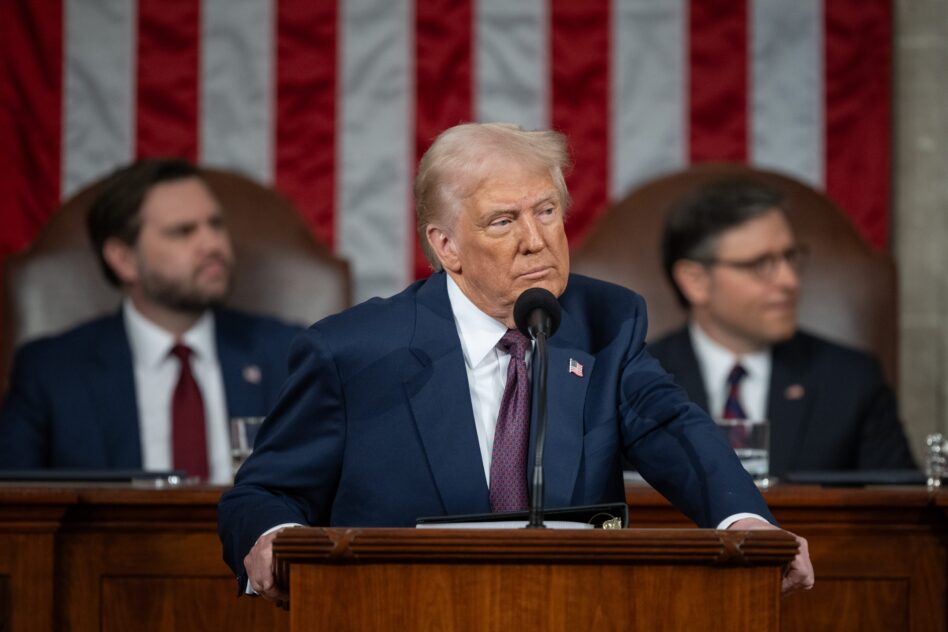
The Western Hemisphere occupies a privileged place in this hierarchy of interests. The Trump administration’s posture represents a revival, and expansion, of Monroe Doctrine logic: external powers especially China and Russia are to be excluded from the Americas by force or coercion if necessary.
Recent events involving Colombia illustrate how this logic is applied not only through military means, but also via economic intimidation.
Trump’s public threat to impose sweeping tariffs and punitive measures on Colombia over its initial reluctance to accept US deportation flights was a blunt reminder that sovereignty, even among partners, is subordinate to American demands.
Compliance was not negotiated through diplomacy but compelled through the threat of economic pain.
Venezuela, endowed with vast energy reserves and governed by a regime openly hostile to Washington, thus becomes more than a diplomatic irritant. It is recast as a strategic obstacle to US dominance.
The US military operation culminating in the capture of Nicolás Maduro was therefore not an aberration, but a revealing case study of how Washington now intends to enforce its interests.
Together, the Colombia episode and the Venezuela operation demonstrate a continuum of coercion where tariffs, sanctions, and military force are interchangeable instruments of policy.
What distinguishes this new approach is not merely its aggressiveness, but its candour. Unlike past interventions framed around humanitarian protection or democratic restoration, these actions are openly justified in terms of US security, law enforcement, and economic advantage.
Multilateral institutions are bypassed, international legal constraints treated as secondary, and allied consensus deemed optional.
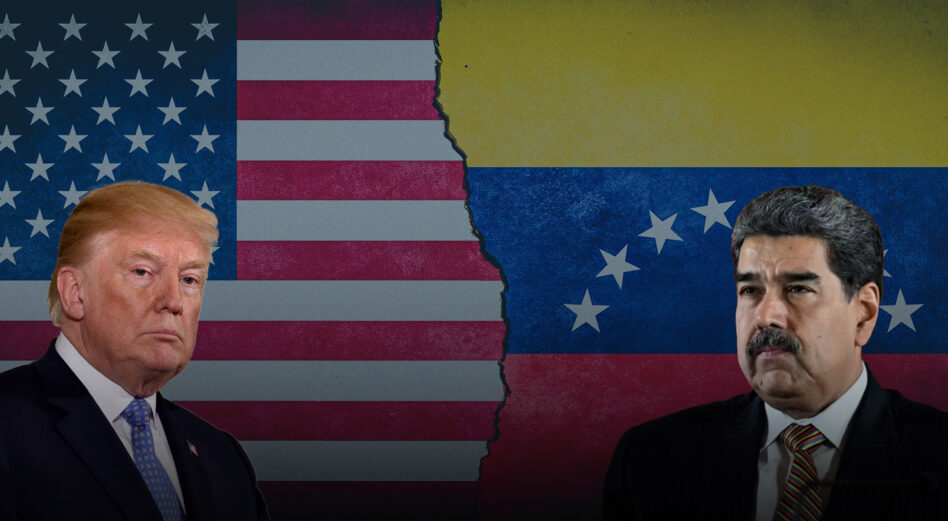
The underlying message is unambiguous: sovereignty is conditional when it conflicts with American priorities. In 2026, the use of force or the threat of economic strangulation is no longer an instrument of last resort, but an accepted mechanism of statecraft.
Equally significant is the fusion of military power with economic objectives. Trump’s remarks on controlling energy infrastructure, combined with his readiness to weaponise tariffs against Colombia, underscore a broader shift within US strategic thinking.
The NSS explicitly links national security to economic dominance, energy control, and supply-chain leverage. Military and economic tools are no longer sequential; they are simultaneous. The battlefield and the balance sheet have merged into a single arena of competition.
This evolution has profound institutional consequences. The US Department of Defense—functionally a Department of War within this framework has expanded its role from deterrence to active political enforcement.
Special operations forces, intelligence assets, and precision strike capabilities are now routinely deployed for missions that would once have been considered extraordinary. Such actions lower the threshold for future interventions, particularly against governments labelled as criminal, illegitimate, or uncooperative.
Legal and constitutional constraints are increasingly marginal. Congressional oversight is weakened by executive urgency, while international law is treated as discretionary.
The security apparatus does not merely execute policy; it shapes it, translating presidential intent into ‘faits accomplis’ that are difficult to reverse. In an era of perceived decline, speed, shock, and intimidation have become strategic virtues.
This posture carries serious global risks. By normalising unilateral coercion whether through tariffs or troops the United States erodes the norms that have historically constrained great-power behaviour.
If Washington claims the right to impose its will pre-emptively, other powers will inevitably emulate this logic within their own regions. The result is a more fragmented and volatile international system where power, rather than law, determines outcomes.
For Malaysia, these developments are not distant geopolitical debates but immediate strategic concerns.
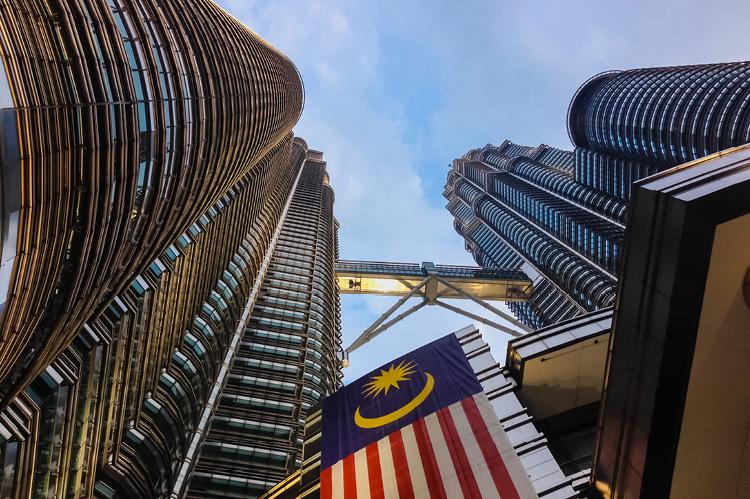
As a medium-sized trading nation at a critical maritime crossroads, Malaysia’s prosperity depends on stability, international law, and predictable economic systems. A world in which great powers routinely weaponise force and trade exposes Malaysia to heightened vulnerability.
The response should be strategic prudence rather than alignment. Malaysia must diversify partnerships, strengthen ASEAN centrality, and maintain balanced engagement with all major powers.
It must also consistently defend international law and multilateral norms, even when they are violated. Finally, Malaysia must treat economic resilience as national security, reducing exposure to coercive trade practices and geopolitical shocks.
In a nutshell, US strategy in 2026 reflects a post-liberal vision of power where military force, economic coercion, and national interest are tightly fused.
Trump’s actions toward Colombia and Venezuela are not isolated incidents, but signals of a broader doctrine. For Malaysia, navigating this harsher landscape will require realism, balance, and disciplined strategic foresight.
R. Paneir Selvam is Principal Consultant at Arunachala Research & Consultancy Sdn Bhd (ARRESCON), a think tank specialising in strategic and geopolitical analysis.
The views expressed are solely of the author and do not necessarily reflect those of MMKtT.
- Focus Malaysia.

No comments:
Post a Comment
Note: Only a member of this blog may post a comment.