


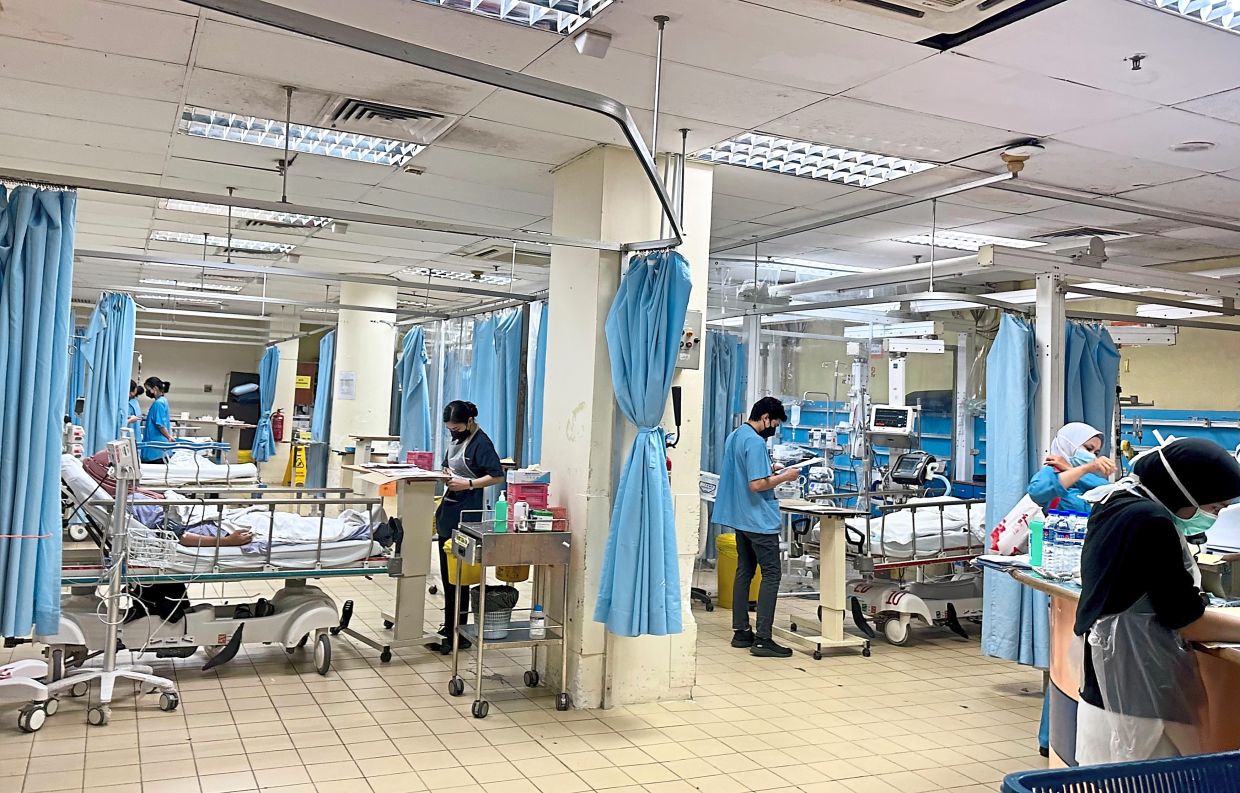
MALAYSIA’S healthcare system is sustained by a quiet injustice that policymakers have chosen to ignore for far too long.
A newly graduated house officer earns between RM3,000 and RM4,000 a month. A medical officer—after years of study, professional examinations, compulsory service, and relentless hospital postings—takes home only RM4,000 to RM5,000.
These doctors work five to six days a week, perform night calls, manage emergencies, make life-and-death decisions, and remain legally accountable for every clinical outcome. They pay income tax. They are bound by professional regulations. They can be sued, suspended, or struck off.
Yet in the same economy, an unregulated caregiving industry allows foreign workers—some legal, many not—to collect RM5,000 to RM6,000 a month from Malaysian families after minimal training.
They are often provided with free board and lodging. Many pay no tax. Most are not subject to any formal competency assessment, licensing framework, or continuous monitoring by any ministry.
This is not a marginal policy oversight. It is a structural failure. Caregivers play an important role, particularly in an ageing society.
But entrusting vulnerable Malaysians—those with physical disabilities, dementia, or mental illness—to individuals who operate outside any enforceable national standard is not compassion; it is abdication of responsibility.
When something goes wrong, families have little recourse. When abuse or neglect occurs, accountability is murky. When exploitation happens, of both patients and caregivers, the state looks the other way.
Meanwhile, the message sent to Malaysia’s medical officers is devastatingly clear: your training, sacrifice, and responsibility are worth less than an unregulated market that answers to no one.
This imbalance explains why young doctors are leaving the public sector, leaving the country, or leaving medicine altogether. It explains burnout, demoralisation, and the slow hollowing out of public hospitals.
No health system can survive when its most skilled professionals are treated as expendable.
The failure cuts across ministries. The Health Ministry regulates doctors but has little authority over caregiving. The Human Resources Ministry tolerates a grey labour market.
The Immigration Department does not even clearly recognise “caregiver” as a defined occupational category with enforceable standards. The Ministry of Finance taxes doctors to the last ringgit while an informal care economy flourishes untaxed.
Malaysia urgently needs a reset. Caregiving must be legally defined, regulated, trained, certified, and monitored. Immigration pathways must be transparent and enforceable. Patient protection must be central, not incidental.
At the same time, medical officers’ pay and conditions must be reviewed honestly, based on workload, responsibility, and national healthcare needs—not budgetary convenience.
Healthcare justice is not just about access to care. It is about fairness to those who deliver it. Until Malaysia stops undervaluing its doctors while tolerating unregulated alternatives, the system will continue to bleed talent—and the public will ultimately pay the price.
Healthcare is a moral and institutional contract between the state, its professionals, and its people. When doctors are systematically undervalued, while an unregulated care economy is allowed to flourish around the most vulnerable, that contract is broken.
This is not a budgetary constraint, nor a labour shortage—it is a failure of governance and political will.
Until Malaysia regulates caregiving with the seriousness it demands of medicine, and remunerates doctors according to responsibility rather than convenience, any claim of healthcare reform will remain rhetorical.
Systems do not collapse suddenly; they erode quietly—until there is no one left willing to hold them together.
KT Maran
Seremban, Negri Sembilan
The views expressed are solely of the author and do not necessarily reflect those of MMKtT.
- Focus Malaysia.

No comments:
Post a Comment
Note: Only a member of this blog may post a comment.