`


THERE IS NO GOD EXCEPT ALLAH
read:
MALAYSIA Tanah Tumpah Darahku

LOVE MALAYSIA!!!


16 SEPTEMBER 2026

Thursday, July 2, 2020

Get kids back to normal routine, expert says as long break ends

Experts say it is important for parents to get their children back to their normal routines even now.
PETALING JAYA: A consultant paediatrician has advised parents to start getting their children back to their regular school routines following yesterday’s announcement that classes will resume from July 15 after a four-month break due to the movement control order imposed in March.
Dr Zulkifli Ismail, a former president of the Malaysian Paediatric Association, said children were “conditioned” to “wake up early, get ready, have breakfast and go to school five days a week”.
“When this conditioning response is broken, they get used to a new schedule that does not involve strict discipline,” he told FMT.
He said parents could get their children back to their regular school routines even now by reminding them that classes would start soon, and that they would be able to see their friends again.
Consultant paediatrician Dr Zulkifli Ismail.
Zulkifli, who served as head of the paediatrics department at Hospital Universiti Kebangsaan Malaysia, said this was especially important for children who might have lost the desire to go to school during the long break.
He said rapport with their parents through activities such as consistently doing their schoolwork at home would help reacquaint them with their regular school routine.
Education Minister Radzi Jidin announced yesterday that schools nationwide would reopen beginning July 15, with primary students from Year One to Four to resume classes a week later on July 22.
Classroom sessions have already resumed for Form Five and Six students, who returned to school on June 24. Preschool and kindergarten children meanwhile went back to school yesterday as part of the education ministry’s gradual resumption of classes based on SOPs implemented by the health authorities.
Psychiatrist Dr Ahmad Rostam Md Zin told FMT that parents should refrain from putting too much pressure on their children to return to school.
He said the Covid-19 pandemic had led to an increase in mental health issues in children such as anxiety, and that providing a calm and supportive environment for them would help ease them back into their regular school routines.
“We need to pre-empt them, not pressure them,” he said. “School is something that is fun and normal for them.”
After that, he said, parents could educate their children about safety.
Among the SOPs to be introduced in schools is a one-metre gap between desks, with surplus students placed in other classrooms.
Students will also have their temperatures taken before they enter the school compound, and take their recess in turns to prevent overcrowding at canteens. - FMT

What happens if someone is infected in school, asks NGO

Classroom sessions have already resumed for those sitting for major public examinations such as SPM and STPM.
PETALING JAYA: An education watchdog has raised concern over the lack of information on steps to be taken if a Covid-19 case is reported after schools reopen on July 15, four months after they were closed under a nationwide lockdown to curb the spread of the deadly virus.
Parent Action Group for Education (PAGE) spokesman Tunku Munawirah Putra said SOPs for what should happen if an infection occurs should be made known for the benefit of parents.
Education Minister Radzi Jidin said yesterday that schools would reopen on July 15, with primary pupils from Year One to Four to resume classes on July 22.
Classroom sessions have already resumed for those sitting for major public examinations such as SPM and STPM.
Munawirah said Radzi should have explained the steps to take, such as contact tracing and whether the school in question would remain open the following day, rather than only stating that the decision to reopen schools was made after consultation with the health ministry.
She asked if the ministry only planned to handle the situation when it “crosses the bridge and if and when a positive case happens”.
Regarding the three different models for schools to use after pupils go back to school, PAGE chairman Noor Azimah Abdul Rahim said Model 1 for single sessions suited remote, rural and some suburban schools.
The second option, the two-session model, would be more suited to overpopulated urban schools, she said.
She said Model 3, which is to have two sessions with students attending school in turns, was the best solution for all double session schools.
Meanwhile, National Union of the Teaching Profession (NUTP) spokesman Harry Tan urged principals and headmasters to take into account the views of parents and teachers before choosing the model to employ.
Asked if the dual and rotation models would lead to fatigue and overworked teachers, he said the ministry had assured that this issue would be addressed once the full guidelines are released.
Tan also welcomed the hybrid teaching method, which involves online and face-to-face lessons on different days, saying it was the best way forward at this period of time.
He said a joint study by the NUTP and experts from Universiti Malaya found that 93% of 10,500 teachers surveyed wanted face-to-face sessions with their students.
With insight from 100 experts from various fields, he added, the study decided that a blended teaching method with online and physical lessons would be best suited for the new normal. - FMT

Explosives factory damaged in blast

Malaysiakini

A factory making explosives in Batu Arang was partly damaged in an explosion yesterday.
Gombak district police chief ACP Arifai Tarawe said the company’s security officer made a police report on the incident at 1.45pm.
“A team of police personnel from the Batu Arang police station was rushed to the scene. Upon inspection, they found that one part of the single-storey building was damaged.
”However, there were no casualties because the workers were out for lunch when the incident happened,” he said in a statement.
He said firemen and personnel from the police bomb disposal unit were investigating at the scene.
“The factory has ceased operations immediately until the situation is established to be safe,” he added.
- Bernama

Wednesday, July 1, 2020

INDECISION


There are many reasons why people find it difficult to make decisions at various points in their life. Or if they do make decisions, why they sometime find it difficult to stick to them and follow through with appropriate actions. 

There are the six main reasons for our indecision:

Paralysis by analysis

It is rare that we have all the facts necessary to make decisions that will affect our future (especially big decisions) and so we can become indecisive. This can be especially relevant to those folks who have a propensity to over-analyse, falling into paralysis by analysis.
Limiting beliefs

But even if we do have all the facts, we can often remain indecisive because we have become locked into the past; past people, past events, past patterns and behaviours. This can create a feeling of not being able to let go and so not being able to make that important decision. Connected to this is when people believe themselves to be dependent on others and so feel they cannot make independent decisions. This is a really debilitating state to be in and is derived from our limiting beliefs. Our limiting beliefs are those beliefs we hold that are no longer empowering us.
Distractions

For others there is a tendency to find distractions as a means of not having to make a decision. Unfortunately, these great distractors are likely to end up having a decision forced upon them for good or ill.
Laziness
However, sometimes people find it difficult to make a decision simply through laziness. This can be as simple as people not wanting to be put out in any way, or being unwilling to step outside their comfort zone. So, it is easier to make no decision than it is to commit to a course of action. It is important to realise that making no decision is a decision in its own right, just not a very proactive and positive decision.
Stress and anxiety

Making decisions, especially if they are big ones, can be very stressful. Anxiety can lead us to shut down, thus we feel unable to make a decision. It is important we recognise just how much emotions influence our decision-making process. For more clarity it will be important to change your emotional state.
Lack of purpose

But for many, the difficulties around decision making are more to do with a lack of clarity on their purpose or direction, and so no clear sense of what the decision should be and not knowing where you want the decision to take you. 
HOW TO STOP BEING INDECISIVE
Pay attention to your emotions
You have likely heard the advice to “trust your gut.” But if it were that easy, you would not be hemming and hawing over decisions. Trusting your gut is no different from trusting your emotions - so start there.
Your emotions are a guidepost. Anxiety is your body’s attempt to direct you back to yourself so you can receive information that is more accurate. When we act impulsively or react quickly, very often this information is tainted with fear.
Take your time 
We might associate being decisive with choosing quickly, but research shows that taking a pause can result in a better decision. When making decisions, check your ‘sense of urgency meter’ - the feeling you must do something now.
Taking your time can save you - literally - if the decision you are making is related to a large purchase, like when buying a car. Do not let the salesperson’s tactics force your hand. They may use techniques to play to your emotions and make you believe this is the last time you may ever get this deal - do not fall for it, and do not let the urgency build.
If it is high - and you are unable to focus on anything else and feeling on edge - anxiety has likely kicked in. This is a red flag to step away from the decision for now. Excessive worry and fear actually cloud your judgement and often result in faulty decisions made in haste. Go for a walk or do an activity you enjoy to distract yourself before making a snap decision.
Think strategically 
Perhaps you are more of a logical thinker than one to “feel through” a decision. There are several strategies to promote clarity, such as thinking in a different language - if you happen to speak another - or consider the situation as a third party. Each of these strategies works to help remove emotion and gives clarify to your understanding of the situation.”
Even something as seemingly benign as a well-lit room can affect decision making. A study showed that our emotions are more intense when we are exposed to brightness.
Gathering information is knowing more about the issue you are facing, which should give you more confidence. The other part is understanding what is driving your belief system.
Knowing everything you can about the situation you face - as well as yourself - will give you the confidence that you are making the right decision.
Ask who you are trying to please
Many times, the decisions we make do not affect us alone. One of the reasons that people are indecisive is because they are trying to please more than one person at the same time. You may be trying to make decisions that will advance your career, or a decision a spouse or parent will be proud of, but it is not the way you have wanted your life to go. Decisions will not come easily because you are serving two masters - or trying to.”
Understanding your motivations and whom you might please or disappoint as a result of your decision - and weighing those outcomes - will help you move forward in the process.
Banish your perfectionist mindset
Some people are paralyzed by a fear of failing. We are afraid we will fail and lose something - usually time, effort, and/or money - or we are afraid we will succeed, not be ready for what happens next, and then fail. 
Having a perfectionist mindset - the belief that we must have everything figured out all at once and that there cannot be any room for mistakes - is the root of these fears.
The solution? Replace the perfectionist mindset with the belief that errors and mistakes are bound to happen. When you account for the fact that there will always be hiccups and setbacks no matter what decisions you make, you can plan for them and be more prepared when they inevitably arise.
Let go of bad decision
The majority of indecisive people struggle to let go of past mistakes. Failure after failure grooms them to second guess, over-analyze and thoroughly dissect every decision they make. Eventually, they become paralyzed every time they are confronted with a decision.”
Build your trust in yourself by not only forgiving yourself for your past mistakes and your poor decisions but also by acknowledging when you have made a good decision in the past. Every decision is an opportunity to learn and grow.”
After making your choice, continue the process by analyzing the aftermath. Validate the decision, affirm the very act of making a decision, and trust that whatever the outcome was, you did your best. Create a safe, compassionate environment for yourself so that every decision does not carry life-or-death or all-or-nothing outcomes.
Visualize possible outcomes
Another option is to envision what might come as a result of your decision.
If you are the type who likes to see things on paper, use a journal to work through a decision. You are encouraged to identifying the positives and negatives, as well as to note any thoughts or feelings you might have as you work through the process. If any anxiety spikes, take note of where and when and why. Does one decision leave you feeling unsettled or anxious? Does another decision leave you feeling hopeful, peaceful, or excited inside? This is usually your inner voice giving you clues as to what decision is best for you.
As usual, we remind you to take your Memo Plus Gold daily. It will help to keep you alert and mentally sharp. For more information or to order for Memo Plus Gold, please visit : https://oze.my.

We know where you live - Health DG warns returnees who skip second test

Malaysiakini

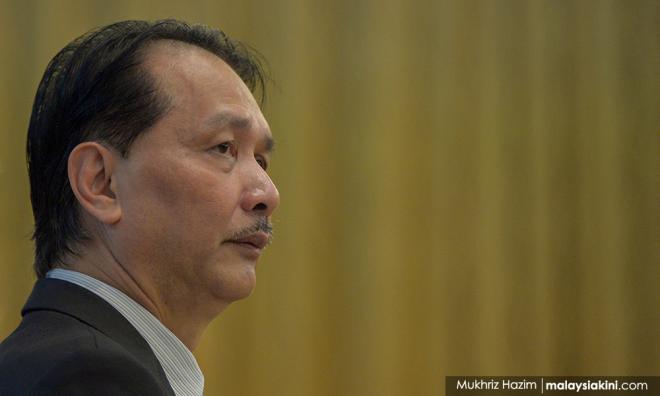
CORONAVIRUS | The Health Ministry has details on all overseas returnees and will track down those who have skipped a compulsory second Covid-19 test.
This comes after a revelation that 1,472 recent returnees had failed to get tested on the 13th day of their home quarantine period.
During his media briefing today, Health director-general Dr Noor Hisham Abdullah reiterated his call for the individuals to adhere to home quarantine rules and get tested as soon as possible.
“We have identified these individuals, we have their addresses and all that.
“So now we will track them down and find out why they did not show up (for a second test)," he said. 
“We have data on them and we know where they are,” he added.
Earlier today, Defence Minister Ismail Sabri Yaakob warned that the police will get involved if the returnees in question continue to resist getting tested.
Covid-19 tests can be performed at any government clinics or selected private clinics.
Malaysia began allowing returnees to quarantine themselves at home instead of at designated quarantine centres on June 10.
Among the home quarantine rules are:
1) Individuals must wear a face mask throughout the journey from the airport to their homes
2) They must contact the district health office if they show symptoms
3) Wear an observation band throughout the quarantine period
4) Get a second Covid-19 test on the 13th day of quarantine at any government clinic or private clinic recognised by the Health Ministry
5) Present the Covid-19 test result to the nearest District Health Office for clearance and removal of the observation band on the 14th day.
Those who violate these rules could risk two years imprisonment or a fine, or both, under Section 22 and 24 of the Infectious Diseases Act 1988.
Repeat offenders risk a higher punishment.
'No need for compulsory licensing of Remdesivir yet' 
Asked if Malaysia will consider using compulsory licensing to access experimental Covid-19 drug Remdesivir, Noor Hisham indicated there was no need for it at the moment.
“We are still watching closely in terms of the efficacy of Remdesivir.
“But more importantly, we need to look at the situation, whether we need the medicine at the moment or not. If our case (numbers) are down, then perhaps we have other options,” he said.
Malaysia recorded just one case of Covid-19 today, an imported case from Turkey.
This marks the first time zero locally transmitted cases have been detected since March 2.
Manufactured and patented by American pharmaceutical company Gilead Sciences Inc, Remdesivir has been priced at US$2,340 (approximately RM10,030) for a five-day treatment plan for one patient.
Gilead has partnered with companies in India and Pakistan to distribute generic and cheaper versions of the experimental drug to 127 countries, but Malaysia is not on the list.
Noor Hisham previously said that Malaysia presently had access to Remdesivir through the World Health Organisation’s (WHO) Solidarity Trial, but not through voluntary licensing.
A voluntary licence for a drug means the permission is given by the patent holder to a generic company to produce a patented drug as if it were generic.
A compulsory licence, meanwhile, is when a government allows the production of patented products without the consent of the patent owner or plans to use the patent-protected invention itself. - Mkini

NSC says MySejahtera developer is M'sian after bumi ICT firms claim sidelined

Malaysiakini

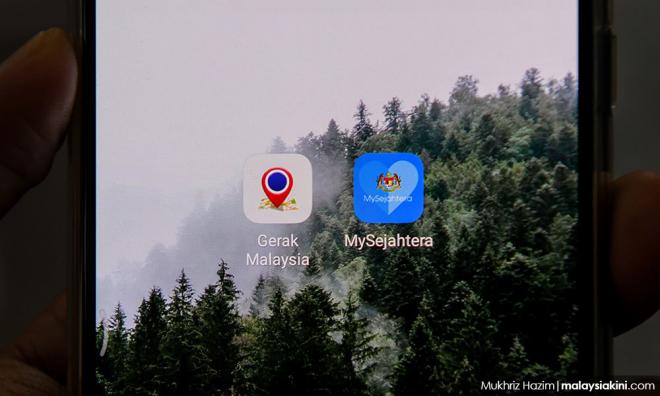
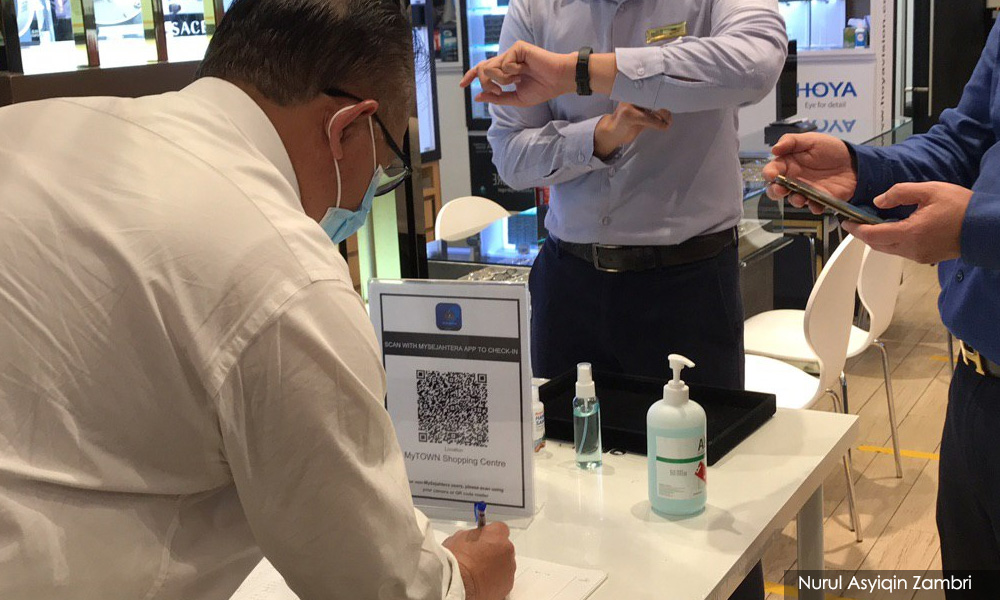
The National Security Council (NSC) said the developer of the MySejahtera application, the federal government's official tool to track the spread of Covid-19, is an international company with Malaysian roots.
This was after the Malaysian Association of Bumiputera ICT Industry and Entrepreneurs (NEF) complained they were sidelined by the government in favour of foreign companies.
"KPISoft is a local company with MSC (Multimedia Super Corridor) status which was founded in 2010. The founders include two Malaysians, namely Anuar Rozhan and Raveenderan Ramamoothie.
"To date, they are the bigger shareholders of the company," the NSC said in a statement today.
It said that with the Malaysia Digital Economy Corporation's (MDEC) guidance, the company went international in 2014 by opening its Asia Pacific office and subsequently expanded to the US, Middle East, Europe, Singapore, and India with a total of 15 offices across the globe.
"This company is amongst the local companies that succeeded in expanding at the global level. The applications it developed are used by Fortune 500 companies.
"Even though this company has expanded globally, KPISoft's main management team is still based in Malaysia.
"Anuar is the CEO of KPISoft Malaysia and Asia Pacific. Its global chief financial officer and application development lead architect are also Malaysians operating globally from Malaysia," it said.
The NSC said that in the initial stages, the Health Ministry had asked the National Cyber Security Agency (Nacsa), NSC, and the Malaysian Administrative Modernisation and Management Planning Unit (Mampu) to evaluate an application developed by KPISoft Sdn Bhd on a corporate social responsibility basis.
"Considering the Health Ministry's urgent need, the evaluation by Nacsa, NSC, and Mampu found the application (by KPISoft) was the readiest for national implementation compared to other applications offered to the government at the time.
"The development of the (MySejahtera) app is a result of strategic cooperation between the NSC, Health Ministry, Mampu, Malaysian Communication and Multimedia Commission (MCMC), and the Science, Technology, and Innovation Ministry," it said.
Yesterday, NEF posted a statement on Facebook criticising Putrajaya for granting such a large scale project to "foreign companies".
"The government's current policy also does not favour products and solutions by local companies.
"For example, MySejahtera was developed as a joint venture with a foreign company, KPISoft Inc from the US which has an Asian headquarters in Singapore, for Covid-19 contact tracing," said NEF president Khairil Iszuddin Ismail.
It also criticised the Education Ministry's Digital Education Learning Initiative Malaysia which it claimed did not emphasise on local content and the Social Security Organisation's (Socso) MyFutureJobs portal which it claimed used technology from the Netherlands.
"It is inappropriate for foreign companies with huge capital to benefit from the government and taxpayers' money for their benefit when local companies are struggling," Khairil said.
Despite this, he said local firms have voluntarily developed applications to aid in the fight against the Covid-19 pandemic. - Mkini

Federal Court to hear contempt case against Malaysiakini tomorrow

Malaysiakini
Contempt proceedings against Malaysiakini and its editor-in-chief Steven Gan will be heard at 9am tomorrow at the Federal Court in Putrajaya.
Submissions are expected to begin in the morning, before a panel of probably seven judges at the Palace of Justice.
Malaysiakini filed an application, last Thursday, to set aside the Federal Court ruling granting leave to attorney-general Idrus Harun to commence contempt proceedings against the online news portal.
The Federal Court is expected to hear this set-aside application first. Should the judges deny the application, then the court will proceed to hear the contempt proceedings.
It is possible that a decision could be delivered immediately after lawyers have completed their submissions, which may take the whole morning. Should Malaysiakini and Gan be found to be in contempt, sentencing could be handed down on the same day.
There is no legal limit to the penalties for contempt of court.
In April 2019, lawyer Arun Kasi was jailed 30 days and fined RM40,000 over comments he made regarding a Federal Court proceeding.
Contempt proceedings against Malaysiakini and Gan were initiated by Idrus on June 16. In his affidavit, Idrus said the accused had facilitated the publication of readers' comments, which undermined the judiciary.
The five allegedly offending comments appeared in an article dated June 9 titled 'CJ orders all courts to be fully operational from July 1'.
"(The comments) clearly meant that the judiciary committed wrongdoings, is involved in corruption, does not uphold justice and compromised its integrity,” Idrus said.
"These comments threaten public confidence in the judiciary and are clearly aimed at tarnishing the administration of justice by the judiciary.”
‘Scandalising the court’
The attorney-general has submitted that the offending comments scandalised the court as it was an indirect attack on Chief Justice Tengku Maimun Tuan Mat, exposed the judiciary to public scandal and would lead to an erosion of public confidence in the judiciary.
Gan said that the case will have a tremendous impact, not just on Malaysiakini but also on other media organisations, tech companies and millions of Malaysians who use social media.
“This contempt of court action against Malaysiakini is for comments posted by our readers,” said Gan.
“This is despite that we have removed the allegedly contemptuous comments from our website not long after the news report on the reopening of the courts was uploaded.”
Malaysiakini is represented by lawyers Malik Imtiaz Sarwar and Surendra Ananth.
A number of organisations will be holding watching brief at the hearing, including the Bar Council, the International Federation of Journalists (IFJ), Gerakan Media Merdeka (Geramm) and the Centre for Independent Journalism (CIJ).
- Mkini