



MALAYSIANS made 18.4 billion e-payment transactions in 2025, up 25% from the year before. As Budget 2027 approaches, the conversation should move beyond payment adoption towards how effectively businesses can use digital tools across their operations.
For enterprises and SMEs alike, a payment does not begin and end when a customer completes a transaction. It also involves confirming orders, reconciling records, understanding settlements, managing refunds and disputes, and maintaining visibility over cash flow.
For large enterprises, these processes may be supported by dedicated finance and technology teams.
But for SMEs, the same responsibilities may sit with an owner or a small team. When systems do not connect, businesses end up filling the gaps manually. With MSMEs contributing 39.7% of Malaysia’s GDP in 2025, those manual gaps carry a real cost.
This also affects wider commercial networks, where enterprises work with suppliers and distributors with different levels of digital capability.
The next phase of Malaysia’s digitalisation agenda should therefore focus not just on adoption, but on making end-to-end digitalisation practical for Malaysian businesses.
This means connecting payments with accounting and operational systems, providing accessible training, and helping businesses manage new processes with greater ease and confidence.
The digital objective should be measurable business outcomes.
Can a local business account for its online payments accurately? Can staff resolve exceptions efficiently and immediately? Can finance teams see what has been settled and what remains outstanding in minutes rather than hours or days?
Digitalisation creates economic value when it reduces friction and enhances speed in these everyday processes.
AI and money: Building trust with infrastructure and security

AI can further support these outcomes, from retrieving transaction information and assisting with reconciliation to investigating exceptions and prioritising cases for review.
But adoption should begin with a clearly defined business problem and a way to measure whether the technology actually improves the process.
This becomes particularly important as AI is increasingly used in activities involving money.
There is a meaningful difference between using AI to find a payment record and allowing a system to initiate a refund or change an account setting. As functionality increases, so must the controls around access, approval, authentication and accountability.
Trust is under pressure, with online scam losses rising sharply to RM2.97 bil in 2025. AI can help detect fraud, prioritise alerts and support investigations.
However, decisions on liability, compensation and disputes must remain with accountable decision-makers, with clear avenues for customers and merchants to challenge mistakes.
As AI becomes embedded in how money moves, trust becomes the real currency. Every gain in capability must be matched by stronger controls over who can access, approve and authenticate a transaction, and who is accountable when something goes wrong.
Budget 2027 should give Malaysian small and large businesses the infrastructure, skills and confidence to put AI and payment innovation to work, so they can run leaner, grow faster and compete well beyond Malaysia’s borders.
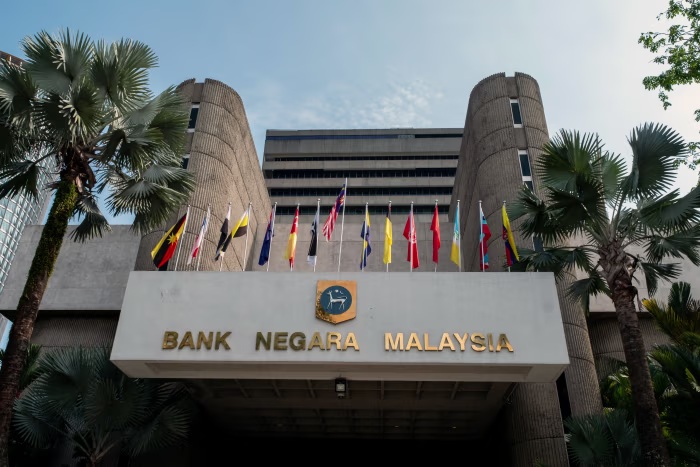
This principle of responsible innovation also aligns with the evolving regulatory environment. Bank Negara Malaysia’s (BNM) Technology Requirements for Payment Services Regulatees, which take effect in March 2027, reinforce the importance of technology risk management, security and operational resilience.
Regional competitiveness
There is also an opportunity to connect Malaysia’s digitalisation agenda with regional competitiveness. For a Malaysian business entering a new market, payments are part of the commercial decision.
Businesses need clarity on how customers can pay, the applicable fees and currency conversion, settlement timelines, and how refunds or disputes will be handled.
Interoperability can help make that journey more seamless, while businesses also need clear information and predictable processes.
BNM’s Interoperable Fund Transfer Framework provides an important policy foundation for connected payment services and fair access to shared infrastructure.
Ultimately, Budget 2027 should help Malaysia move from digital adoption to digital capability, giving enterprises and SMEs the infrastructure, skills and confidence to use AI and payment innovation to operate more productively in Malaysia, compete in regional markets and strengthen trust in every transaction.
Kevin Lee is the Country Head & CEO of Razorpay Curlec.
The views expressed are solely of the author and do not necessarily reflect those of MMKtT.
- Focus Malaysia.

No comments:
Post a Comment
Note: Only a member of this blog may post a comment.