


If this Madani government is serious about killing corruption in Malaysia - evidence is, it is not - it has to not only separate the powers of the attorney-general (AG) and public prosecutor, but also ensure that bodies such as the MACC are headed by competent people and given freedom of action.
The latest proposal by MACC chief Azam Baki to have a deferred prosecution agreement (DPA) is alarming, allowing large corruption cases (RM100 million or more) to be negotiated with criminals.
This is no “pie in the sky” as the proposal is expected to be tabled in June and will most likely be embraced by a majority of MPs to become law.
Unlike DPAs in other countries, which allow this for companies only, Azam wants this for individuals too, setting alarm bells ringing for the potential abuse of such arrangements, which adds another layer of discretion to law enforcement activities.
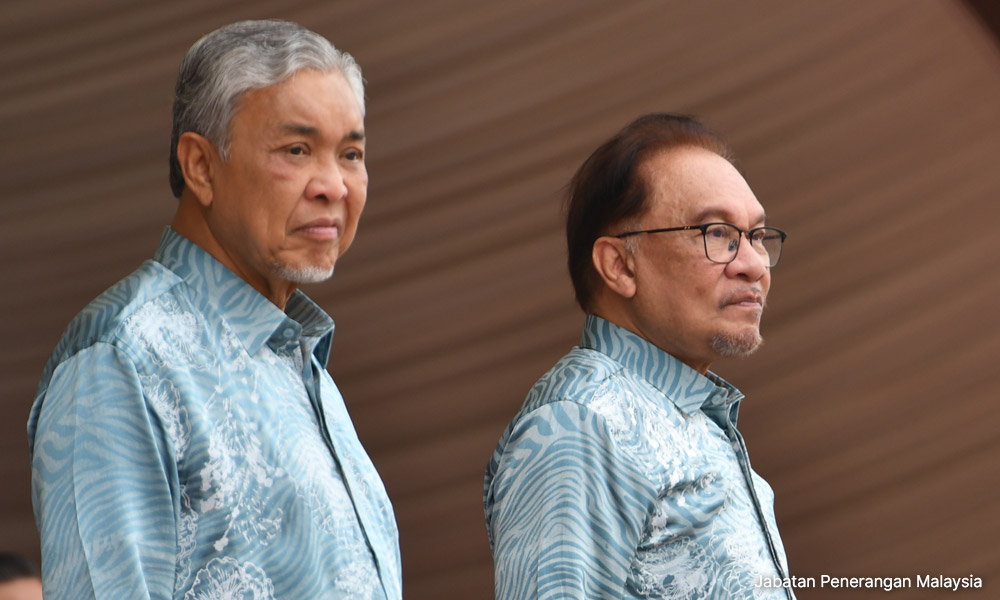
Recently, the AG inexplicably exercised his extensive discretionary power, moving from discharge not amounting to acquittal (DNAA) to no further action (NFA) in the infamous case of Deputy Prime Minister Ahmad Zahid Hamidi on 47 corruption charges.
This was done although the trial judge had already ruled that a case was established against Zahid. Despite the AG’s defence of his decision, it looks like political expediency (the AG is effectively appointed by the prime minister) decided the issue. Zahid and Prime Minister Anwar Ibrahim are very close.
Earlier this week, Azam told a Berita Harian podcast that the MACC has proposed a DPA mechanism as part of efforts to resolve high-value corruption cases involving RM100 million and above without full court trials.
Malaysiakini, reporting on the podcast, said the framework is expected to be tabled in the Dewan Rakyat in June, with the matter currently in the drafting stage following discussions with the Attorney-General’s Chambers (AGC).
The proposal would be applicable for corporate entities and individuals involved in corruption cases featuring values deemed as “extremely large”, the New Straits Times quoted Azam as saying.
“If we continue to worry solely about perception, when will we ever resolve these issues? It is our responsibility to convince MPs when the DPA is tabled,” he reportedly affirmed.
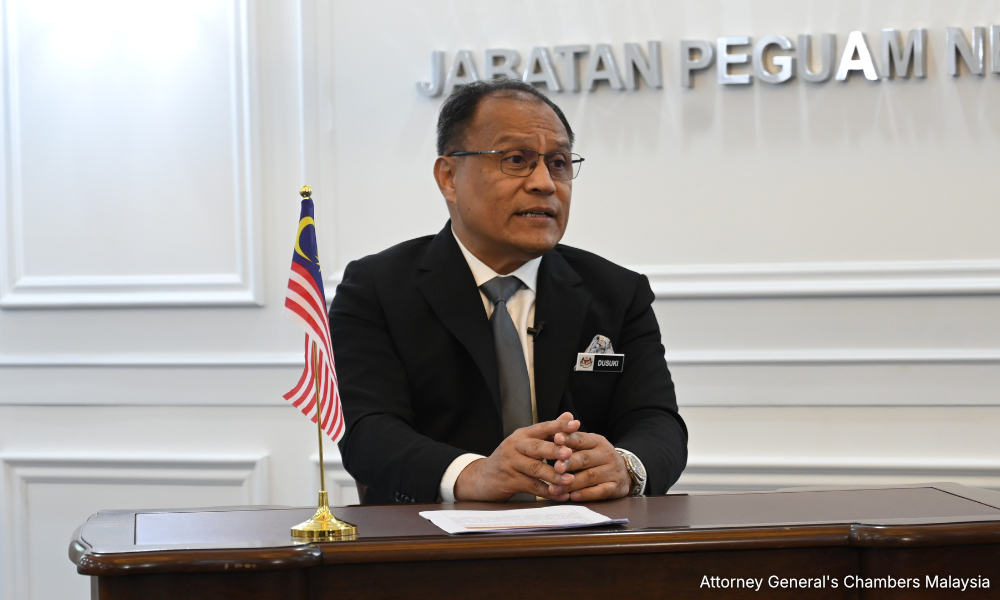
With the substantial leeway for discretion given to the AG, to the extent that he can rule NFA in a prominent case where the court ruled that a prima facie case has been established, the extension of this to investigative discretion is very concerning.
Power abuse stems from weak appointments
The only way to prevent this kind of abuse of power by the AG is to appoint a person with unquestioned integrity and proven, unshrinking competence to be the AG, the head of MACC, the inspector-general of police, and of all enforcement agencies.
The three key appointments must be made by an independent commission whose members must be respected members of society, the majority of whom must come from civil society, not those tied to politicians. And they must report to Parliament directly.
Their removal must be made very difficult and only on proven allegations of misconduct by the same commission which appointed them.
The government, after it has separated the powers of the AG into two different positions - the legal adviser and the public prosecutor - can have the freedom to appoint its own legal adviser.
That will lend weight to the independence of the judiciary (including enforcement), the executive, and the legislature, each playing their assigned roles to ensure the proper and fair functioning of an operational democracy ruled according to the laws of the country, with no exemptions for anyone, no matter their stature or wealth.
Questionable leaders, stalled progress
Clearly, neither the current AG nor the head of the MACC are fit candidates for those positions, which ultimately is a reflection on Anwar, who must bear responsibility for their continued appointment despite questionable decisions both have made in their careers.
The AG has offered no satisfactory answers for an NFA against Zahid. Similar DNAAs have continued, and in important cases where decisions in the lower courts have gone against the prosecution, no appeals have been made to the higher courts. The historical way of doing things remains - there is no semblance of reform.
Azam’s term has been extended three times, although Pakatan Harapan made a promise to remove him if they came to power. Infamously, he said in 2015 that he interviewed the Arab donors who gave Najib Abdul Razak RM2.6 billion.
Najib was jailed for 15 years and fined over RM11 billion for that offence.
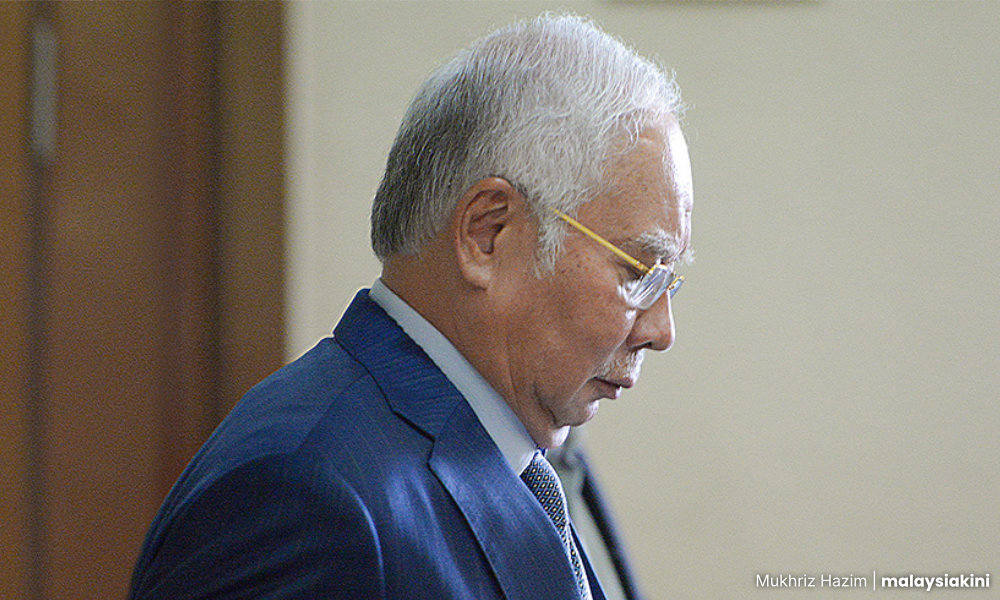
One wonders how Azam, then MACC’s investigations division director in 2015 when Najib was prime minister, could have made such a mistake, in the process helping to clear Najib of wrongdoing at the time.
Paradoxically, Azam praised investigators who brought Najib to account, in a clear switch of allegiance after Najib lost the 2018 general election.
Privilege a shield from justice
This sequence of events highlights the need for independent appointments in law enforcement, but it also reveals that prime ministers, past and present, have shown little commitment to fighting graft at all levels.
Until that changes, efforts are going to be futile, and law enforcement is going to be two-tiered - one for the rest of us and another for those who are privileged, affluent, and in power.
If you still have doubts about that, look at how Najib is treated in court, in prison, in transit, what he is allowed to do, how he is dressed, and how he is not mixed with the common criminals, of which he is one, in prison.
Look at Umno, despite all this, still clamouring for his pardon, ignoring the indisputable evidence against him and the enormity of his crimes. Look at Anwar not pushing back against Umno and silently acquiescing to their behaviour.
For any change to be meaningful, this Madani government has to switch and make a U-turn from its reversion to Umno Baru-style politics and engage in genuine political and economic reform instead. - Mkini
P GUNASEGARAM says change must be meaningful for reform to take place.
The views expressed here are those of the author/contributor and do not necessarily represent the views of MMKtT.

No comments:
Post a Comment
Note: Only a member of this blog may post a comment.