


The downgrading of a rape charge against a single mother’s attacker has exposed what legal eagles describe as a double injustice - alleged police failures that eroded evidence, followed by prosecutorial dependence on such gaps to justify a lesser charge.
Malaysiakini spoke to several legal experts following the Attorney-General’s Chambers’ (AGC) citation of contradictions in the victim’s testimony and findings of a medical report in explaining why the prosecution had dropped the rape charge against her assailant.
The victim, Loh Wai Mun, had previously claimed there were serious lapses in how her case was handled by the police, including how an officer at the Kota Damansara police station instructed her to return home and shower first before meeting an investigation officer (IO).
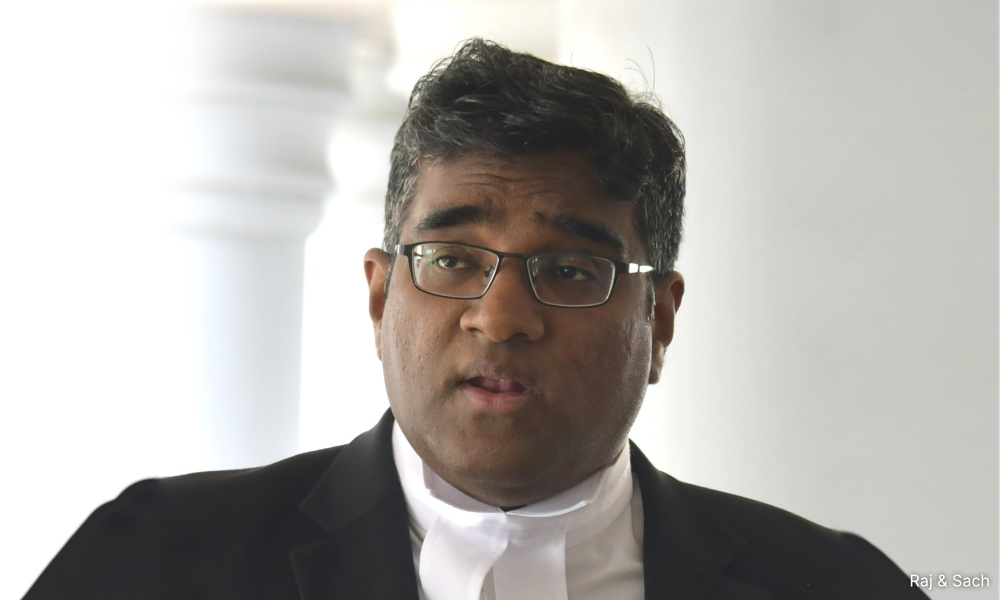
As such, lawyer Rajesh Nagarajan argued that the AGC’s attempt at providing clarification is “fundamentally incomplete” as it addresses prosecutorial discretion in isolation, while ignoring how police’s alleged failures at the investigative stage “degraded” crucial evidence.
“Any honest assessment of ‘weak evidence’ must begin with the conduct of the police. The victim was told to go home, bathe, and return (later) to lodge her report. This instruction is indefensible.
“Advising a sexual assault survivor to bathe directly compromises forensic evidence and is contrary to the most basic principles of sexual offence investigation. Such advice does not merely affect evidential quality; it actively destroys it,” Rajesh said.
Expressing similar sentiments, lawyer Mahajoth Singh said Loh’s case appeared to have been “mishandled from the outset”, questioning whether basic duties to a sexual violence complainant were ever met.
In particular, he referenced Loh’s assertion that the police had assured her of sufficient evidence in the case while telling her to “jangan bagi banyak kerja” (don’t increase the police’s workload), with the lawyer labelling the alleged remark as “absurd”.
“Section 107(4) of the Criminal Procedure Code makes it clear that a police officer is duty-bound to receive information relating to any offence, and Section 20(3)(j) of the Police Act 1967 expressly requires officers to give assistance in the protection of life and property.
“These (alleged) failures demand an answer from the inspector-general of police,” Mahajoth added.
No effective legal avenue for victim
Rajesh further opined that the situation is exacerbated by the legal reality of Article 145(3) of the Federal Constitution, which grants the attorney-general exclusive power to institute, conduct, or discontinue criminal proceedings.
“In practice, this discretion is almost entirely immune from judicial scrutiny. Once the AGC elects to reduce a charge, the victim has no effective legal avenue to challenge that decision - even where the decision is built upon evidence weakened by state action.
“The combined effect is stark and deeply unjust: police errors at the front-end compromise evidence, and prosecutorial caution at the back-end entrenches those errors. Article 145(3) then ensures that the survivor is legally silenced once discretion is exercised,” he added.
The assault against Loh, a former employee in the IT industry, occurred on June 9 last year, when she accompanied a former neighbour to his office, where she claimed he restrained, drugged, and sexually violated her.
The assailant was charged on June 26 in the Petaling Jaya Sessions Court under Section 376 of the Penal Code for rape. However, the charge against him was later downgraded on Oct 3 without her knowledge, with the amended charge framed under Section 354 of the Penal Code for assault intending to outrage a person’s modesty.

Section 376 provides that whoever commits rape can be imprisoned for up to 20 years and caned. Those found guilty under Section 354, on the other hand, can be jailed for a maximum of 10 years, fined, or caned.
On Oct 23, Judge Syahliza Warnoh convicted the assailant and imposed a RM10,000 fine, which the attacker paid. Loh was only informed of the matter on Nov 12.
‘Explore supporting evidence’
Lawyer Samantha Chong observed that the accused was brought to face charges in court, indicating that the prosecutor, having gone through the investigation papers from the police, was initially satisfied that there was a sufficient basis to proceed with the case.
“Further, (as) the prosecutor has preferred an alternative charge such as outrage of modesty; that in itself reflects a prosecutorial view that a criminal act did occur,” the former prosecutor said.
While there is a belief that rape requires clear signs of a struggle or physical injury, Chong said the common misconception is not necessarily true, particularly when a survivor was physically incapacitated, drugged, or froze as an instinctive trauma response.

She noted that in cases involving a rape charge, a key issue for the prosecution is proving whether penetration occurred - a matter that, while heavily dependent on a survivor’s testimony, can also be supported by other forms of corroborative evidence.
“Where the survivor was fully unconscious throughout (the attack), proving rape can be significantly more difficult, as the question becomes whether she was still aware of what occurred and is able to state with certainty that penetration did happen,” she said.
“If there is no medical evidence to corroborate her statement, (however), the investigation should not stop there.
“The IO must explore other supporting evidence (as) medical evidence is not the sole determinant in proving rape, and the absence of injuries or conclusive findings does not automatically negate the offence,” Chong added.
She further detailed that other investigative measures which could have been taken include obtaining a blood sample from the survivor and conducting toxicology testing for any substances that may have incapacitated her.
It is unclear whether the medical report in Loh’s case only covered a physical examination or if it also included toxicology screening, as to this day, Loh remains in the dark over the forensic analysis of her clothes and the results of her medical examination.
She has also not been informed whether a DNA test was performed on the evidence provided.
Commenting on the AGC’s claim that Loh’s testimony bore inconsistencies that could have affected her credibility, Chong questioned whether further statements were recorded from Loh to give her an opportunity to address or clarify the alleged contradictions.

“It is no secret that convictions (or) full trials in sexual offence cases are still relatively low.
“Perhaps it is time to strengthen capacity building for sexual crime investigation officers, introduce stronger oversight mechanisms, as well as review and improve existing SOPs (standard operating procedures) to ensure investigations are trauma-informed, thorough, and evidence-driven,” she added.
She also expressed hope that Loh’s case would not deter other survivors of sexual crimes from stepping forward to report perpetrators.
READ MORE: 'Mishandled' case: Sexual assault survivor meets Suhakam
Chong also said that such survivors should seek support from women’s rights NGOs and, if possible, engage a watching brief lawyer to help safeguard their rights, ensure proper oversight, and keep them informed throughout the progress of the case.
Civil liability
When asked about potential avenues for justice open to Loh at this point, Rajesh said one of the few viable options still available to a survivor in such circumstances is a civil action against the perpetrator.
He outlined that civil claims for sexual assault, battery, or intentional infliction of emotional distress are assessed on the balance of probabilities, not the criminal standard of proof beyond a reasonable doubt.
“A reduced criminal charge does not absolve civil liability. In civil proceedings, the survivor is not a peripheral witness to a state-managed process, but the central claimant.
“Damages may be awarded for psychological trauma, counselling, and economic loss. While civil litigation cannot correct institutional failures, it allows survivors to reclaim agency that the criminal process has denied them,” he added.

Loh’s tribulations had earlier bolstered calls for the proposed Independent Police Complaints and Misconduct Commission (IPCMC), which has often been upheld as a better alternative to the existing Independent Police Conduct Commission (IPCC).
Various quarters contacted by Malaysiakini highlighted that either commission should be empowered to probe allegations of the police mismanaging incidents of sexual violence. - Mkini

No comments:
Post a Comment
Note: Only a member of this blog may post a comment.