


Prime Minister Anwar Ibrahim might not have the luxury of delaying moves to recalibrate his administration as DAP’s move to press ahead with its internal “referendum” on its role in the government, signalling the need for immediate reforms.
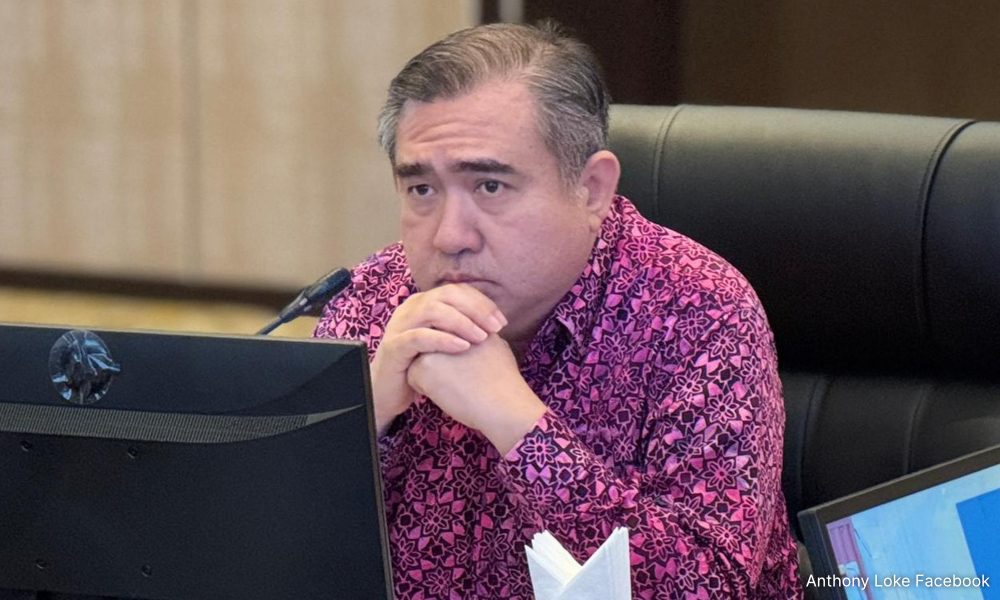
Yesterday, DAP secretary-general Anthony Loke affirmed that the party will hold a special congress on July 12, during which delegates are expected to determine whether its leaders should step down from all government positions.
The event comes as no surprise, as in December last year, Loke had declared that if Anwar fails to deliver meaningful reforms within six months, DAP - which holds the largest number of MP seats in the coalition government - will be forced to reassess its role in the administration.
Loke, however, has consistently maintained that even if party members vote for their leaders to withdraw from executive roles, the party’s 40 MPs will continue to support Anwar’s government until the next election.
International Islamic University Malaysia political science academic Syaza Shukri cautioned that DAP’s insistence on pushing ahead with its six-month deadline for reforms highlights the party’s dissatisfaction with the government’s perceived slow pace in pushing through reforms.

Such dissatisfaction among government partners, she said, reinforces calls for Anwar to immediately “change course”, rather than delaying action until the 11th hour and risk jeopardising his campaign for the next general election.
“...it’s a huge signal that Anwar needs to change course now. (He) can’t afford to wait until July,” Syaza told Malaysiakini.
Frustrated electorate
Oh Ei Sun, a senior fellow of the Singapore Institute of International Affairs, theorised that the government’s ostensibly slow pace in dealing with pressing matters has fuelled frustrations not only within DAP, but also among the electorate.
Oh asserted that DAP is primarily worried that longstanding issues affecting non-Malay communities, such as recognition for the United Examination Certificate (UEC), are not being speedily and comprehensively addressed by the government.
“Anwar’s detractions, on the other hand, primarily have to do with the pace and quality of Pakatan Harapan’s overall promised reforms, which many have criticised as at best insufficient and at worst backtracking,” he said.
In illustrating his assertion, Oh pointed to the recent fiasco involving the MACC, which saw its chief commissioner Azam Baki getting embroiled in a shareholding issue, contributing to Anwar’s public trust deficit.
Expressing similar sentiments, Universiti Sains Malaysia’s analyst Azmil Tayeb opined that the government’s supposed lack of reforms and poor handling of ethnoreligious matters has rankled many DAP members and supporters.
Although the party’s move to project an image of independence while still supporting the government appears to strike a delicate balance, he noted that it remains to be seen whether such a stance will work in “appeasing” dissatisfied members.
“I’d be surprised if (DAP) members vote (for their office-bearers) to leave all executive positions (in the government). Losing access to government resources will be a big blow to the party.
“Perhaps, the special congress is a symbolic move to also make (Anwar) realise that DAP supporters should not be taken for granted anymore,” Azmil added.

He also posited that DAP’s persistence in sticking with its deadline could be due to the upcoming Sarawak state election, which is scheduled to take place sometime this year.
“...DAP doesn’t want to repeat its disastrous performance in Sabah - perhaps that explains the July date (which will) give it more time to campaign on changes,” he added.
Loke had initially spoken of the six-month deadline following DAP’s crushing defeat in the Sabah state polls on Nov 29, where all eight of the party’s candidates lost.
During the elections, DAP had aligned itself with Gabungan Rakyat Sabah (GRS), whose leaders were previously implicated in a mining scandal.
In response to DAP’s dismal performance in the polls, which also saw it losing six constituencies it previously won with large majorities in the 2020 election, the party’s central executive committee (CEC) had taken immediate measures by convening an emergency meeting.
The CEC had then vowed to accelerate reforms to regain public confidence after critics accused the once-vocal opposition party of losing its voice upon gaining federal power. - Mkini

No comments:
Post a Comment
Note: Only a member of this blog may post a comment.