


Malaysia is entering a decisive political-economic phase in which stability is largely assumed, and execution has become the defining variable. The national discourse is no longer dominated by crisis containment or macroeconomic fragility.
Instead, attention has shifted toward governance reform credibility, coalition dynamics, subsidy recalibration, rule-of-law optics, regional positioning, and the discipline of state capital management.
At the centre of this transition lies a straightforward but consequential question for policymakers, investors, and citizens alike: can institutional alignment be translated into measurable, timely, and credible outcomes?
The proposal to introduce a 10-year cap on the prime minister’s tenure has surfaced as a structural reform signal with long-term implications. Reports indicating that the cabinet has agreed in principle to advance such a measure suggest an intention to recalibrate executive architecture.
Supporters frame the proposal as a safeguard against excessive concentration of power and as reinforcement of institutional maturity. Critics, however, raise questions regarding constitutional pathways, amendment thresholds, definitional scope, and enforcement design.
For markets, the significance extends beyond symbolism. Credible constraints on executive tenure can compress governance risk premia by embedding predictability into leadership succession. Yet investors will assess legislative follow-through, precision in drafting, and bipartisan durability.
Without procedural clarity, reform intent risks being discounted as political messaging rather than structural transformation.
Opposition recalibration introduces an additional layer of tempo risk. With Perikatan Nasional signalling leadership realignment following Muhyiddin Yassin’s decision to step down, parliamentary rhythm and the style of policy confrontation are under observation.
Political contestation in itself is not destabilising; mature democracies routinely absorb leadership transitions. What the markets discount is unpredictability. If opposition restructuring sharpens policy scrutiny while maintaining institutional order, accountability may improve.
If factional negotiations produce episodic volatility, legislative sequencing and reform momentum could slow. In 2026, parliamentary tempo has become a quantifiable economic variable.
Fiscal reform
Fiscal reform remains politically sensitive, particularly in the realm of subsidy rationalisation. Budget 2026 messaging emphasised targeted subsidies, including diesel recalibration and the potential targeting of RON95.

With inflation recorded at 1.6 percent year-on-year in January 2026 and unemployment steady at 2.9 percent in December 2025, policymakers possess room to prioritise structural delivery rather than macroeconomic firefighting.
Nonetheless, subsidy reform intersects directly with cost-of-living concerns. Rationalisation expands fiscal space and reduces leakage, but execution quality will shape public acceptance.
Precision in targeting, credibility in enforcement, and sequencing of communication are critical. Poorly managed transitions risk eroding trust; well-executed reforms can strengthen fiscal optics and long-term resilience.
Rule-of-law developments involving high-profile political figures continue to influence perception. Governance credibility now operates as an explicit economic variable.
Malaysia increasingly trades on credibility differentials rather than growth differentials. Institutional consistency, judicial independence, and procedural transparency affect capital flows and long-duration investment commitments.
Investors are less concerned with individual case outcomes than with systemic predictability. A rules-based environment lowers discount rates; perceived elasticity elevates them.
Position within Asean
Regionally, Malaysia’s position within Asean, particularly regarding Myanmar, signals a commitment to legitimacy. The foreign minister’s declaration that Asean would not endorse a junta-led election and would refrain from sending observers draws a clear institutional boundary.
Diplomacy and supply-chain risk are now intertwined. For multinational manufacturers and logistics operators, political legitimacy influences site-selection models. Malaysia’s rules-based posture enhances its standing but simultaneously raises expectations for consistent Asean follow-through. Credibility, once asserted, must be operationalised.

State capital strategy presents both scrutiny and opportunity. Khazanah Malaysia Berhad’s reported profitability and RM2 billion dividend to the government strengthen fiscal optics and demonstrate portfolio resilience. Government-linked investment entities can crowd in private capital and accelerate upgrading in strategic sectors.
Yet as the state capital aligns more closely with national strategy, governance expectations intensify. Transparent project selection, robust disclosure, and measurable outcome metrics are essential to mitigate politicisation risk. Markets reward disciplined stewardship and penalise opacity swiftly.
Macroeconomic data provide a firm foundation. Malaysia’s GDP expanded by 5.2 percent in 2025, with fourth-quarter growth accelerating to 6.3 percent year-on-year. Bank Negara Malaysia has maintained the Overnight Policy Rate at 2.75 percent, reinforcing predictability as a policy anchor.
International reserves at US$126.9 billion represent an external buffer equivalent to 4.8 months of imports. The ringgit, trading in the high-3.8 to low-3.9 range against the US dollar, reflects improving sentiment and foreign inflows. Reuters has highlighted bullish positioning at levels not seen in nearly 16 years.
Yet currency strength introduces competitiveness tests. Exporters must increasingly compete through productivity, automation, and higher-value E&E integration rather than currency cushioning.
Strategic trajectory
Trade data reinforce the execution narrative. December’s surplus of approximately RM19.3 billion and export growth to RM131.19 billion signal robust activity, but composition carries greater weight than headline figures.
Capital and intermediate imports must translate into commissioning, productivity gains, and export upgrading. Without such conversion, elevated activity risks generating weak multipliers.
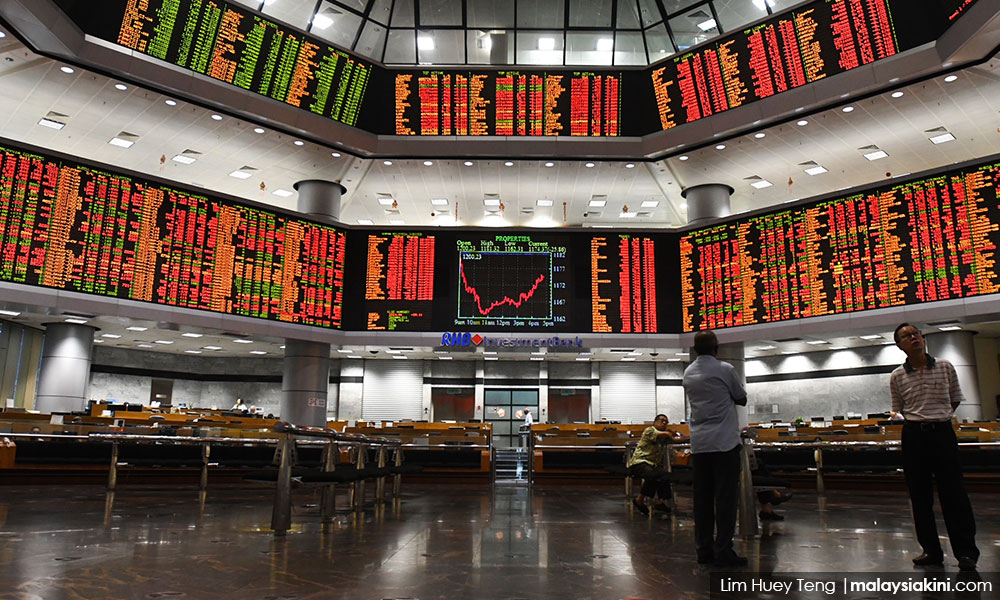
Equity markets mirror this selective confidence. Bursa Malaysia’s consolidation in mid-February, alongside stock-specific pressures despite supportive earnings narratives, reflects a discerning risk posture.
Balance-sheet resilience, governance clarity, and cash-flow visibility are being rewarded. The execution premium is tangible.
Malaysia’s strategic trajectory is therefore defined less by macro volatility than by institutional follow-through. Growth momentum, monetary stability, and external buffers offer favourable starting conditions.
The decisive arena lies in delivery discipline: constitutional reform clarity, subsidy targeting precision, opposition stability, judicial consistency, Asean credibility, and transparent state capital governance.
Stability is assumed. Execution will determine whether Malaysia converts credibility into sustained advantage. - Mkini
AZAM MOHD is an independent political and economic analyst.
The views expressed here are those of the author/contributor and do not necessarily represent the views of MMKtT.

No comments:
Post a Comment
Note: Only a member of this blog may post a comment.