


Prime Minister Anwar Ibrahim has reminded the public that they are free to practise their faiths however they want, as long as it is in accordance with the law.
Speaking at a special event with the Home Ministry in Putrajaya today, Anwar also suggested that focusing on such issues would only lead to racial disharmony and distract from more pressing issues.
“Like the case of Hindu temples… You can pray as much as you want, build as many temples as you want. But laws still need to be followed. You cannot just build it anywhere you like.
“For those who say that there are mosques and surau built without adhering to regulations, I would like to remind you that throughout our history, there has also been a surau in Perak which has been demolished because it did not follow regulations.
“So, I hope this issue can be resolved, because if we continue being like this, our country will not be peaceful, and we will not be able to focus on other matters to advance the nation,” he said.
Anwar had previously emphasised a similar matter, explaining that while the Federal Constitution recognises the right to practise religion, it does not mean the government can allow houses of worship to be built against the law.
His remarks were made in the backdrop of the authorities' crackdown on a banned rally on Feb 7, which saw close to 20 individuals arrested, including activist Tamim Dahri, for trying to participate in a rally against allegedly illegal houses of worship.
In a separate incident on Feb 11, Tamim was arrested again after demolishing a temple in Rawang.
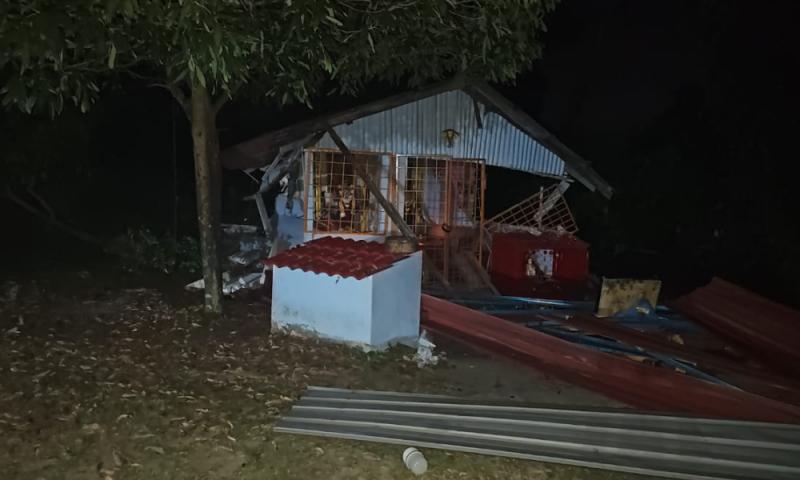
The demolition has drawn sharp condemnation from the Hindu Temple Task Force, which described the act as an extreme measure that threatens public order.
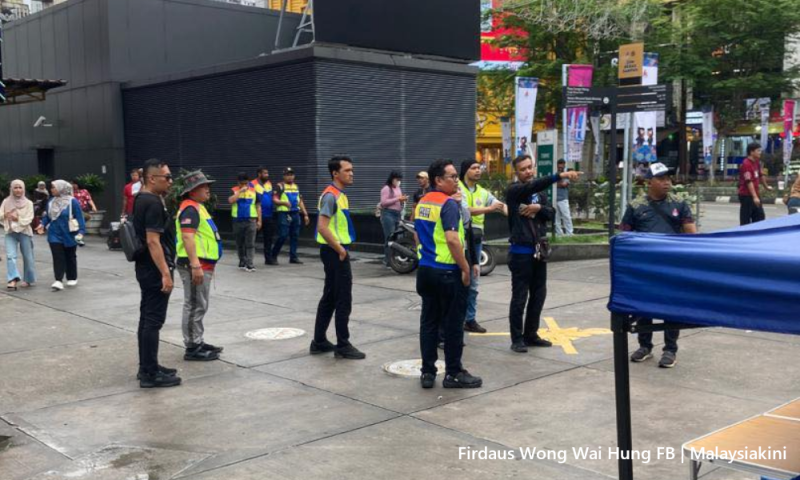
In his speech today, the prime minister also reminded that even Muslim proselytisers needed to adhere to the law, referencing an incident earlier this week where the Kuala Lumpur City Hall took down Multiracial Reverted Muslims' tents for violating regulations on obstructing pedestrian walkways.
The council stressed that it has never prohibited public proselytisation (dakwah), and that the enforcement action was intended to maintain the safe use of urban spaces.
Anwar shared that he had personally been involved in dakwah activities before, but stressed that it must be done without breaking the law.
Praise for Home Ministry
The premier also said he was “very proud” of the Home Ministry’s performance and achievements throughout the past three years in safeguarding national security.
“I choose (to speak at) the Home Ministry today because I feel it is necessary to offer them my gratitude. Because I know this ministry has often been criticised and ambushed on social media and by the public for its weaknesses.
“I’m not here to deny these weaknesses, but our Home Ministry is an issue of national security. The fact that people feel confident to walk peacefully at night is proof that the ministry is doing a good job,” he said.
Anwar expressed concern that certain parties were “jealous” of the nation’s progress over recent years, and that they sought to undermine the government’s success.
He reminded that Malaysia was “one of the most peaceful countries in the world”, and that the authorities should not simply be accused or berated due to their weaknesses.
‘No punitive measures’
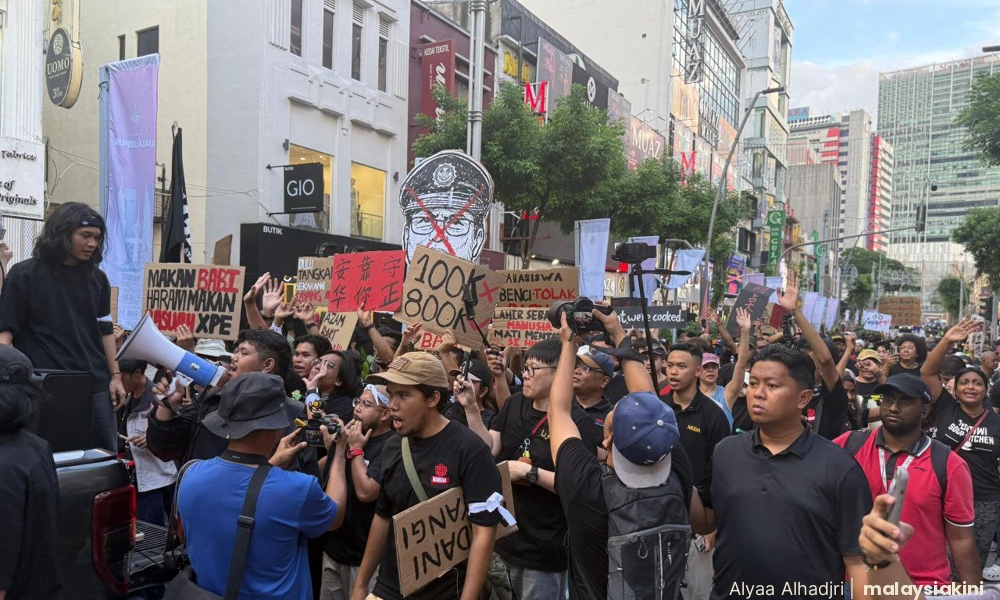
His remarks came in the wake of recent protests against the MACC and its chief commissioner, Azam Baki, who has been embroiled in a shareholding scandal, amid allegations that MACC officers had colluded with private individuals to strong-arm business rivals and abet corporate takeovers.
On Feb 15, hundreds took to the streets in Kuala Lumpur to protest the matter, urging Azam to resign, and accusing Anwar of allegedly defending the MACC chief.
However, in today’s speech, Anwar remained firm that no punitive measures will be taken unless thorough investigations have been carried out.
He also reminded that significant progress has been made over recent years, especially in battling against corruption and embezzlement.
“If there are serious complaints, they should undergo due processes, like what is happening with the MACC case. But I will not choose to take the route of ‘immediate punishment’ without first investigating the matter.
“If enforcement actions and punitive measures are necessary, then by all means, they should take place. But it should not simply be because we are not fond of the person, we decide to immediately ‘punish’ them. Enforcement should be clear. We should remember this, especially during Ramadan.
"In this month of Ramadan, we will work harder to improve our weaknesses. But despite these weaknesses, our country and enforcement bodies still significantly improved. The rakyat needs to accept this, instead of portraying it as though everything is bleak and awful.
“Only then will we find solutions for these weaknesses, and in our efforts to combat corruption,” he said. - Mkini

No comments:
Post a Comment
Note: Only a member of this blog may post a comment.