


THEY are in almost every suburb in Malaysia. The ubiquitous signboards of KK Super Mart and 99 Speedmart convenience stores have established themselves so well that many people use them as landmarks or an indication that civilisation has indeed reach a particular location.
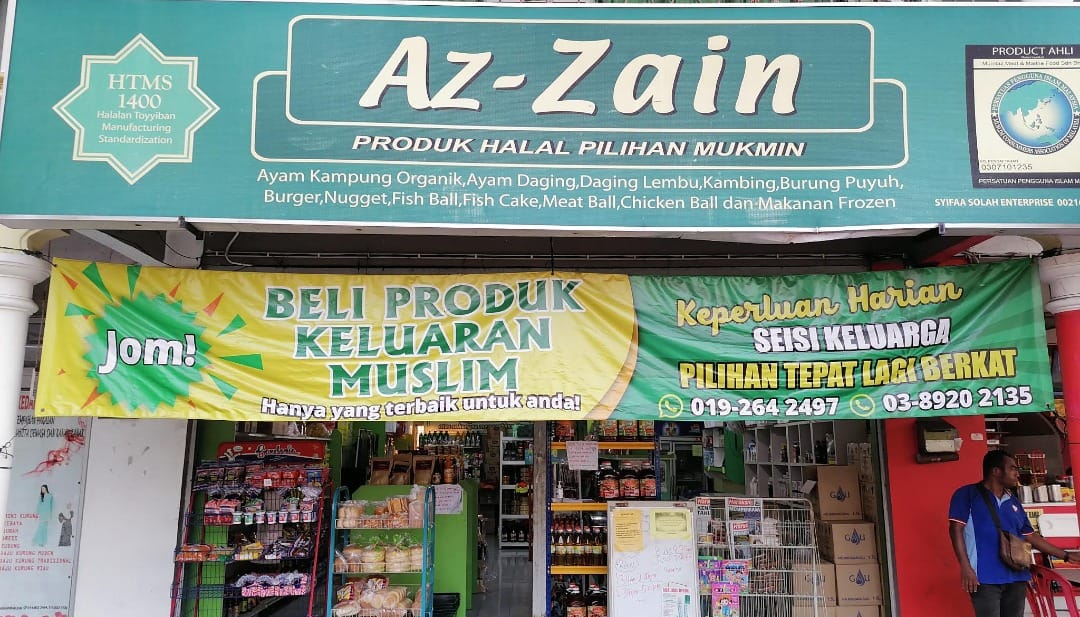
Less prominent are signboards for Muslim-owned AzZainMart, a premier halalan toyyiban (halal and wholesome) retail chain specialising in fresh, hormone-free chicken, organic meat and various Muslim-made SME (small medium enterprises) products.
Editor’s Note: AzZainMart currently has three outlets in Bukit Jelutong (Shah Alam), Subang Jaya and Bangi.
This led to one Facebooker wondered just why Malay-Muslim consumers were not throwing their collective weight behind the home-grown AzZainMart which is not only 100% Muslim-owned but carries plenty of Muslim-made products.
“Just why did Muslims feel compelled to consume kafir (infidel)-made products from the moment they are born,” lamented the Shah Alam resident.
The post may have only generated 420 likes, 506 comments and 38 shares at time of publication but it is insightful given the wealth of comments from an entrepreneurial perspective as to why AzZain Mart perhaps lagged behind its non-Muslim-owned competitors.
One commenter argued that Malay businesses tend to cater to just Malay consumers whereas other non-Muslim-owned businesses would cater to all – that being the crucial difference.
This led to one consumer wondering just when did Malay businesses “chase away” non-Malay customers.

It was then clarified that what was probably meant is that the Malay-owned businesses did not carry enough stock to attract a wide clientele unlike “Kedai Aceh or mamak shops”.

Editor’s Note: Kedai Aceh (Acehnese shop) is a small, family-run convenience store or sundry shop in Malaysia operated by migrants from the Aceh province of Indonesia.
However, another commenter double downed by claiming that Malay stores suffered because of “dirty premises” and “staff with long faces”. This was what chased customers away.

It was further surmised that product choices at AzZainMart was somewhat lacking. This is on top of the lack of parking space around the usually cramped premises. This is why customers preferred to shop at more comfortable environments nearby, argued this clued-in observer.

Ineffective marketing was also proffered as a reason for AzZainMart’s lacklustre showing compared to its non-Muslim-owned counterparts.
It was stressed that pricing has to be competitive and services need to be up to scratch. One business-savvy commenter stressed that it was also vital that there is a continuous supply of goods to avoid empty shelves.

It was also surmised that non-Muslim customers usually favoured non-Muslim brands or products, hence Muslim-owned businesses would need to stock up on such products as well.

However, this led to the question whether Muslim-owned grocers needed to have non-halal items such as alcoholic beverages on their shelves in order to attract this demographic.

One commenter pointed to the supply chain being controlled by non-Muslims as the source of the problem. It was also highlighted that pricing also needs to be more sensitive as too often Malay-owned businesses were not competitive at all.
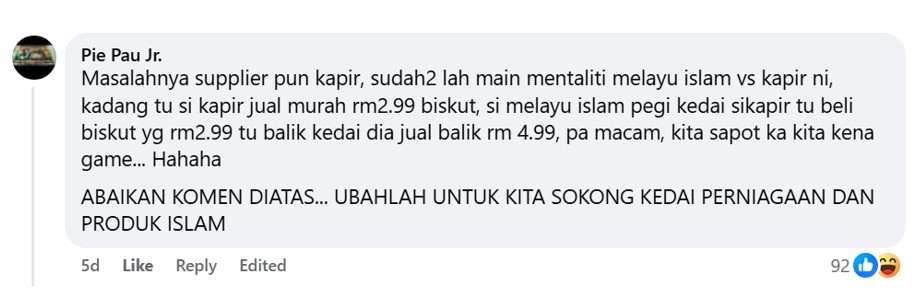
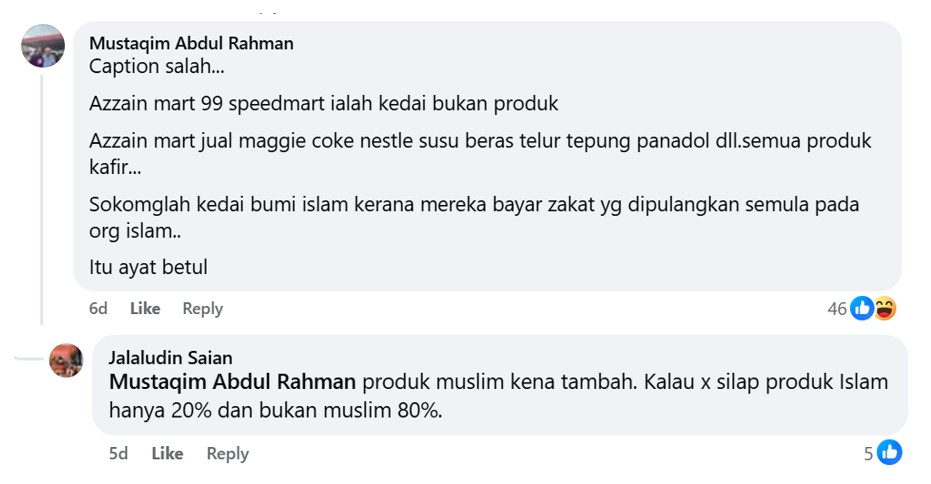
It was also highlighted by one eagle-eyed commenter that the poster’s caption got it wrong as AzZainMart also sells plenty of “kafir-made products”.
Another claimed that the proportion of Muslim to non-Muslim products is merely 20:80, hence the need to stock up more Muslim-made products.
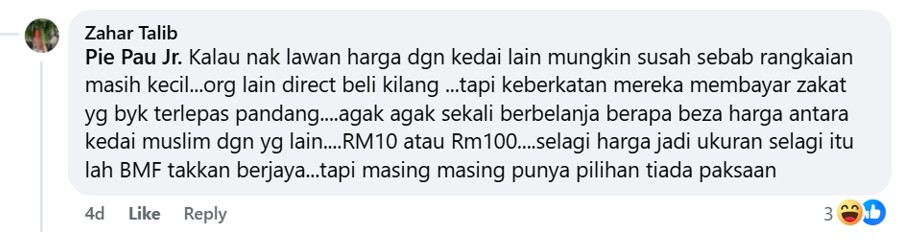
So long as price remained the key determining factor, Malay-owned businesses will struggle as their franchise network is often small.
Ultimately, as this commenter pointed out, there is a tall mountain to climb for the BMF (Buy Malay/Muslim First) quest to be successful given it boils to consumers’ choice at the end of the day.
- focus malaysia

No comments:
Post a Comment
Note: Only a member of this blog may post a comment.