


Tenaganita takes serious note of the human resources minister’s denial regarding the reported involvement of private entities in Malaysia’s migrant worker recruitment system.
However, a simple denial is no longer sufficient.
At this stage, public confidence has been deeply eroded. Years of shifting positions, policy reversals, and unfulfilled commitments have left little room for trust.
When the minister states that he is unaware of the details, it raises more concern than reassurance. This reflects a troubling pattern where decisions appear to move forward without transparency, only to be denied or clarified after public exposure.
This is not just about one company or one system. It is about governance, accountability, and whether Malaysia is prepared to confront the deep structural failures that have long defined its labour migration regime.
Malaysia has a well-documented history of opaque recruitment systems, monopolistic arrangements, and private intermediaries gaining tremendously at the expense of migrant workers.
In this context, the government must provide a clear and unequivocal position on whether companies such as Bestinet Sdn Bhd will play any role in future systems. Ambiguity is no longer acceptable.
Direct hiring not silver bullet
The promotion of “direct hiring” as a solution must also be approached with caution.
While reducing layers of intermediaries may appear progressive, the reality is far more complex. Without strong safeguards, direct hiring risks simply shifting exploitation from agents to employers.
In the absence of a regulated and transparent framework, what we risk is not reform, but a quiet reshaping of exploitation.
Employers may begin to take on recruitment roles without any real systems of accountability, effectively stepping into the place once occupied by agents, but without the scrutiny or regulation that should come with such responsibility.
At the same time, workers remain vulnerable to hidden and unregulated recruitment fees, often pushed through informal channels that leave them indebted before they even begin work.

Without independent oversight, the most basic safeguards, fair contracts, timely wages, and humane working conditions can easily fall through the cracks, with no one monitoring compliance and no effective avenue for redress when abuses occur.
Direct hiring alone does not dismantle exploitation. It can, in fact, deepen vulnerability.
Joseph Maliamauv, who is part of Tenaganita‘s Business and Accountability Programme, said what Malaysia urgently needs is not another isolated policy shift, but a comprehensive national labour migration framework.
That framework, he said, must ensure zero recruitment fees, enforce standardised contracts, guarantee independent grievance mechanisms, and deliver consistent enforcement against abusive practices.
Crucially, any reform must be informed by those working directly with affected communities, civil society organisations, frontline responders, and migrant workers themselves, not shaped solely by consultants or industry interests.
‘Effective’ system?
Abdul Aziz Ismail of Tenaganita’s Migrant Rights Programme said that the claim that the Foreign Workers Centralised Management System (FWCMS) is “effective” must be firmly challenged.
Effectiveness cannot be measured by technological performance alone. The real measure is whether workers are protected. From Tenaganita’s experience on the ground, the system has failed profoundly.
Since 2023, more than 400,000 migrant workers have entered Malaysia only to find themselves without employers, without valid work permits, and without basic protections.
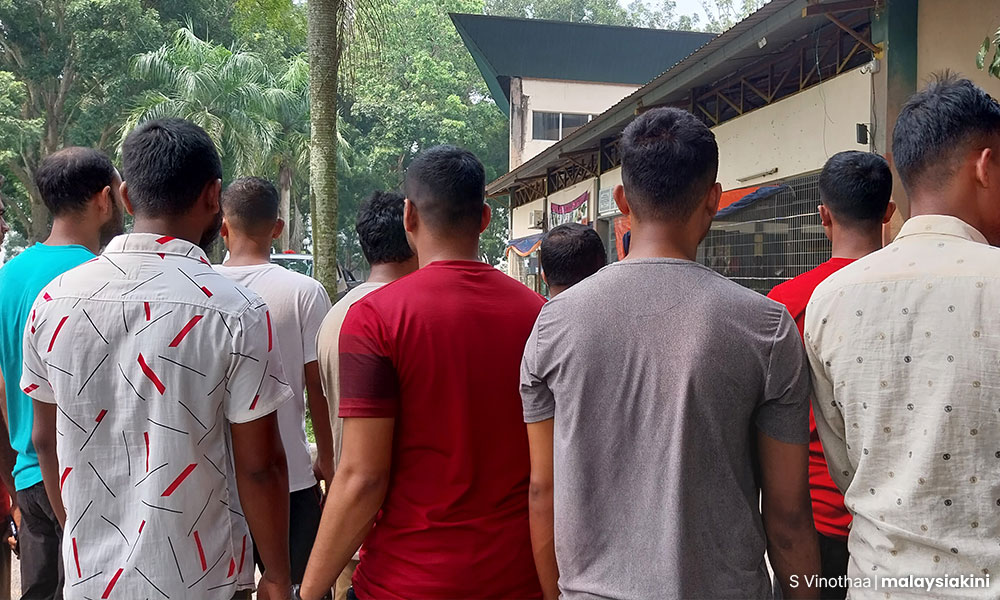
Many have been left stranded, forced into irregular work, and exposed to severe exploitation.
This is not a technical glitch. This is a systemic failure. This is a national disgrace.
To date, there has been no meaningful remedy. Workers remain without wages, without justice, and without recourse. So, digital systems cannot replace accountability.
Without transparency, oversight, and rights-based safeguards, centralisation can entrench abuse at scale rather than eliminate it.
No more recycling failed systems
Malaysia does not need another system repackaged under a different name.
We do not support the involvement of Bestinet or any continuation or reincarnation of models that have already caused widespread harm.
Without independent oversight, the most basic safeguards, fair contracts, timely wages, and humane working conditions can easily fall through the cracks, with no one monitoring compliance and no effective avenue for redress when abuses occur.

In such a system, exploitation does not disappear. It simply shifts, adapts, and continues, taking on a different form, but with the same devastating consequences for workers.
Most importantly, no new system should be introduced until there is full acknowledgement of what has gone wrong. Reform cannot begin without truth.
Our position
Malaysia stands at a critical crossroads.
We can continue down the path of fragmented, unethical gaining, and profit-driven systems, or we can choose to rebuild a migration governance framework that is just, transparent, and centred on human dignity.
Anything less will only reproduce the same cycles of exploitation under a different name.
Tenaganita calls on the government to act with honesty, courage, and accountability.
The lives, rights, and dignity of migrant workers or any workers demand nothing less. - Mkini
GLORENE A DAS is Tenaganita executive director.
The views expressed here are those of the author/contributor and do not necessarily represent the views of MMKtT.

No comments:
Post a Comment
Note: Only a member of this blog may post a comment.