


Deputy Works Minister Ahmad Maslan’s suggestion to cycle to work has sparked a lively debate among netizens amid global discussion on the impact of a looming energy crisis.
But beyond the polemics, there are people who have long embraced the lifestyle - no longer a suggestion but a daily reality where bicycles are their main mode of transport to work.
A lecturer at Puncak Perdana Universiti Teknologi Mara (UiTM) branch, Shahrazif Tajul, told Malaysiakini he has been commuting using a bicycle for five years.
“Actually, I used to live in Ampang… from Ampang to here is always congested. I’m the type who just can’t deal with that,” he said.
Now living in Bandar Nusa Rhu, Shah Alam, he only needs to cycle about 800 metres to work. Initially, his family worried about his decision, but those concerns faded once it became a routine.
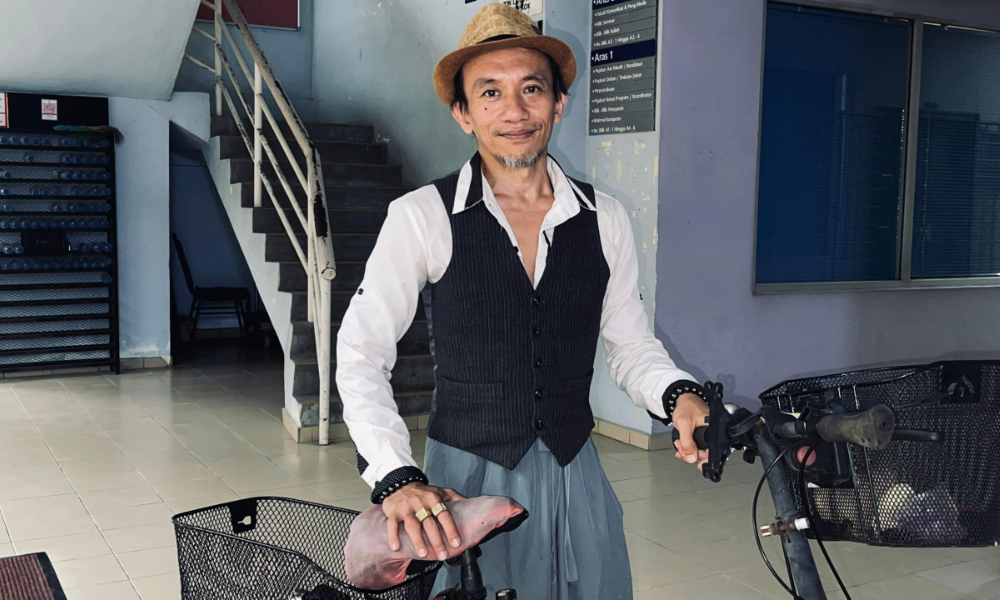
The decision not only reduced traffic stress but also cut daily expenses.
“I ride that bicycle every day, and over five years, the maintenance cost is less than RM100. The bicycle itself only cost RM250,” he said.
According to Shahrazif, using a bicycle can save up to 80 percent in expenses compared to owning a vehicle, while also helping maintain fitness without excessive fatigue.
Previously, Ahmad clarified that the suggestion referred to short-distance travel within urban areas, not long-distance intercity journeys.
“Why laugh? I’m reminded of my suggestion - ‘Cycling is a healthy way to travel short distances’,” he wrote on Facebook.
The Pontian MP added that bicycles are more suitable within towns such as Pontian or Putrajaya, rather than for long journeys like to Johor Bahru or Kuala Lumpur.
Ahmad also noted that cycling was just one of seven initiatives he proposed.
‘From personal pain’
For a coffee shop owner in Kuantan, Luqman Nasaruddin, his cycling journey began with a difficult personal experience and became a daily routine.
“Just when people stopped cycling after the lockdown ended, that’s when I bought my first bicycle,” he told Malaysiakini.
It began as a weekend activity, but a personal episode changed everything.
“I was still using motor vehicles to get around… until something happened that could be described as quite sad in my life. Simply put, relationship problems,” he said.
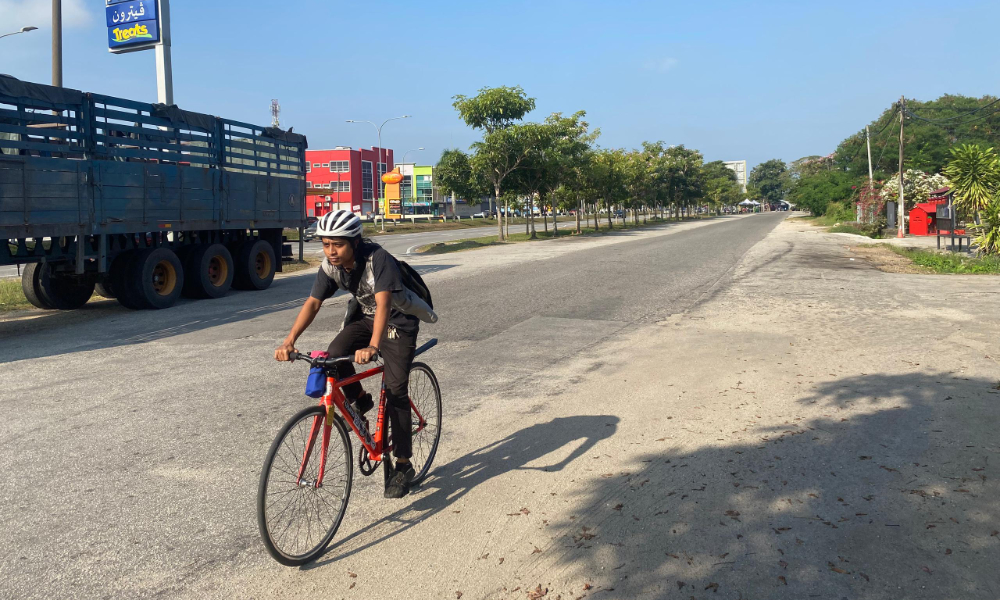
“For about three months, I cycled almost every day to truly recover from what was haunting my life.
“At that time, my life - morning, evening, day and night - was all about cycling,” he said candidly.
Now, Luqman no longer owns a motor vehicle and cycles entirely, including commuting up to 20 kilometres daily.
“There are no more motorcycles or cars in my daily life, except when I hitch a ride with friends if I’m unwell or the weather is bad.”
Although Luqman has experienced accidents, his spirit remains unshaken.
“My worst injury was a broken pinky finger on my right hand. But it didn’t dampen my spirits at all - to me, that’s normal,” he said.
‘Infrastructure still a barrier’
However, conditions on the ground indicate that significant challenges remain, particularly in infrastructure and facilities.
Sinar Project coordinator Khairil Yusof, who has cycled for over 20 years, described the lack of facilities as the main obstacle.
“Since I started working 20 years ago, I’ve gone to work and handled daily affairs on foot, by bicycle, and using public transport,” he said.
According to him, bicycles are not just a commuting alternative but can also be used for short trips or combined with public transport.
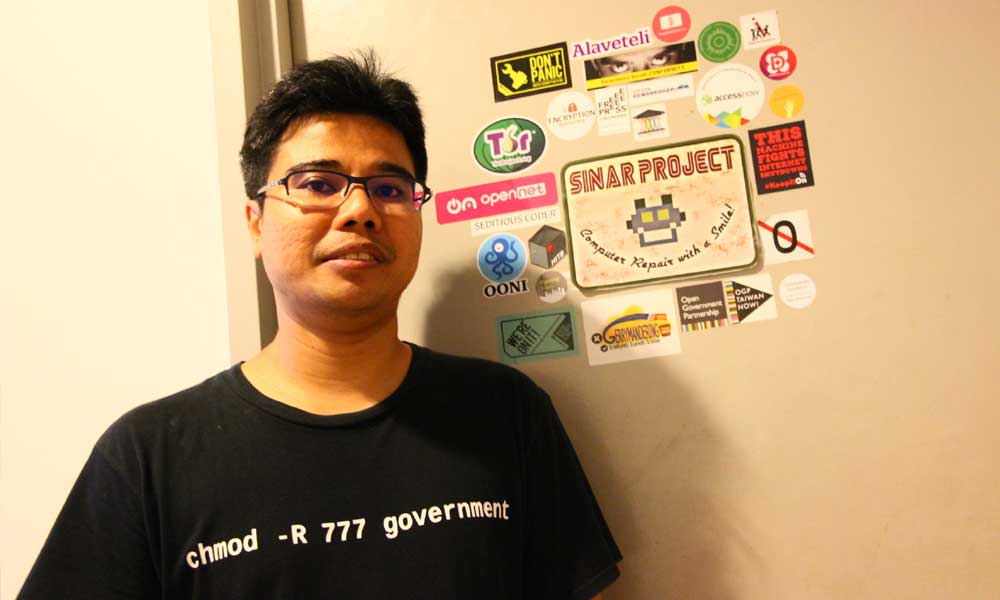
“There is no safe infrastructure for pedestrians or cyclists.
“If it doesn’t feel safe to walk or cycle with children, it means it’s not safe enough for the public,” he said.
Khairil added that the lack of practical bicycle parking in commercial areas, public transport stations, and institutions is also an issue.
“Another barrier is the absence of bicycle parking facilities in commercial areas, public transport stations, universities, and schools,” he explained.
He also revealed that social discrimination against cyclists still exists.
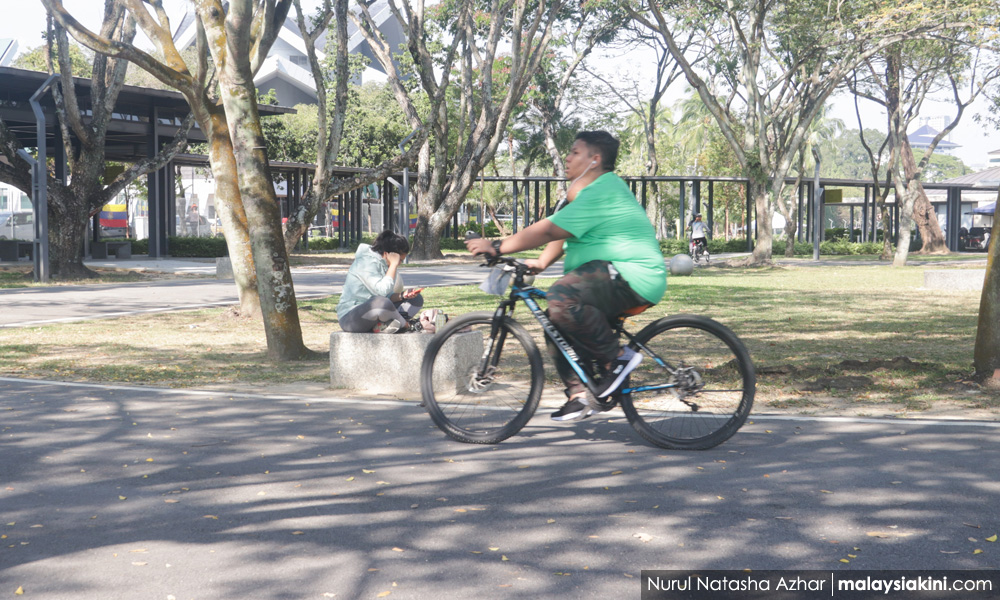
“They chase you away, blow whistles when you arrive on a bicycle. It is as if people who cycle to work are looked down upon and should be removed from public view,” he said.
He further questioned how leaders themselves are walking the talk on the idea.
“I don’t know of a single elected representative who cycles or uses public transport to go to work,” Khairil claimed. - Mkini

No comments:
Post a Comment
Note: Only a member of this blog may post a comment.