


The most meaningful way to honour this Merdeka Day is to have the courage to speak truthfully, to question what we are told and to insist on the truth.
That is what makes a recent interview with Mohamed Tawfik Ismail, son of the late Tun Dr Ismail Abdul Rahman, so compelling. He speaks with a candour that is strikingly rare in public life today. There is nothing polished or rehearsed about it.
He tells it as he sees it.
He takes us into an era when convictions mattered, disagreements could be fierce, and speaking independently was not automatically misunderstood as disloyalty.
And that is the thread running through his conversation on The Good Cast Show with Vinodh Rajendran.
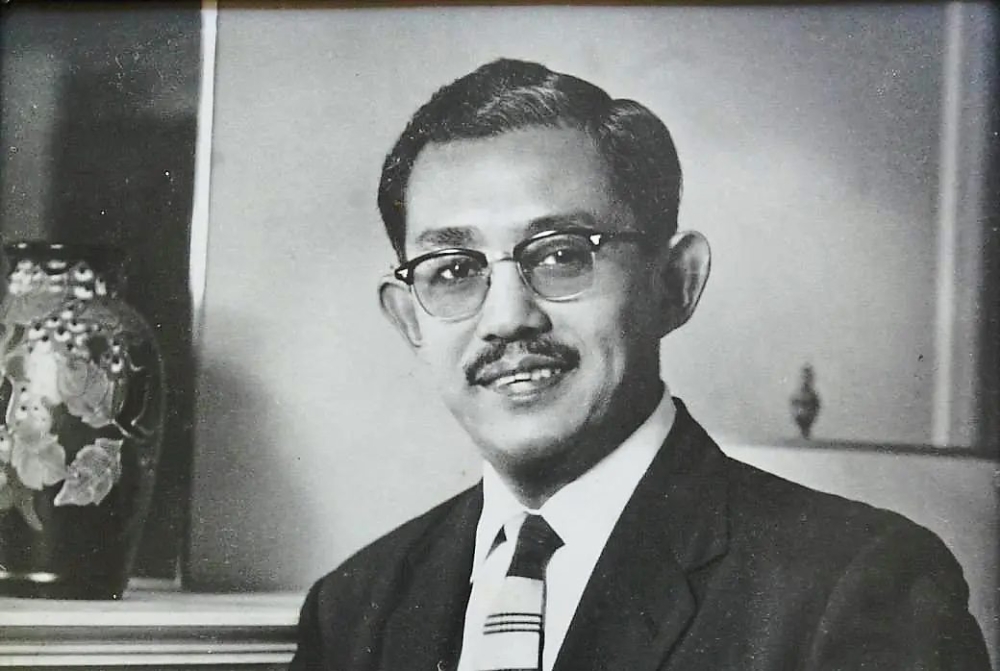
Tawfik grew up watching a different political culture. His father, Tun Dr Ismail, was not a man who sought popularity. He was known for his firmness, discipline and willingness to speak plainly. As Deputy Prime Minister under Tun Abdul Razak, he was one of the defining statesmen of Malaysia’s formative years.
“As his children, if we need anything, he will ask us to go through the normal channel like everyone else.” Tawfik recollects.
“He was a stickler for discipline and honesty and on that fundamental principle he set up the Anti-Corruption Agency as Minister of Home Affairs.”
Tawfik offers another insight into his father’s thinking, one that goes to the heart of integrity in public life:
“My father advised me that one should be financially independent when offering oneself for public office, as that prevents the temptation to be corrupt, to not see public office as a source of private wealth.”
That distinction matters. Public office, in his father’s view, was a responsibility to the nation, never a means of personal enrichment.
Robert Kuok, a close friend of Tun Dr Ismail, described him this way:
“He was a lovely man with strength of character, high principles, and a great sense of fairness. In my opinion, he was probably the most non-racial, non-racist Malay I have met in my life. And I have met a very wide range of Malays from all parts of Malaysia. Dr Ismail was a stickler for total fair play, for correctness; total anathema to him to be anything else.”
Tawfik studied in Royal Military College of Malaysia, History and Politics in Australia before reading Jurisprudence at Oxford. His career began with Malaysian International Merchant Bankers from 1978 to 1981, where he helped establish Malaysia’s first mini money market in Penang. He then joined Fleet Group, holding several senior corporate positions between 1981 and 1986, including directorships of Bank of Commerce and American Malaysian Insurance. In 1984 he was dynamically involved in launching Malaysia’s first private commercial television station, TV3.
He also explains how his father’s experiences shaped his commitment to fairness:
“My father grew up in Australia as a minority. That is why he wanted fairness in a multiracial Malaysia, and tried to apply that fairness in his policies.”
Tawfik puts it simply:
“We should respect the efforts and strengths of every community in the formation of Malaysia and their contributions in nation building.”
But perhaps the deeper lesson he inherited from his father was this:
“My father also believed that you should always live up to your principles and never compromise on them.”
Perhaps that is why Tawfik’s own political journey is so telling. He had grown up with an understanding that public life demanded independence of thought and the courage to stand by one’s convictions.
He was elected to Parliament in 1986, at a time when Tun Dr Mahathir Mohamad was Prime Minister and Umno was at the height of its political dominance. His disagreements with the powerful Prime Minister eventually became part of his political identity.
His account of those years is striking for its lack of diplomatic varnish.
“I enjoyed fighting Mahathir,” was his arresting admission.
But beneath the provocative phrase is something more important: He could disagree with a Prime Minister without believing that the country would collapse because he had done so.
A democracy cannot be healthy if disagreement is treated as disloyalty, or if political loyalty becomes more important than loyalty to the country.
Nations are not sustained by monuments, slogans or taglines. They are sustained by courage and conviction. By people willing to stand their ground when it is easier to remain silent. By leaders who understand the difference between authority and statesmanship.
Tawfik’s interview is valuable because it does not offer us a polished version of history. It gives us something more useful: an honest one.
The political conversation is changing. A younger generation will demand honesty and truth, and will hold leaders to account for promises made and left unfulfilled. Politicians will not be remembered simply by how long they remained at the wheel, but by whether people trusted the direction in which they were taking the country.
Perhaps that is what the next generation is asking of Malaysia: not perfection, but truthfulness.
To all Malaysians for the next election, he had a clear message.
“Choose the right candidate, not the right party.
Not slogans, but honesty. Not political survival, but public trust.
As we approach our 69th Independence Day, we should hoist the Jalur Gemilang and sing Negaraku with the conviction that Malaysia belongs to all of us.
Perhaps that is the true meaning of Merdeka: to be free enough to speak, brave enough to question and confident enough to tell the truth about the country we love and call our own. - malaymail
This is the personal opinion of the writer or publication and does not necessarily represent the views of MMKtT.

No comments:
Post a Comment
Note: Only a member of this blog may post a comment.