


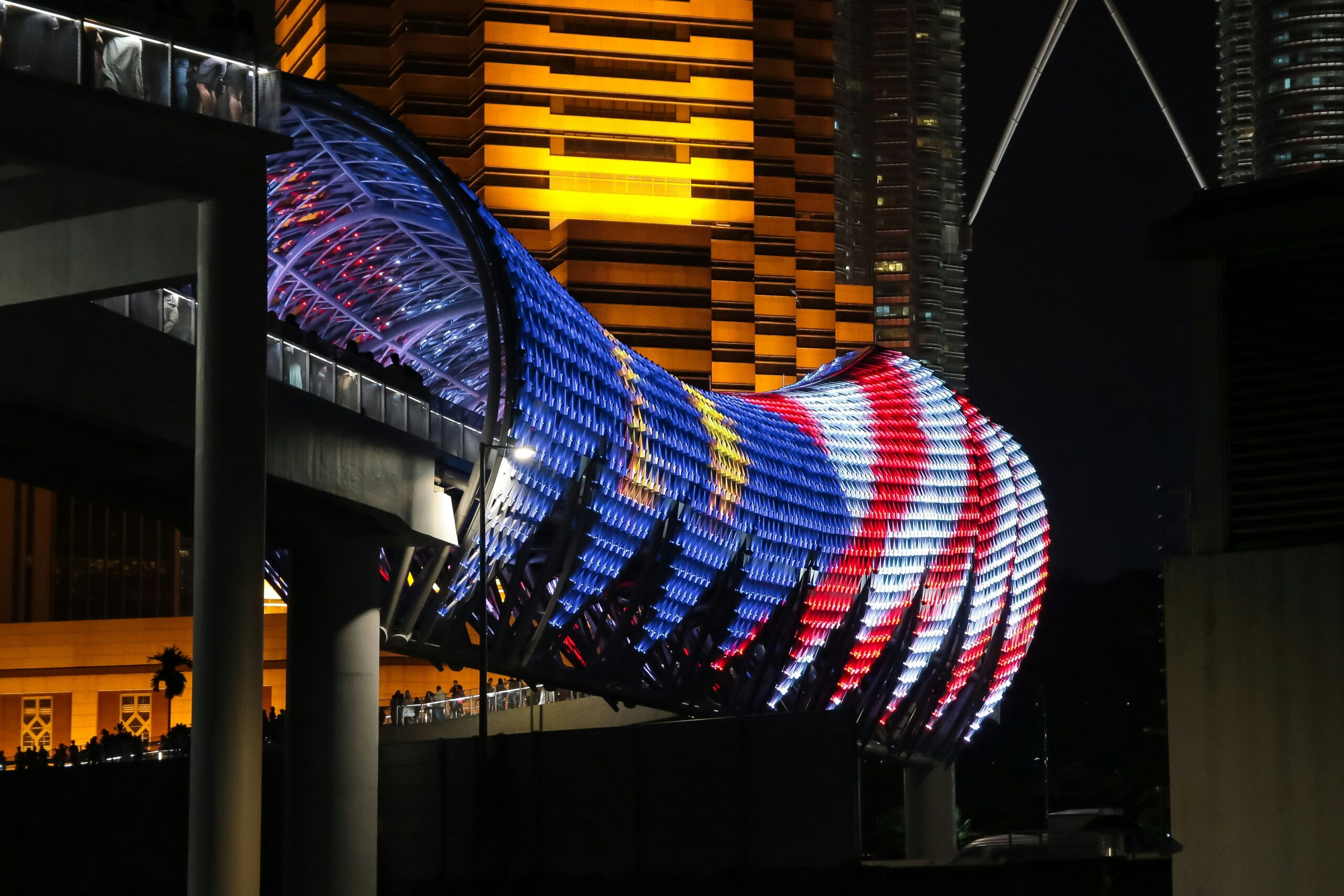
EVERY August, we raise the Jalur Gemilang with pride. We sing Negaraku and feel that familiar swell in our chests. But if we’re being honest, really honest, there’s something that nags at us beneath the celebration.
Have we actually finished becoming one nation?
Long before independence, poet Usman Awang was already thinking about what a free country might become. In his 1956 poem Tanah Air (Menjelang Kemerdekaan), written a year before Malaya achieved independence, he imagined a “new country” taking root in freedom.
Sixty-nine years after Merdeka, that hope is worth revisiting because look at what we’ve built.
In 1957, Malaya’s economy was predominantly agriculture- and commodity-based, with rubber and tin at its heart. Today, Malaysia is a diversified economy deeply integrated into global industries.
The transformation has been extraordinary. GNI per capita grew by an average of 6.4% a year between 1962 and 2024. Almost 36% of the workforce had tertiary qualifications by 2023, while life expectancy rose from 59 years in the 1960s to 77 in 2024.
We have highways and ports, international airports and modern hospitals. We have universities, a sophisticated services sector and a substantial middle class. Extreme poverty has been virtually eliminated.
Politically, we’ve seen governments change hands. Elections are fought with genuine intensity. Civil society speaks up, sometimes loudly enough to make those in power uncomfortable.
Malaysians, particularly younger ones, are increasingly willing to question authority and demand accountability.
Socially, we live together, work side by side, trade, study and celebrate together. Our diversity is woven into the texture of daily Malaysian life.
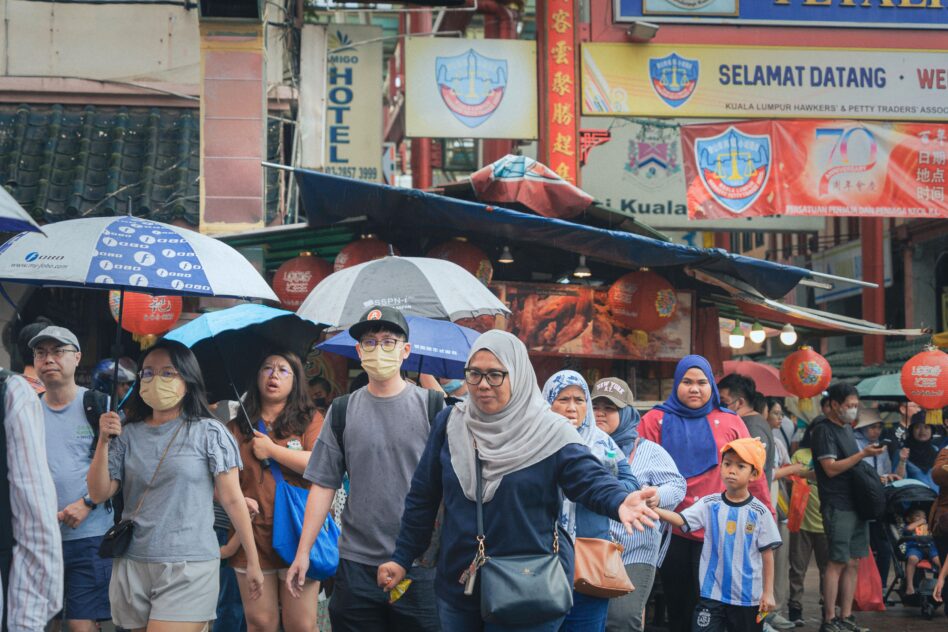
And yet, here’s the uncomfortable truth that won’t go away: We’ve progressed in almost every measurable way, while our sense of being one people remains fragile.
The National Unity Index has improved, rising from 0.629 in 2022 to 0.701 in 2025 but ethnicity remained the biggest perceived challenge to national unity, cited by 60.3% of respondents.
SUHAKAM has likewise warned that racism and racial discrimination remain deeply embedded in our institutions, public discourse and societal attitudes.
So perhaps the honest conclusion isn’t that we’ve become worse at living together; it’s that we never quite finished becoming one nation.
So where did we go wrong?
- We made ethnic politics permanent
The political arrangements forged around independence reflected the realities of their time. But ethnic identity eventually became one of the principal languages of Malaysian politics.
“Malay versus Chinese.” “Majority versus minority.” “Islam versus others.”
These are not merely descriptions of differences. Too often, they have become the political frames through which Malaysians are encouraged to see one another.
- We built parallel worlds
Look at our schools, political parties, media and social circles.
Children can grow up in the same neighbourhood while experiencing very different educational and social environments. The same happens with the media we consume and the people who populate our social networks.
We live alongside one another remarkably well but living alongside someone isn’t quite the same as knowing them.
- Politicians found identity easier than policy
Fixing an economy requires hard work, planning and difficult decisions.
Stirring fear about “the other community” requires a speech, a slogan or a viral video.
It is cheap and emotionally effective. It also distracts from harder questions about jobs, inequality, education and institutional trust.
- We forgot the civic soul of education
We’ve taught our children how to pass exams, often brilliantly but have we taught them how to be Malaysians?
The Rukun Negara was introduced following the May 13, 1969 racial riots and proclaimed in 1970, with national unity among its central objectives.
More than five decades later, perhaps we should ask whether we’ve treated it as a living civic philosophy or merely something to recite at school assemblies.
The real test of Merdeka
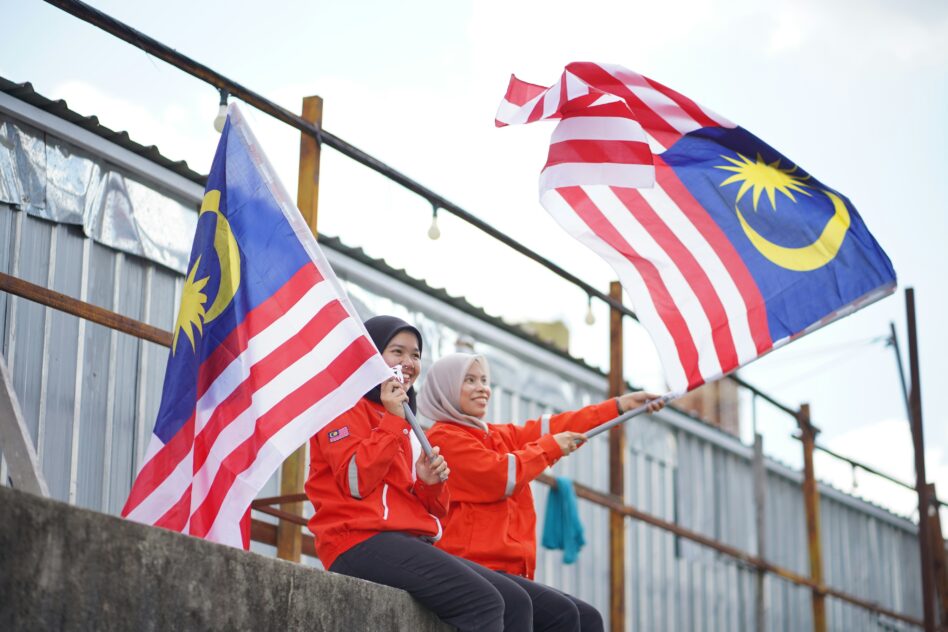
Unity cannot be achieved through slogans. It has to be lived.
We need more opportunities for children and young people from different communities to learn and serve together. We need communities to solve problems side by side until the neighbour who once seemed unfamiliar becomes simply the person next door.
We need to move beyond merely tolerating diversity towards actually trusting it.
Because the real challenge isn’t getting Malaysians to coexist—we’ve already done that.
The harder task is getting Malaysians to feel that another Malaysian’s success belongs to all of us. The real test of Merdeka isn’t our skyscrapers, GDP or technology.
It is whether a Malay can look at a Chinese Malaysian, an Indian Malaysian, an Iban, a Kadazan-Dusun or an Orang Asli and instinctively think: That is my fellow citizen, and their success is my country’s success.
We threw off colonial rule in 1957. That was an enormous achievement.
The harder task is building a society in which fear, suspicion and political exploitation no longer keep citizens psychologically apart.
We have built a successful country.
Now we need to finish building one people.
KT Maran is a Focus Malaysia viewer.
The views expressed are solely of the author and do not necessarily reflect those of MMKtT.
- Focus Malaysia.

No comments:
Post a Comment
Note: Only a member of this blog may post a comment.