


The past year was a defining one for Malaysian politics – one in which leaders, coalitions, and electorates have changed the national landscape, putting in place conditions for major shifts in this coming year.
The main national coalitions, Pakatan Harapan and BN in the Madani government and Perikatan Nasional, are undergoing serious strain, with tensions unlikely to be resolved in the short term.
In this reflective piece, I look at how Malaysian politics are changing, identifying five major shifts and their consequences.
1. Displacement of senior leaders
The year ended with multiple bangs – the 1MDB conviction and 15-year sentence of former prime minister Najib Abdul Razak and the almost-fall of the Perlis government that ended without by-election polls and empty seats.
The Perlis instability provided an opportunity for the Islamist party PAS to push out one of the factions of Bersatu, that led by former prime minister Muhyiddin Yassin.
In short, two former prime ministers were put into political storage – at least for now.
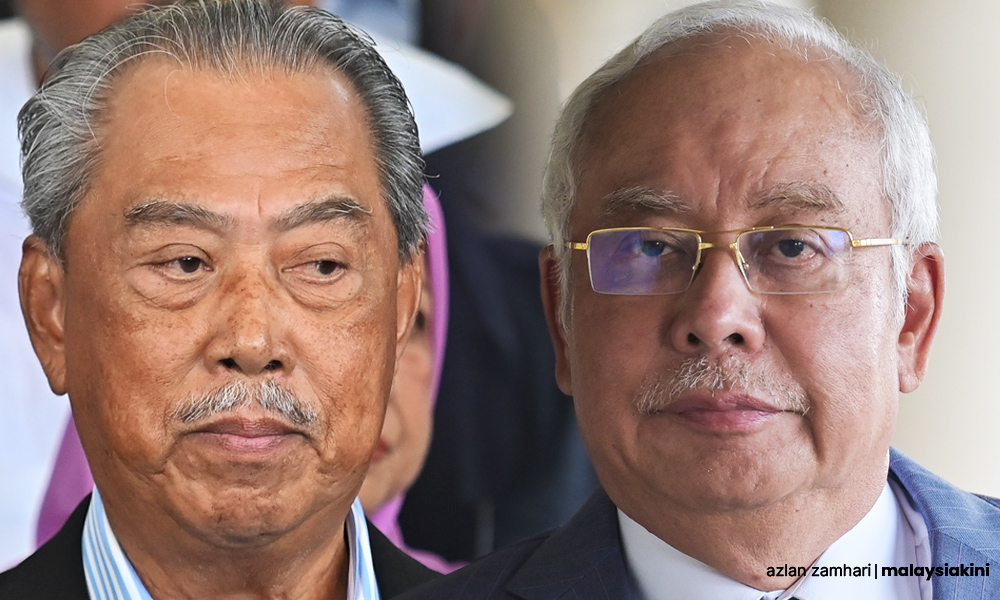
This comes with Dr Mahathir Mohamad’s political influence continuing to wane, as he marked his centennial year.
The consequence is that younger leaders will play more of a role in shaping Malaysian politics ahead – if they choose to embrace this role.
2. Electorally weaker Anwar Ibrahim/Madani government
The intense December political events come after the Sabah November polls, which emphatically illustrated the limits of Anwar Ibrahim’s electoral capital, with serious losses to his Harapan coalition and negative spillover to Umno. Anti-federal sentiments dominated the campaign.
Unlike the 2023 state election, the Sabah election pitted Madani partners against each other. This – along with the results for key partners DAP and Umno – have caused strain for the Madani government.
Multiple exit doors were opened – from Harapan and from the Anwar-led Madani government. The test ahead will be whether partners take the exit option, stay put or are effectively pushed out by a lack of attention to the issues they need for their respective political base – from the Unified Examination Certificate to more recognition of their important roles in the Madani government.
A consequence of the Sabah polls is that partners are seriously considering pursuing their own electoral paths for future polls, as Anwar’s leadership in 2025 proved to be an electoral liability.
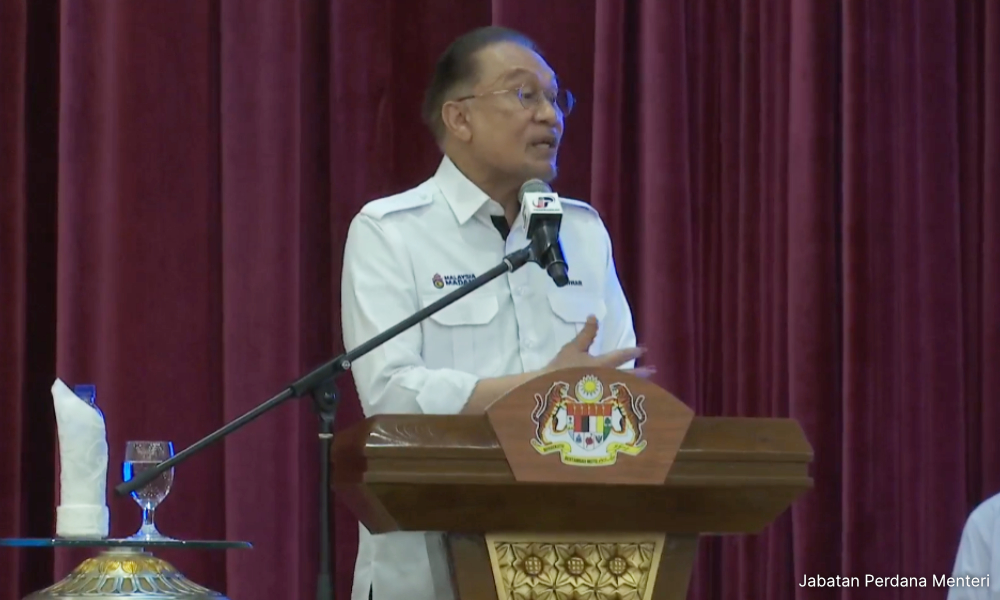
It remains to be seen whether this can be reversed, with Anwar promising to deliver on reforms, many of the same reforms (such as the PM term limit) that he has had three years to deliver and have been promised now by Harapan for nearly a decade.
Importantly, one should not dismiss reversals of fortune in Malaysia’s fluid politics. Yet, the damage of a poor Sabah campaign remains.
The current prime minister ended the year weaker domestically, despite the boost in national support as Asean chair and solid and continual economic growth.
3. PN opposition divided
Divisions extend to Malaysia’s opposition as well. The tensions within PN were on display over instability in Perlis, which led to the purge of the national controlling faction of Bersatu.
PAS used the opportunity of the challenge to their own weak leadership in Perlis to push for national leadership of PN. In stamping its control of the opposition coalition, PAS flexed its stronger muscles in the alliance, a trend that has persisted all year and was exacerbated by a deep split within Bersatu.
Whether PAS leads PN with Terengganu Menteri Besar Ahmad Samsuri Mokhtar or deputy president Tuan Ibrahim Tuan Man or Bersatu deputy president Hamzah Zainudin is yet to be resolved; what has become clear is that PAS is now the dominant partner and making electoral gains on its own, as it did in Sabah, while Bersatu has lost ground and relevance.
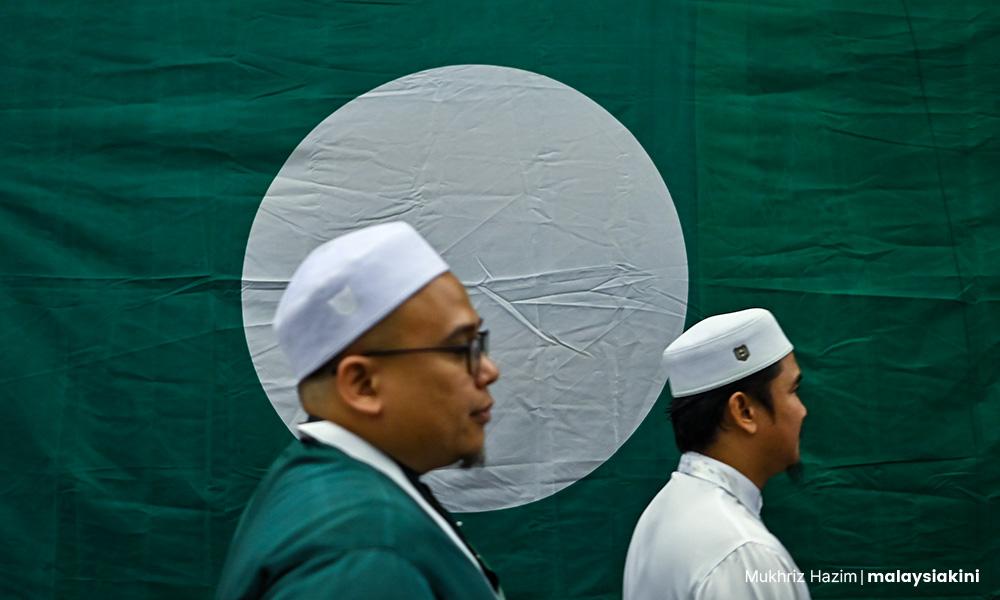
This may change in the election this year, such as in Malacca, where Bersatu is stronger, but the balance of power has significantly shifted.
Nationally, Muhyiddin’s departure leaves an electorally weaker PN.
The diminishment of Bersatu within PN has another implication. It leaves the coalition – which has underperformed as an opposition in Parliament – as a weaker national player in politics.
PAS remains electorally strong but has governance deficits – it has yet to show how it can govern nationally, especially to manage the economy and diversity of Malaysia.
PAS as a party may be stronger, but PN’s ability to be a viable alternative national leader by year-end has dimmed. PAS’ weakness continues to advantage the Madani government.
4. PKR purge
The impact of a political purge extends beyond PN to PKR. Over six months after PKR’s fractious party polls, which led to the resignation of former ministers Rafizi Ramli and Niz Nazmi Nik Ahmad and marginalisation of ‘team’ Rafizi, the negative effect on the party remains evident.
Its political base has been narrowed. Nowhere is this clearer than in PKR’s poor Sabah campaign, which led to the losses of all PKR candidates – except one borrowed from Parti Gagasan Rakyat Sabah for the spend-a-lot Melalap constituency.
Rafizi has become one of the leading opposition voices, although many of the personalised nature of his attacks mirror the anger of the personal attack he received upon being ousted.

With a couple of exceptions, the December cabinet reshuffle reflects the appointment of those in the “Anwar” faction to positions, a reshuffle that aims to boost PKR leaders, many of whom are at risk of losing their seats if electoral trends continue.
This speaks to a party aiming to rebuild with a short clock to do so.
5. Greater Borneo power
Perhaps the most significant shift in power is the continued empowerment of Borneo, as part of an ongoing pattern of decentralisation taking place nationally.
If 2024 was the year for Sarawak to show its greater autonomy acumen, 2025 was the year where Sabahans spoke emphatically for more of their “own” representation – an electoral boon that primarily benefitted Gabungan Rakyat Sabah, although post-results failed to lead to significant changes in the many old-timer cabinet composition.
Sabah’s justified call for its constitutional share of revenue – long legislated but not delivered – and urgently needed improvements to infrastructure for basic needs – was made clear.
Worrying since the polls, the lack of adequate appreciation of the needs has set in, with an even more worrying sense that Sabah could even be punished for speaking out for itself.
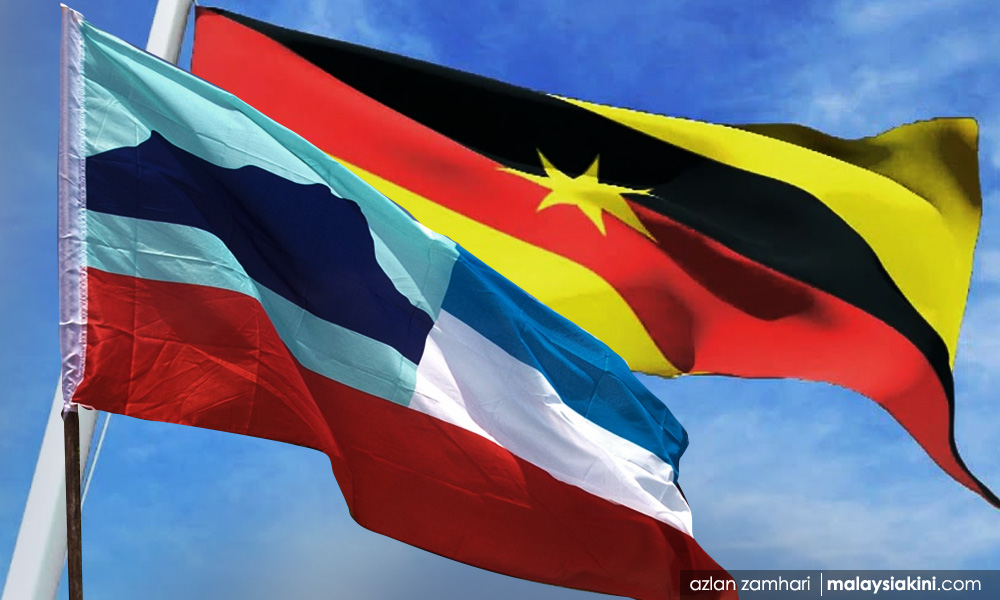
Sarawak should hold its polls this year, with an echo of strengthening local parties likely. The mantra of Borneo for Borneo is strengthening.
It is also causing strain with increasingly common false claims that financial redistribution will lead to “bankruptcy”. The divide between Borneo and the rest of Malaysia is widening, as there is resentment of calls for autonomy and greater control of resources.
Ironically, with the political divisions within Peninsular Malaysia – and as shown in part 2, the highly competitive polls, the electoral power of Borneo is rising and will be more important than ever.
Malaysia’s political recalibration is broad, extending from leaders, coalitions, parties and regions. Power centres are changing, making Malaysia more challenging to govern and even more challenging to deliver the changes in governance that Malaysians are demanding.
Part 2 will look at the potential electoral impact of these changes and show that unless there are meaningful and bold changes in governance, those believing they hold the political advantage will no longer do so. - Mkini
BRIDGET WELSH is an honorary research associate of the University of Nottingham’s Asia Research Institute, a senior research associate at Hu Fu Centre for East Asia Democratic Studies, and a senior associate fellow at The Habibie Centre. Her writings can be found at bridgetwelsh.com.
The views expressed here are those of the author/contributor and do not necessarily represent the views of MMKtT.

No comments:
Post a Comment
Note: Only a member of this blog may post a comment.