


Prime Minister Anwar Ibrahim has declared that the long-standing controversy over recognising the Unified Examination Certificate (UEC) should no longer persist, now that Bahasa Malaysia and history subjects have been made compulsory for students seeking entry into public higher education.
Anwar said the circumstances surrounding the UEC debate had fundamentally changed, with the vast majority of students from Chinese independent schools already sitting for the Sijil Pelajaran Malaysia (SPM) Bahasa Malaysia paper alongside their UEC qualifications.
“This also applies to the minor controversy regarding UEC, even though circumstances have already changed. The vast majority take SPM, and the vast majority also take SPM Bahasa.
“However, under current regulations, Bahasa Malaysia and history are also made compulsory for international schools, religious schools, and all Chinese-stream schools, that is, UEC.
“So with this method, their pathway to higher education, whether from international schools, religious schools, or UEC, should no longer be a controversy.
“We accept it well, as long as these conditions are met,” Anwar said at the launch of the Malaysia Education Plan and Malaysia Higher Education Plan 2026-2035 in Putrajaya.
In a press conference later, Higher Education Minister Zambry Abdul Kadir said Anwar’s announcement was an initial step to allow the evaluation and alignment process to be carried out systematically.
He added that the same also applies to international and religious schools that use their own education systems and do not necessarily offer national core subjects.
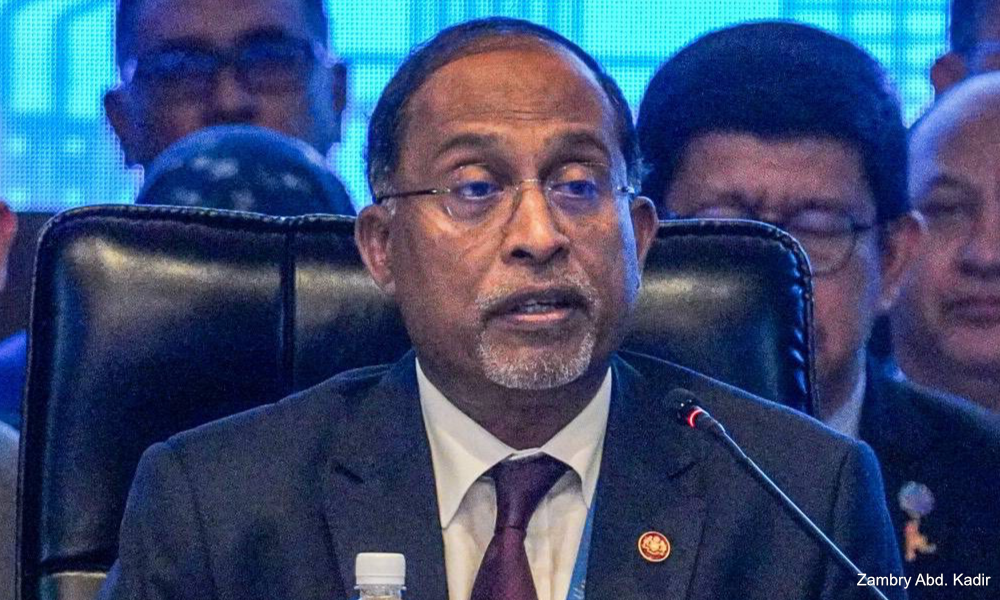
He further explained that the government will also coordinate between the Higher Education and Education ministries, as SPM falls under the latter’s jurisdiction and forms the main foundation of the country’s higher education system.
“All education systems that have not previously been based on the national education framework must first meet the stipulated criteria, namely the teaching of the Malay language and Malaysian history, before further steps relating to student intake into public universities can be considered,” he said.
In his royal address at the opening of the 2026 parliamentary sitting yesterday, Yang di-Pertuan Agong Sultan Ibrahim Sultan Iskandar reminded Malaysians who are unwilling to accept Bahasa Malaysia as the national language that they should not live in this country.
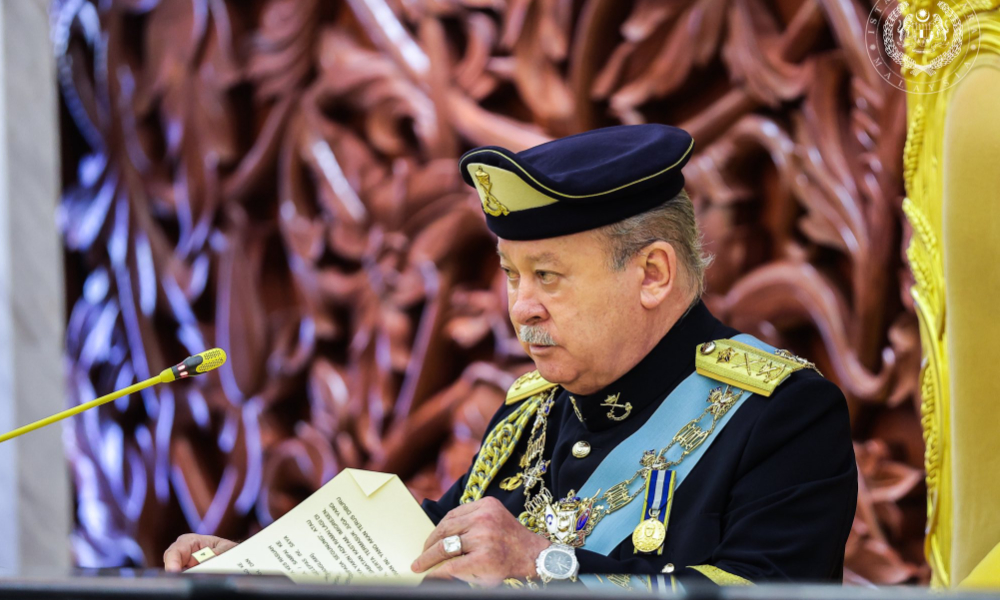
“If a new education system is to be introduced, it must be done in line with the national education policy, and Bahasa Malaysia must be the main language because it is the national language.
“Therefore, any proposal to recognise any other education system must accept the Malay language and Malaysian history. If there are those who do not accept the language, it would be better for them not to live in Malaysia,” he added.
Recurring tensions
The king’s remarks came amid ongoing pushback against moves to get the government to recognise the UEC.
UEC recognition has been a pivotal part of Pakatan Harapan’s pledge to the public, as it was part of their 2018 and 2022 general election campaign promises, provided that applicants obtained a credit in SPM-level Bahasa Malaysia.
For decades, topics surrounding the UEC have sparked recurring tensions in Malaysia, with disputes frequently centring on language requirements, cultural representation, and competing visions of national unity.
The controversy flared anew following social media comments by DAP deputy chairperson Nga Kor Ming, who announced his party’s intention to meet the prime minister and lobby for the certificate’s official recognition.
Opponents of UEC recognition have consistently emphasised Bahasa Malaysia proficiency as a key reason for rejecting the certificate, arguing that the exam’s Chinese-medium instruction does not align with Malaysia’s education policy.
However, Chinese school proponents Dong Zong have countered those claims, noting that over 96 percent of Chinese independent school students passed the Malay SPM subject.

The group stressed that the national language is already a key component of the UEC syllabus and is a compulsory subject for the UEC curriculum.
Anwar later weighed in on the issue, saying that as long as the priority of mastering the Malay language is upheld, he has no objection to other languages - whether English, Chinese, Tamil, or Arabic - being taught. This, he added, extends to the UEC, which uses Chinese as its medium of instruction.
He reminded all parties that any demands touching on religious or racial sensitivities must consider the constitutional position of the national language.
Acceptance and opportunities
Several states, including Penang, Sarawak, Sabah, and Selangor, have taken the unprecedented step of recognising the UEC for purposes such as entry into state‑owned universities, state scholarships, and even civil service eligibility.
In universities where the certificate is accepted, the UEC is generally considered equivalent to the STPM or the UK’s GCE A-Level. Thus, it can be used for admission into foundation, diploma, and bachelor’s degree programmes.
UEC holders are accepted in government teachers’ training colleges if they also have a credit in SPM BM and a pass in SPM History and English. Such graduates may only enrol in programmes that lead to a career in SJKC schools.
For entry into the public service, the UEC is generally not recognised. Sarawak, however, accepts UEC holders into its state civil service, provided that candidates have also obtained a pass in Bahasa Malaysia at the SPM level.
In Penang, the state government has, in practice, recognised the UEC in limited contexts, most notably for recruitment into state government-linked companies (GLCs) and for certain state-level roles linked to the state administration.
However, this does not amount to blanket recognition of the UEC for all state civil service positions, as appointments remain subject to federal public service rules, with recognition confined to areas where the state exercises discretion.
Malacca, by contrast, has never formally recognised the UEC for entry into its state civil service. Although a 2018 announcement raised the prospect of acceptance, this was never translated into policy.
The state, therefore, continues to adhere to standard federal civil service requirements, without any special provision for UEC holders.
The Selangor government, meanwhile, moved to recognise the UEC in 2015, during Azmin Ali’s tenure as menteri besar.
However, this recognition was limited to entry into certain state-linked educational institutions, such as Universiti Selangor (Unisel) and other colleges under the state’s purview.
Recognition in this educational context does not automatically extend to appointments within the Selangor state civil service.
Records of the Selangor state assembly showed that the 2015 decision formalised UEC recognition solely for further education at selected state institutions, and did not include recognition of the certificate as a qualification for employment in the state public service.
Further clarification from assembly proceedings indicates that appointments to the Selangor civil service remain subject to the regulations of the federal Public Service Department (PSD) and the relevant national service circulars.
Applicants are therefore required to hold qualifications recognised by the Malaysian Qualifications Registry (MQR) and the Higher Education Ministry. - Mkini

No comments:
Post a Comment
Note: Only a member of this blog may post a comment.