


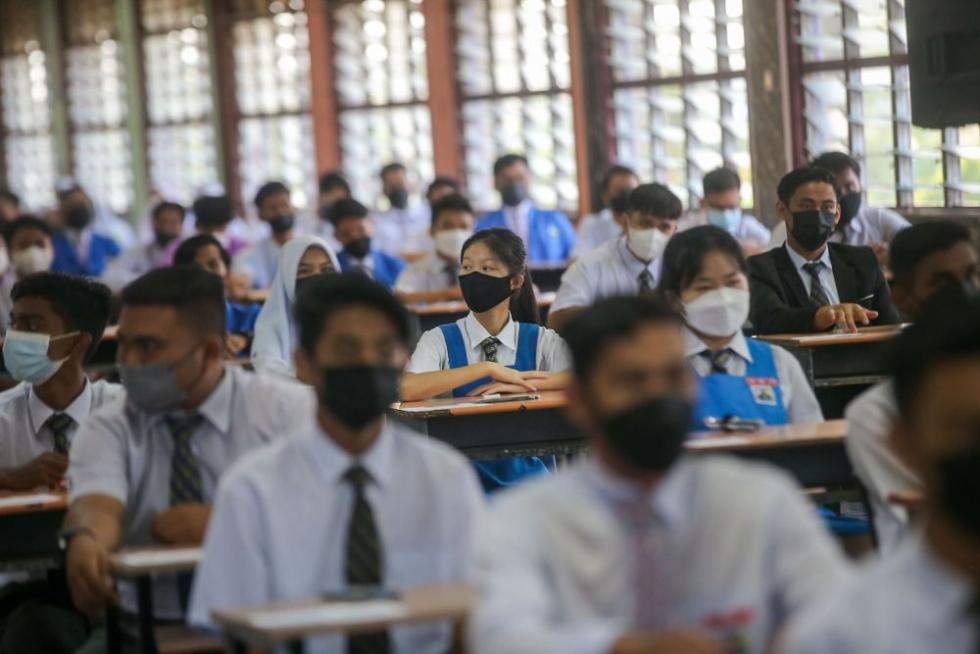
EDUCATION director-general Dr Mohd Azam Ahmad recently commented on the upcoming Educational Blueprint 2026-2035, imposing firm key performance including a requirement for students at both the primary and secondary school levels to obtain at least a grade C in four core subjects, namely Bahasa Melayu, English, Mathematics and History.
There’s a shared hope that every child in Malaysia deserves a strong education. That’s the heart behind the government’s new Education Blueprint, which sets clear goals: ensuring students master core subjects and stay physically healthy.
On paper, it’s hard to disagree because we all want our kids to succeed. But as many parents and teachers know, a goal is only as good as the path to get there.
What happens when a child—or an entire school—falls behind? The plan’s success won’t be decided by the targets themselves, but by whether the system can truly understand and respond to the “why” behind the struggles.
Right now, the proposal applies the same yardstick to every school, as if all classrooms share the same starting line, but we know that isn’t true.
A school in a well-resourced city and one in a remote village face very different realities. Holding both to the same grade benchmark, without tailored support, could unintentionally leave the most vulnerable students even further behind, contradicting the very ideal of “closing gaps” that the plan champions.
The fitness target, while well-intentioned, faces a similar hurdle, not every school has a proper field, a trained PE teacher, or even a safe space to play. A goal alone doesn’t create those things.
The Blueprint speaks beautifully about holistic education, great teaching, and fairness—ideas we can all rally behind, but in daily school life, vision meets reality. Teachers are already stretched thin. Where will they find the time for deeper collaboration?
What gets taken off their plates to make room for new expectations? And if exams remain the loudest measure of success, how do we nurture the emotional well-being the plan also promises?
There’s another quiet concern: accountability seems to flow one way. Schools and educators will be measured closely, but what happens if the targets themselves are mismatched to reality? How will the system listen, learn, and adapt?
It’s tempting to blame past shortcomings mostly on the pandemic. While COVID-19 was a tremendous disruption, it also exposed cracks that were already there, like unequal access to technology and a heavy focus on testing. Learning from those long-standing challenges is just as important as recovering from the crisis.
Ultimately, this is about more than grades and pass rates. It’s about building a system that sees the whole child and meets them where they are.
Raising the bar is necessary, but lifting everyone over it requires insight, flexibility, and the humility to adjust along the way.
The vision in the Blueprint is promising. The real test will be whether the support, understanding, and systemic change follow so that this decade is defined not just by measurement, but by meaningful growth for every student.
KT Maran is a Focus Malaysia viewer.
The views expressed are solely of the author and do not necessarily reflect those of MMKtT.
- Focus Malaysia.

No comments:
Post a Comment
Note: Only a member of this blog may post a comment.