


Letter to Editor
MEMBRANE technology is quietly engineering revolutions. This became clear at a recent talk by Prof Dato Dr Fauzi, former UTM VC, at UCSI University.
From turning seawater into drinking water to capturing carbon emissions and powering clean hydrogen fuel cells, these thin, selective barriers are becoming indispensable tools for the 21st-century.
Thanks to relentless R&D, including pioneering work by Malaysia’s own Prof Dr Fauzi – whose decorated research has placed the nation on the membrane map – costs are reasonable, enabling wider adoption.
Yet, despite impressive progress, significant technological hurdles remain. The global race to commercialise next-gen membranes is accelerating.
While Prof Dr Fauzi and his international peers have pushed boundaries, fundamental challenges demand continued research: Fouling remains the Achilles’ heel.
Scaling and organic fouling clog pores, reducing flux, increasing energy consumption, and demanding frequent, costly cleaning or replacement.
Research is active to develop truly anti-fouling surfaces, self-cleaning mechanisms, or advanced, less damaging cleaning protocols.
Smart membranes that sense fouling and respond autonomously are a holy grail. Membranes face extreme environments – high pressure in desalination, corrosive gases in carbon capture, acidic/alkaline conditions in fuel cells, and aggressive solvents in chemical processing.
Need to engineer novel polymers and materials with chemical, thermal, and mechanical resilience without sacrificing selectivity or permeability.
UTM’s work in novel membrane materials is crucial here. Highly selective membranes often have low permeability, requiring more energy.
Highly permeable membranes often lack precision. Need to design next-gen materials that break this trade-off, achieving both high throughput and exquisite molecular discrimination – vital for efficient carbon capture or gas separations.
While better than many alternatives, membrane processes like reverse osmosis are still energy-intensive. Research should aim to develop lower-pressure membranes, explore alternative driving forces (e.g., forward osmosis, membrane distillation hybrids), and integrate membranes with renewable energy sources more effectively.
Optimising how membranes are packaged (modules) and integrated into larger systems impacts efficiency, footprint, and cost. Challenges include flow distribution, minimizing pressure drops, and scaling up novel materials reliably.
Driven by urgent needs for water security, decarbonization, and clean energy, membrane commercialization is booming. Reverse Osmosis (RO) is now the dominant desalination technology globally.
The focus is on efficiency: higher-flux membranes, better energy recovery devices, and advanced pre-treatment to combat fouling. Forward Osmosis (FO) and Membrane Distillation (MD) are moving from niche to commercial pilots for challenging feeds or low-energy contexts.
Carbon Capture, Utilization, and Storage (CCUS) is arguably the hottest frontier. Post-combustion capture from power plants using membranes is seeing massive investment. The challenge is achieving the required purity and flux at an acceptable energy penalty.
Membranes are critical for purifying hydrogen from various production pathways and within fuel cells themselves. Durability and cost reduction for fuel cells remain key commercial goals.
Green hydrogen production also relies on membranes in electrolyzers. Membrane-based filtration is standard for drug purification, sterile processing, and dialysis.
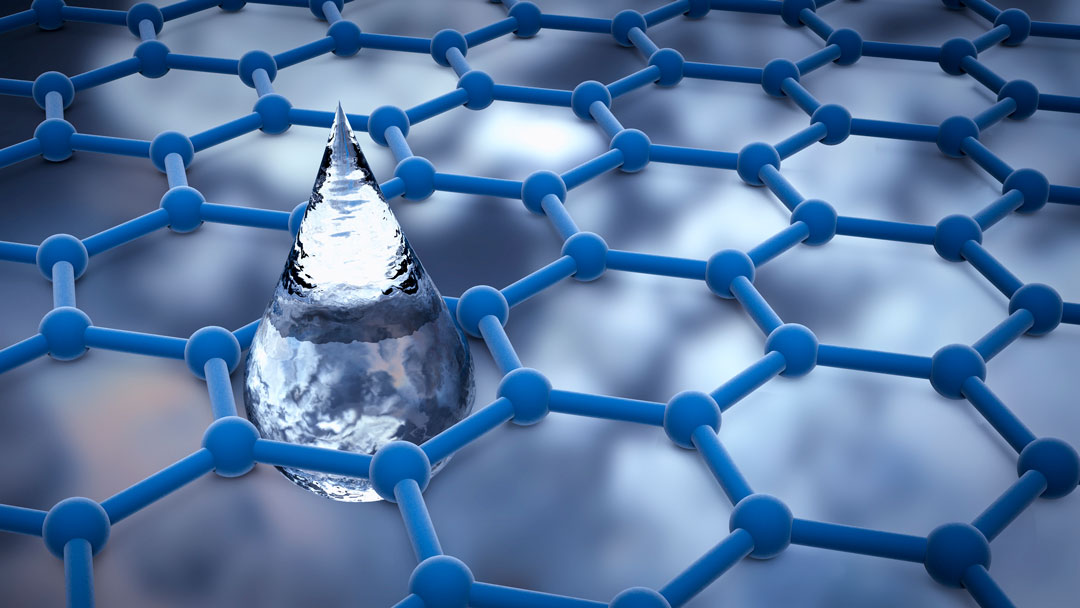
Innovation focuses on virus removal filters, affinity membranes for specific biomolecules, and point-of-care diagnostic devices. Graphene-based membranes and other nanomaterials are transitioning from labs.
The Graphene Flagship in Europe and numerous startups are exploring their potential for ultra-fast, selective separations, though large-scale, cost-effective manufacturing remains a hurdle.
Prof Dr Fauzi’s achievements at UTM prove Malaysia has world-class membrane research capability. At UCSI, membrane research is also gaining traction in the chemical engineering department. A membrane project to concentrate skim rubber latex shows promise.
Research is also underway to evaluate the use of membrane for carbon capture. The challenge now is translating this excellence into tangible economic and societal impact. The R&D focus should be on membranes for tropical challenges such as in the separation needs of palm oil and rubber.
It is about solving Malaysian problems with Malaysian ingenuity. To do this we need to strengthen the links between academia, industry, and government.
We must invest in dedicated programs supporting pilot-scale testing, techno-economic analysis, and IP protection. They are essential to move inventions from the lab bench to pilot plants and beyond.
Membrane technology is no longer a niche scientific curiosity; it’s a critical industrial pillar for sustainability. While pioneers like Prof Dr Fauzi have brought costs down and performance up, the journey is far from over.
Conquering fouling, breaking the selectivity-permeability trade-off, and enhancing durability under harsh conditions require sustained, collaborative global research.
Simultaneously, the commercial landscape is vibrant, driven by the existential needs for clean water and air. Malaysia has demonstrated its research prowess.
The next step – and the true measure of success – lies in harnessing that brilliance to develop, manufacture, and deploy cutting-edge membrane solutions that solve local problems and compete on the global stage. The world needs better membranes; Malaysia has the potential to be a key provider.
Professor Dato Dr Ahmad Ibrahim is an Adjunct Professor at the Ungku Aziz Centre for Development Studies, Universiti Malaya.
The views expressed are solely of the author and do not necessarily reflect those of MMKtT.
- Focus Malaysia.

No comments:
Post a Comment
Note: Only a member of this blog may post a comment.