


In 1962, Parliament amended Malaysia’s Constitution and made sweeping changes to the citizenship law.
Malaysia moved away from jus soli - citizenship based on place of birth - and adopted jus sanguinis, citizenship based on descent, as the overriding criterion for nationality.
Yet even as Parliament tightened its citizenship requirements, it preserved one vital principle: no person with genuine ties to this country should be made stateless.
This was not a political flourish. It was written into the constitutional fabric of a newly independent state determined to take its place among “civilised nations”.
Life in limbo
On Jan 20, 2026, the Court of Appeal will hear the case of “EL”, a 30-year-old woman whose life illustrates the cruelty of statelessness - a cruelty Parliament expressly sought to prevent.
Abandoned as a baby, EL had no information about her biological parents: no names, no nationalities, no records. She was later raised by a Malaysian couple of Chinese descent.
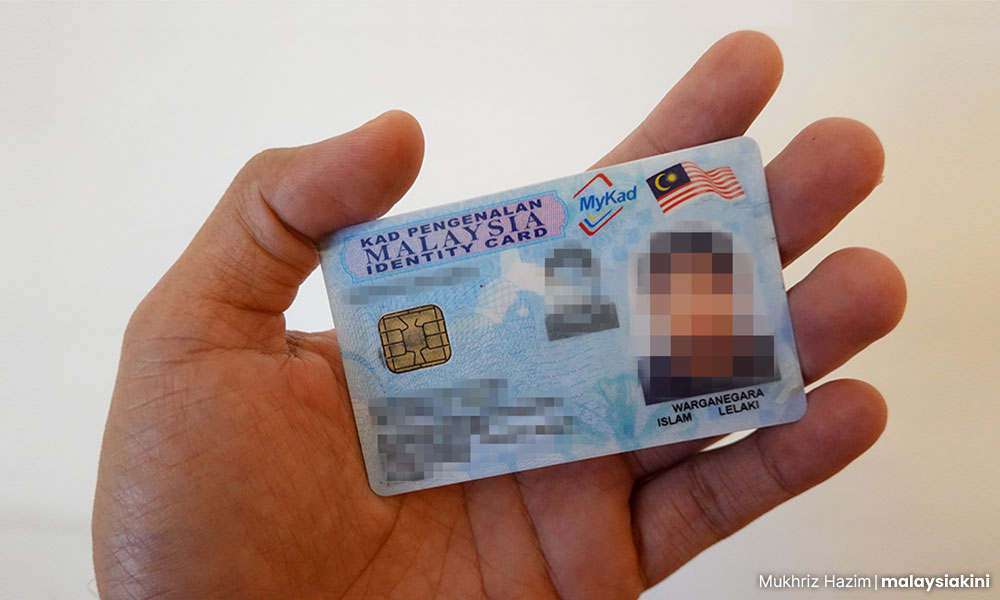
To allow their daughter to live like any other child, the adoptive parents inserted their own names into her birth registration. A birth certificate was issued listing her as Malaysian. At age 12, she received a MyKad.
She attended local schools and, like many Malaysians, speaks Bahasa Malaysia, English, and Chinese. For decades, she lived exactly as she believed herself to be: Malaysian.
That certainty ended when she attempted to renew her MyKad at 22. The National Registration Department (NRD) launched an investigation. Her adoptive parents disclosed that she had been abandoned and that no biological parent information existed.
The NRD’s response was devastating: it revoked her birth certificate and MyKad, replacing them with a Temporary Identification Card.
Yet no amount of administrative regulation can change the constitutional reality. EL is entitled to citizenship by operation of law. She was born in Malaysia, she is not a citizen of any other country, and the Constitution contains a safety net for precisely those in her situation.
Impossible burden of proving a negative
Two earlier Court of Appeal decisions - Than Siew Beng and Lim Jen Hsian - continue to cast a long shadow over citizenship disputes. In both cases, the court held that such children must prove they are not citizens of any other country - an unrealistic and often impossible burden of proof - before they can rely on constitutional protection.
However, how does an abandoned newborn prove a negative? How does a child with no papers, no family, and no country produce evidence of absence? The law should not demand what life itself makes impossible.
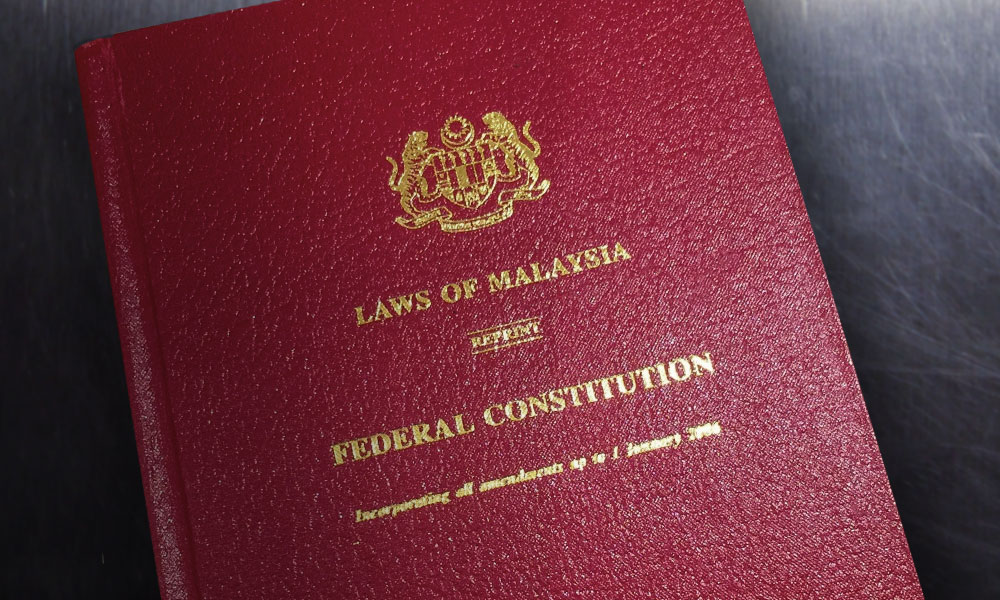
That is precisely why Article 14(1)(b), read with Paragraph 1(e), Part II, Second Schedule, exists. For decades, lawyers, civil society organisations, and legal scholars have understood Paragraph 1(e) as a constitutional safety net against statelessness.
It provides citizenship for children born in Malaysia who are not born citizens of any other country, including abandoned children with unknown parentage.
Parliament’s intention
The principle that no one should be made stateless did not materialise out of nowhere - it is recorded in Hansard.
Then-deputy prime minister Abdul Razak Hussein, in his speech on the second reading of the Constitution (Amendment) Bill at the Dewan Rakyat on Jan 29, 1962, explained:
“Clause 2 of the Bill, subject to amendment in committee, seeks to add a third category by providing that a person will not acquire citizenship by operation of law by reason of birth in the Federation, if at the time of the birth neither of his parent was a citizen or a permanent resident in this country.
“This amendment will not, of course, apply to persons born in the Federation before the amendment comes into force. It will not prejudice rights already acquired, nor will it operate so as to render the child stateless.”
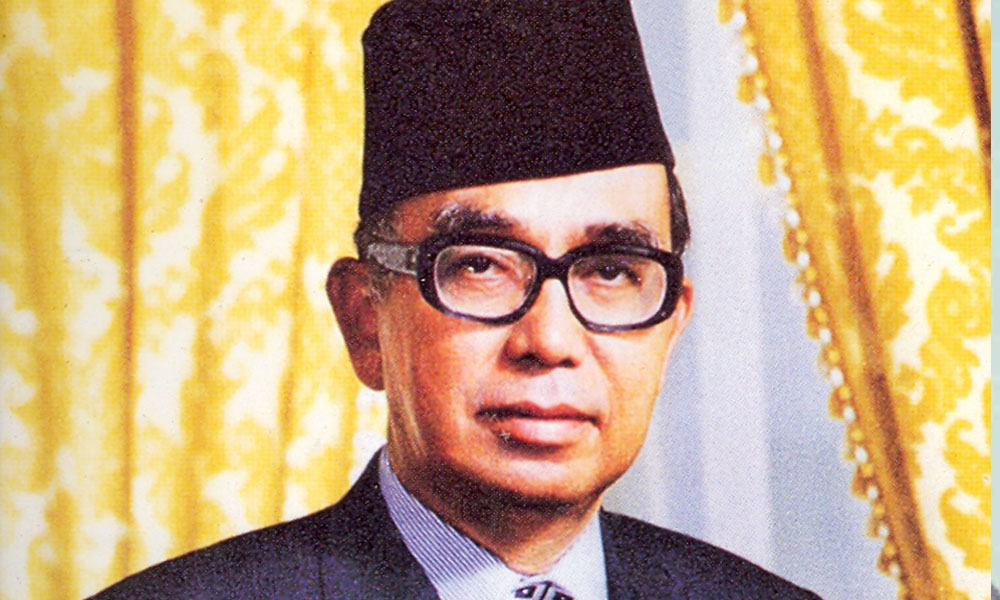
He added: “… In short, our object has been to make our citizenship procedure realistic; to place no hindrance on the bona fide applicant who is prepared to play his part in building the new Malaya…”
This reveals clear legislative intent. Parliament wanted genuine members of the national community to be citizens through realistic procedures, and it intended that no child should be made stateless.
Right way shown
In “CCH & Anor v Pendaftar Besar Kelahiran dan Kematian”, the Federal Court adopted a purposive interpretation that harmonises the Constitution with its obligation to prevent statelessness. Explaining Section 19B, Part III, the Court stated:
“The operative words in s. 19B are ‘any newborn child found exposed in any place’. A literal reading of this section must necessarily mean that the newborn child is left and discovered in a place, which can be anywhere.
“The purpose of this section, when read in context, must be to cover newborn children who are left and discovered in a place without any trace of their biological parents. We take judicial notice of the harsh realities of life: this includes newborn children left abandoned near dumpsites, baby hatches, public or school toilets, places of worship and so on…
“As such, the broadest possible interpretation of the word ‘found exposed’ is to accord it a meaning to include a child abandoned at the place of birth by the birth mother whose identity is unknown. The operative word ‘exposed’ in s. 19B must therefore encompass the plight of abandoned newborn children, otherwise the overarching intent of preventing statelessness would be defeated or rendered illusory.”
In other words, the presumption of citizenship for abandoned children exists precisely to prevent the evidentiary impossibility imposed by Than Siew Beng and Lim Jen Hsian.
Question of who we are
EL’s case offers the Court of Appeal an opportunity to correct course. Doing so would require the court to read the Constitution broadly and generously to protect rights, respect Parliament’s intention, and align with Federal Court precedent.
Anything less would continue to punish children for circumstances beyond their control - circumstances they did not choose and cannot change.
EL has lived her entire life here. Malaysia is her only country. Her language, her culture, her memories - all are Malaysian. Denying her citizenship is not simply an NRD administrative act; it is an act of erasure. It denies recognition, security, and a home.
Razak, during the constitutional amendment debates, explicitly stated that Malaysia had an obligation as a “civilised country” not to render people with genuine ties to this land stateless. He said:
“… as a civilised country, we are bound by this matter because it is an international obligation - that is, we cannot render a person stateless. Therefore, we have to accept them; otherwise, it would mean we are failing to fulfil our international obligations.
“One of the attributes of an independent and civilised state, which maintains relations with other countries of the world, is that we must comply with international obligations.”
Ultimately, this debate is not merely legal. It is about belonging, dignity, and the kind of nation we want to be.
The only question now is whether our courts will fulfil that constitutional promise - or allow it to fade into constitutional amnesia. A country that insists it will not create stateless people cannot, in good faith, turn its back on people like her. - Mkini
ERIC PAULSEN is the co-founder and adviser of Lawyers for Liberty; former representative of Malaysia to the Asean Intergovernmental Commission on Human Rights (AICHR).
The views expressed here are those of the author/contributor and do not necessarily represent the views of MMKtT.

No comments:
Post a Comment
Note: Only a member of this blog may post a comment.